
Get Your Instant Quote Now!
Get Started
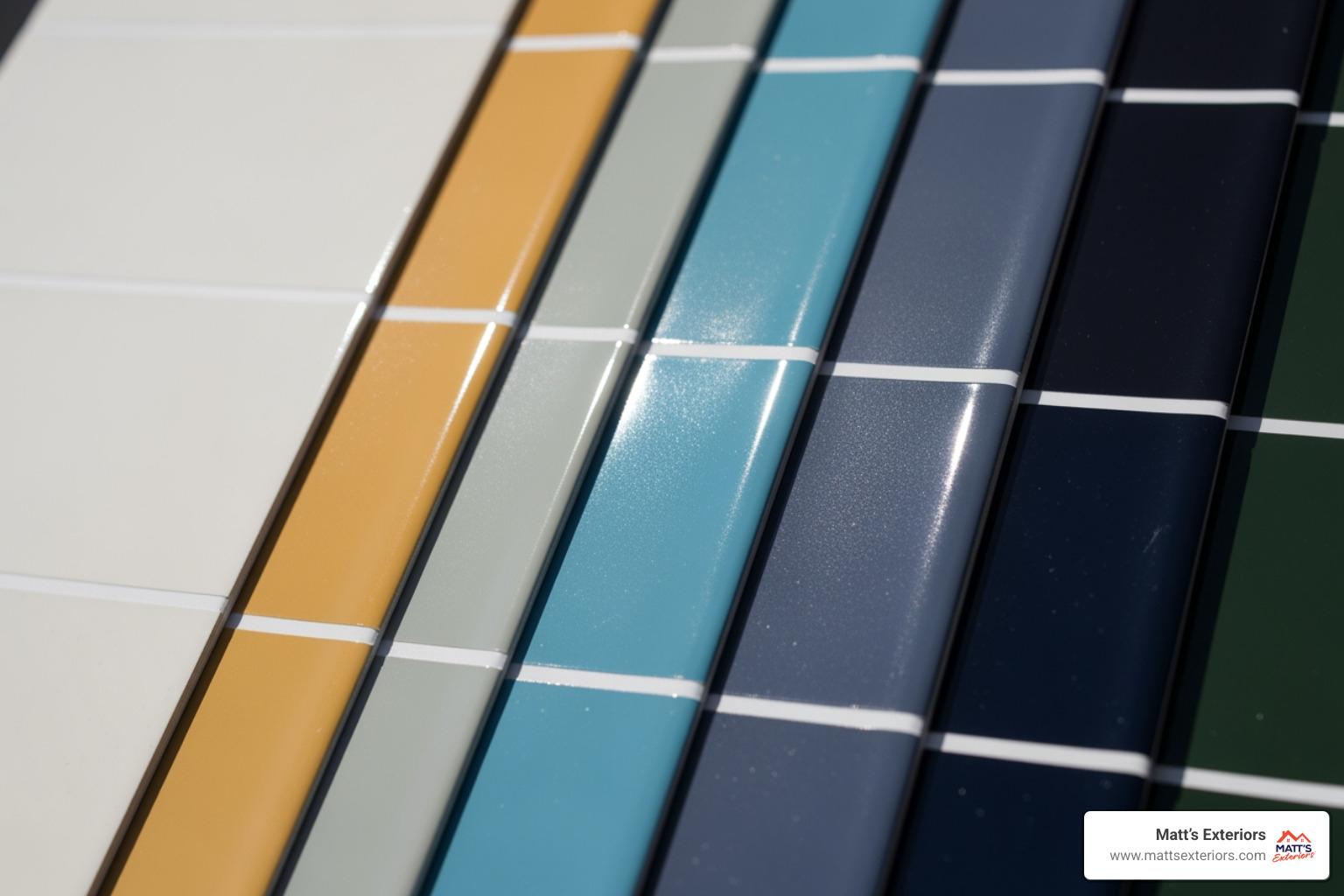
When we talk about the most common exterior paint finish, we are really discussing "sheen." Sheen refers to how much light reflects off the dried paint surface. This isn't just about whether your house looks shiny or dull; it’s a technical choice that impacts the chemistry of the paint itself.
Generally, the more "gloss" a paint has, the higher the concentration of resin (the binder that holds everything together) and the lower the concentration of pigment. This shift in chemistry is why a high-gloss door feels hard and smooth, while a flat-painted wall feels slightly chalky or textured. In the bright Georgia sun—from Alpharetta down to Senoia—light reflectivity is a major player in how your home’s color is perceived. A higher sheen can make colors appear more saturated and vibrant, while a flat finish can make the same color look softer and more muted.
If you are looking to refresh your home's look, our Exterior Paint Services can help you navigate these choices to find the perfect balance for your specific architecture.
There is a golden rule in the painting industry: the higher the sheen, the higher the durability. Because glossier paints like semi-gloss and satin contain more resin, they create a harder, non-porous "shell" once they dry. This makes them significantly more resistant to moisture, scuffs, and stains.
For homeowners in humid Metro Atlanta areas like Marietta or Smyrna, washability is a huge factor. Pollen, red clay dust, and mildew are common exterior enemies. A satin or semi-gloss finish allows you to simply hose down your siding or trim, whereas a flat finish tends to "hold" onto dirt, making it much harder to clean without scrubbing away some of the paint. You can learn more about how we handle these environmental challenges by exploring Our Services.
While high-sheen paints win on durability, they lose when it comes to "hiding power." Light bouncing off a glossy surface acts like a spotlight on every dent, scratch, or poorly sanded patch of wood.
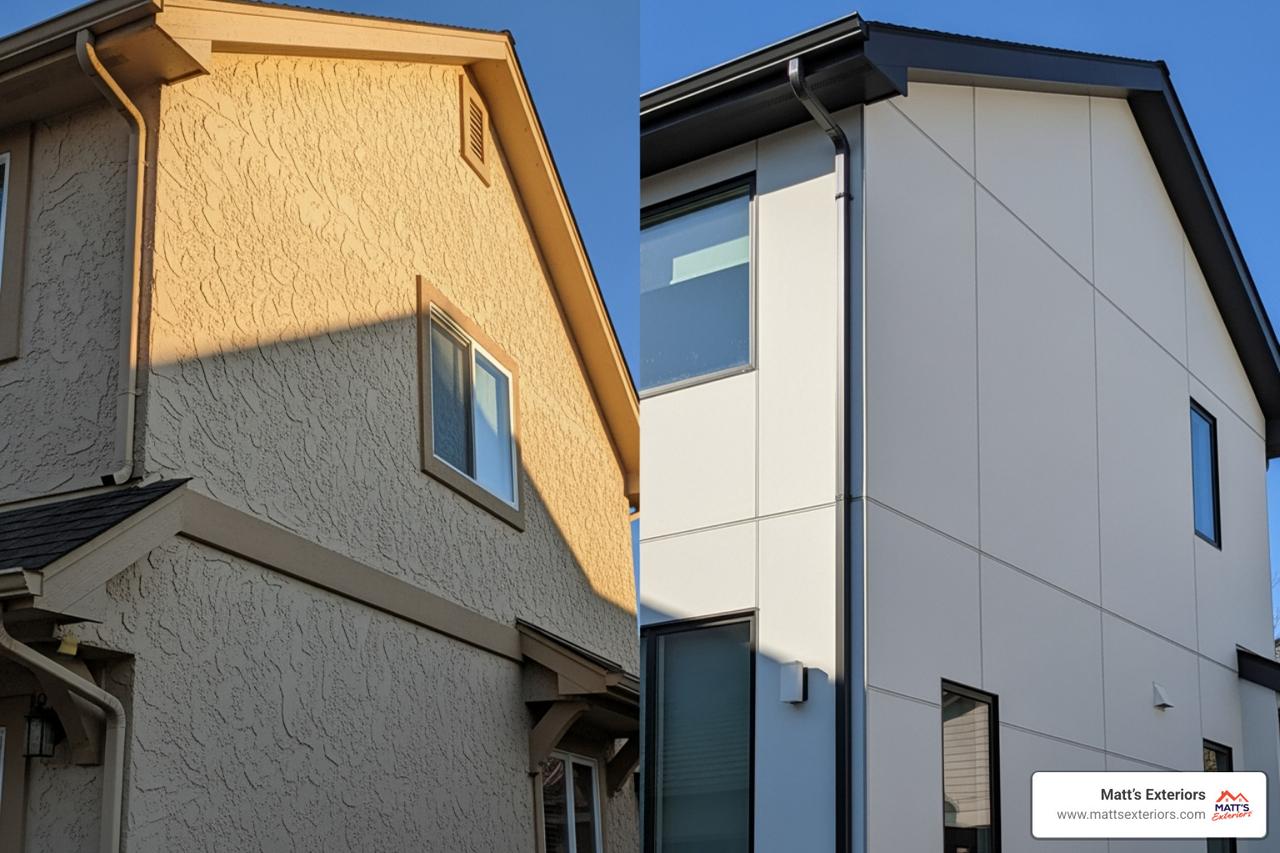
This is why surface preparation is so vital. If your siding has seen better days—perhaps it has some "lap marks" from previous paint jobs or minor dings—a flatter finish will be your best friend. It absorbs light rather than reflecting it, effectively masking texture and making the surface look smoother than it actually is. This is a common strategy we use for older homes in historic districts like those found in Roswell or Fayetteville.
If you drive through any modern neighborhood in Suwanee or Peachtree City, you are likely looking at a sea of satin. Often labeled as "satin enamel" or "low luster," this is widely considered the most common exterior paint finish for siding today.
Satin is the "Goldilocks" of finishes. It has just enough sheen to look clean and "new" without being so shiny that it looks plastic or gaudy. It is the standard recommendation for modern materials like fiber cement (Hardie Plank), vinyl siding, and well-maintained wood. As we look at 2025 Exterior Home Trends, satin remains the dominant choice for its ability to bridge the gap between classic aesthetics and modern performance.
Professional painters almost always steer homeowners toward satin for the "body" of the house. One of the biggest reasons is UV resistance. In our Georgia climate, the sun can be brutal. Satin finishes tend to hold their color longer than flat paints, which can "chalk" and fade relatively quickly under intense sun exposure.
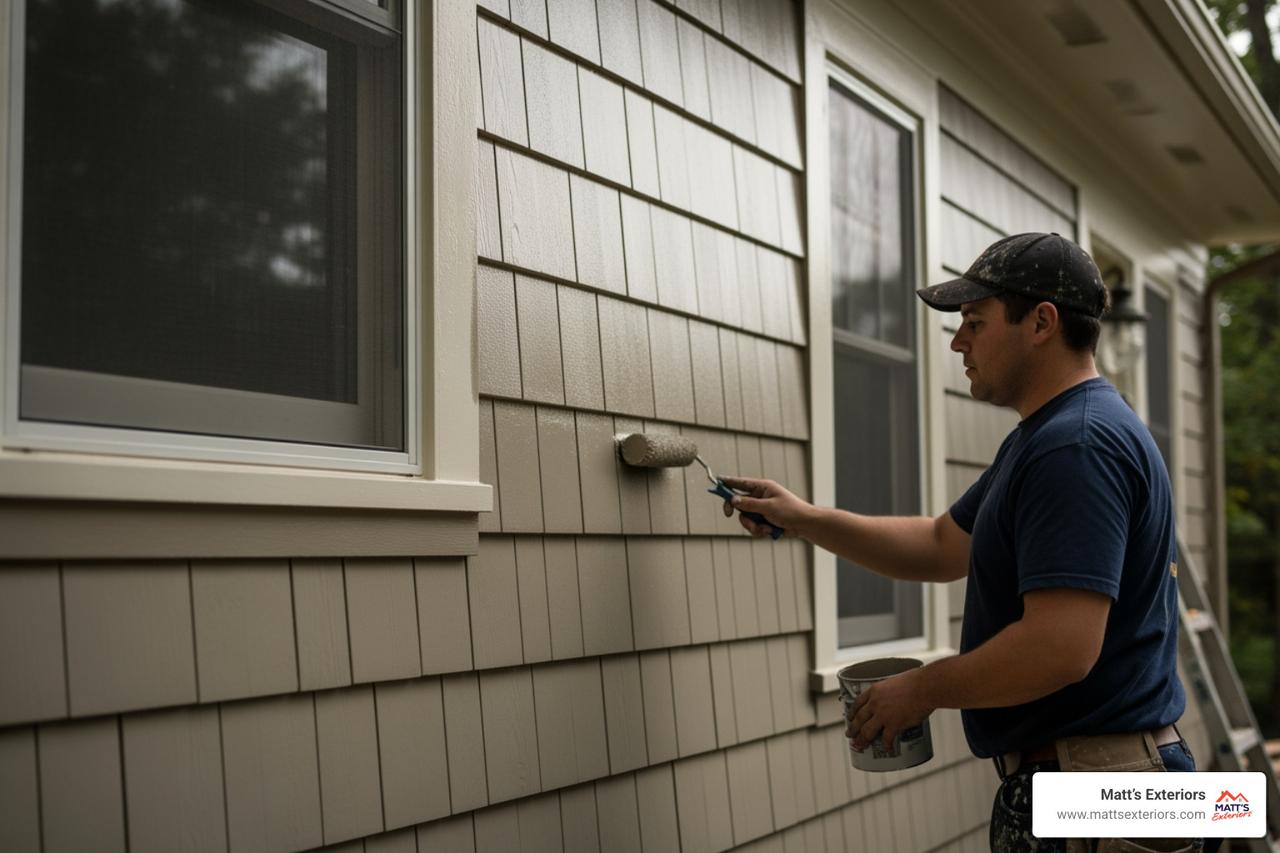
Furthermore, satin provides a better defense against mildew. Because the surface is less porous than flat paint, moisture (and the mold spores it carries) has a harder time taking root. This results in a paint job that stays looking fresh for years longer than a matte alternative.
Satin is a "low-maintenance" finish. Its "dirt-shedding" properties mean that rain often washes away loose dust that would otherwise stick to a flatter paint. For those deep-cleaning days, a gentle spray with a garden hose is usually all it takes to restore the luster.
Longevity is where satin really pays for itself. While a flat paint might start looking tired after 5 to 7 years, a high-quality satin finish can easily last 10 years or more when applied correctly. You can see examples of how these finishes hold up in our Project Gallery.
To help you decide, we’ve broken down the three most popular choices for Georgia homes.
Feature Flat / Matte Satin / Low Luster Semi-Gloss Reflectivity Very Low Soft Glow High Durability Moderate High Very High Hiding Power Excellent Good Poor Cleanability Difficult Easy Very Easy Best For Stucco, Masonry, Old Wood Siding (All types) Trim, Doors, Shutters
Despite the popularity of satin, flat (or its slightly more durable cousin, "matte") has a very specific and important role. If you own a historic home in areas like Newnan or Senoia, or if your home is finished in stucco or brick, flat paint is often the superior aesthetic choice.
Flat paint provides a velvety, rich look that feels more "authentic" on masonry and older architecture. It is also the best choice if your siding is older and has imperfections like dents or "scratched" areas that a shinier paint would highlight. If you're unsure which route to take, you can always Contact Us for a professional assessment of your home's condition.
While you rarely want your whole house to look like a shiny new penny, semi-gloss is the industry standard for accents. This includes:
Professionals often recommend applying multiple thin coats of semi-gloss rather than one thick coat to ensure a smooth, "factory-like" finish on doors.
Choosing the most common exterior paint finish isn't just about what your neighbors are doing; it’s about your specific environment.
In Metro Atlanta, we deal with high humidity and "freeze-thaw" cycles. When water gets behind paint and then freezes, it expands, causing the paint to crack. This is why we prioritize "cracking resistance" in our paint selections. High-quality acrylic-based paints are flexible, meaning they can expand and contract with the wood or siding without snapping the paint film.
We also encourage homeowners to consider VOCs (Volatile Organic Compounds) and Environmental Safety%20than%20outdoors.). Modern eco-friendly paints offer low-VOC options that are safer for your family and the environment without sacrificing the durability needed for Georgia's climate.
Different materials "breathe" differently.
In the Atlanta suburbs—from Kennesaw to McDonough—we see a strong preference for neutral and earthy palettes. According to recent surveys, These Are the Most Popular Exterior Paint Colors, with off-white/cream (16%), light gray (15%), and white (14%) leading the pack.
These colors look best in satin finishes because the slight sheen prevents the neutrals from looking "muddy" or "flat." Furthermore, choosing a finish that aligns with neighborhood cohesion is important for maintaining your home's resale value.
Satin is the most popular because it offers the best "middle ground." It provides enough sheen to resist dirt and mildew and stay easy to clean, but not so much shine that it reveals every flaw in your siding. It is the most versatile and durable option for the majority of modern residential materials.
While you will see "eggshell" listed on many DIY blogs, it is primarily an interior term. Most major exterior paint lines (like those from Sherwin-Williams or Benjamin Moore) replace "eggshell" with "Satin" or "Low-Lustre." If you find an exterior eggshell, it will look very similar to satin but may have slightly less moisture resistance depending on the brand.
Flat or Matte finishes are the undisputed champions of hiding imperfections. If your home has older wood siding with many layers of old paint or "dented" aluminum siding, a flat finish will absorb the light and make those flaws much less noticeable to the naked eye.
At Matt’s Exteriors, we understand that your home is your biggest investment. Serving Metro Atlanta since 2007, we’ve completed over 12,000 projects by focusing on high-quality workmanship and using only the most trusted materials. Whether you are in Alpharetta, Marietta, or Peachtree City, our team is here to help you select the most common exterior paint finish that fits your home's unique needs.
Don't leave your curb appeal to chance. Explore our Project Gallery to see the difference a professional finish makes, or Schedule your professional consultation for Exterior Paint services today to get started on your home's transformation.