
Get Your Instant Quote Now!
Get Started
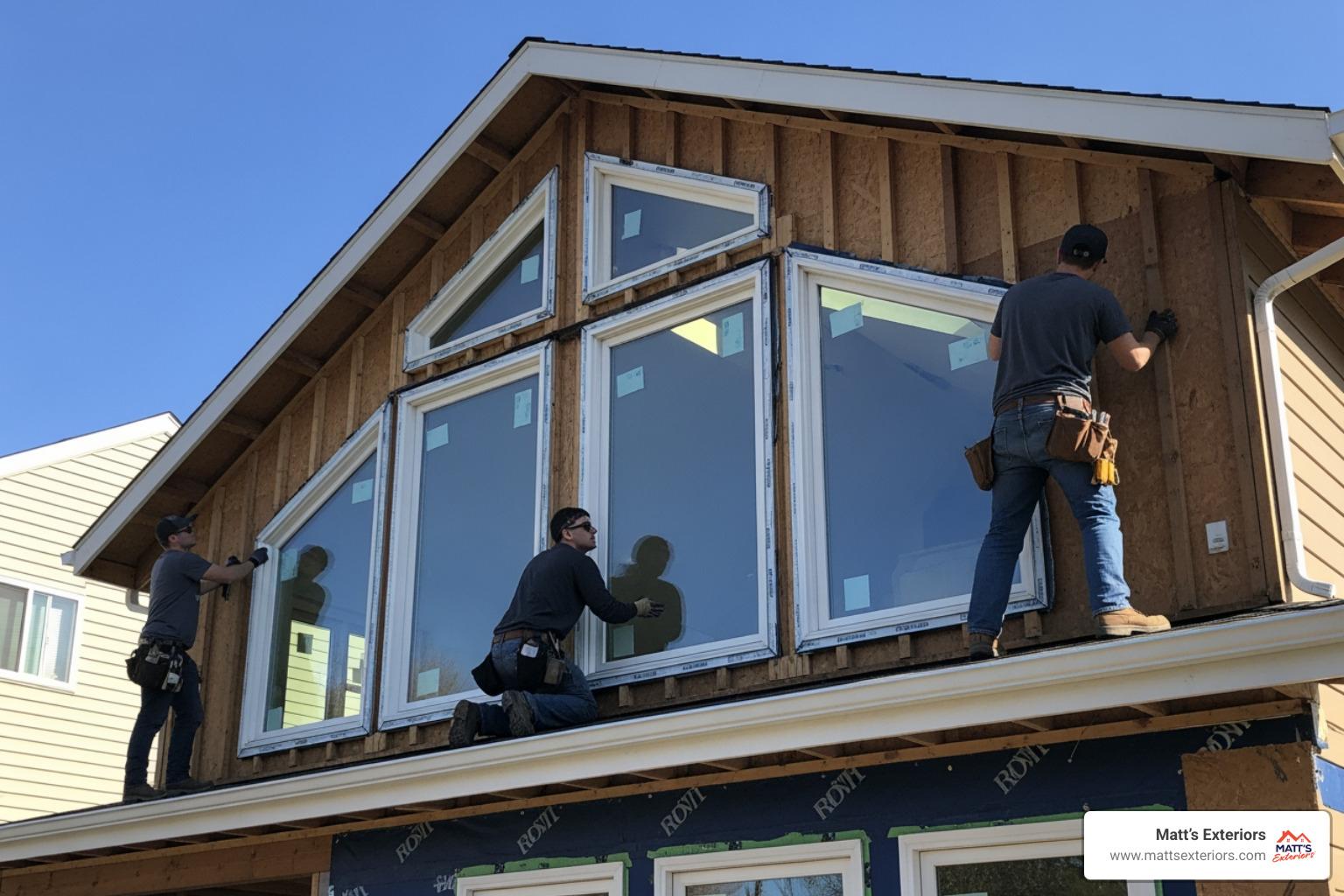
Adding windows to a house is absolutely possible — and when done correctly, it can transform a dark, closed-off room into a bright, inviting space.
Here's a quick overview of what the process involves:
Typical cost: $1,500–$20,600 per window, with an average around $5,800 (window + labor + permits + finishing).
It's not a small project. Cut the wrong wall without the right framing, and you can end up with a sagging structure and a window that won't open or close. Skip the permit, and you could face problems when selling your home.
But done right? It's one of the most rewarding upgrades you can make. Windows account for 25–30% of your home's heating and cooling energy use, so the right window in the right place does more than just look good — it works for your home every single day.
This guide walks you through everything: structure, permits, costs, installation steps, and how to choose the right window for your Metro Atlanta home.
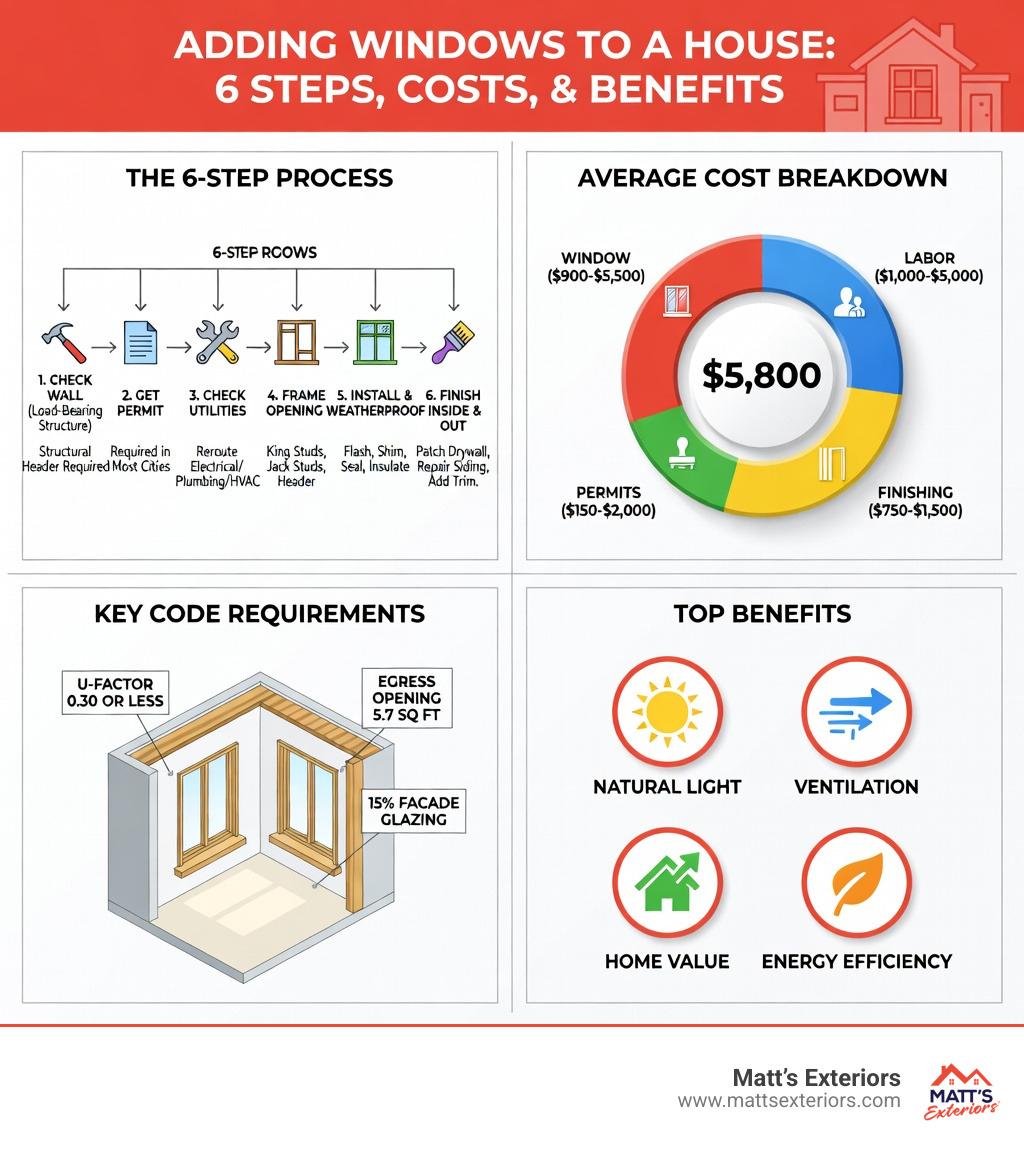
When we talk about adding windows to a house, we aren't just talking about cutting a hole and popping in some glass. Your home’s walls are hardworking components of a complex machine. Most exterior walls are load-bearing, meaning they support the weight of the roof and the floors above them.
To keep your house from sagging (or worse), we have to redistribute that weight around the new opening. This is done through specific framing components:
Beyond the wood and nails, there is the paperwork. Most municipalities in Metro Atlanta, from Marietta to Peachtree City, require permits for window installations when you are creating a new opening. This ensures the structural changes are safe and that the window meets local fire and safety codes. If you're looking for professional help navigating these requirements, you can find more info about window installation services to ensure your project stays up to code.
Safety is the primary reason building codes are so strict. If you are adding a window to a bedroom or a basement, it often must function as an "egress" window. This is a fancy way of saying it needs to be big enough for a firefighter in full gear to get in, and for you to get out during an emergency.
According to emergency egress requirements, a compliant window must provide at least 5.7 square feet of clear opening area when fully open. It also needs to be no higher than 44 inches off the floor so a child or elderly person can reach it.
Other safety considerations include:
In Georgia’s climate, energy efficiency isn't just a "nice to have"—it’s a budget-saver. New windows installed in an existing residence should generally have a U-factor of 0.30 or less. The U-factor measures how well a window keeps heat from escaping; the lower the number, the better the insulation.
Residential heating and cooling energy use is heavily impacted by window quality. We also look at the Solar Heat Gain Coefficient (SHGC), which measures how much solar radiation comes through the glass. In the sunny South, a lower SHGC helps keep your AC from working overtime in July. Modern windows use Low-E (low-emissivity) coatings and argon gas fill between panes to achieve these high-performance ratings.
Finally, don't forget about curb appeal and zoning. Some areas have "glazing rules," such as requiring at least 15% of the street-facing façade to consist of the main entrance door and windows. This keeps neighborhoods looking balanced and welcoming.
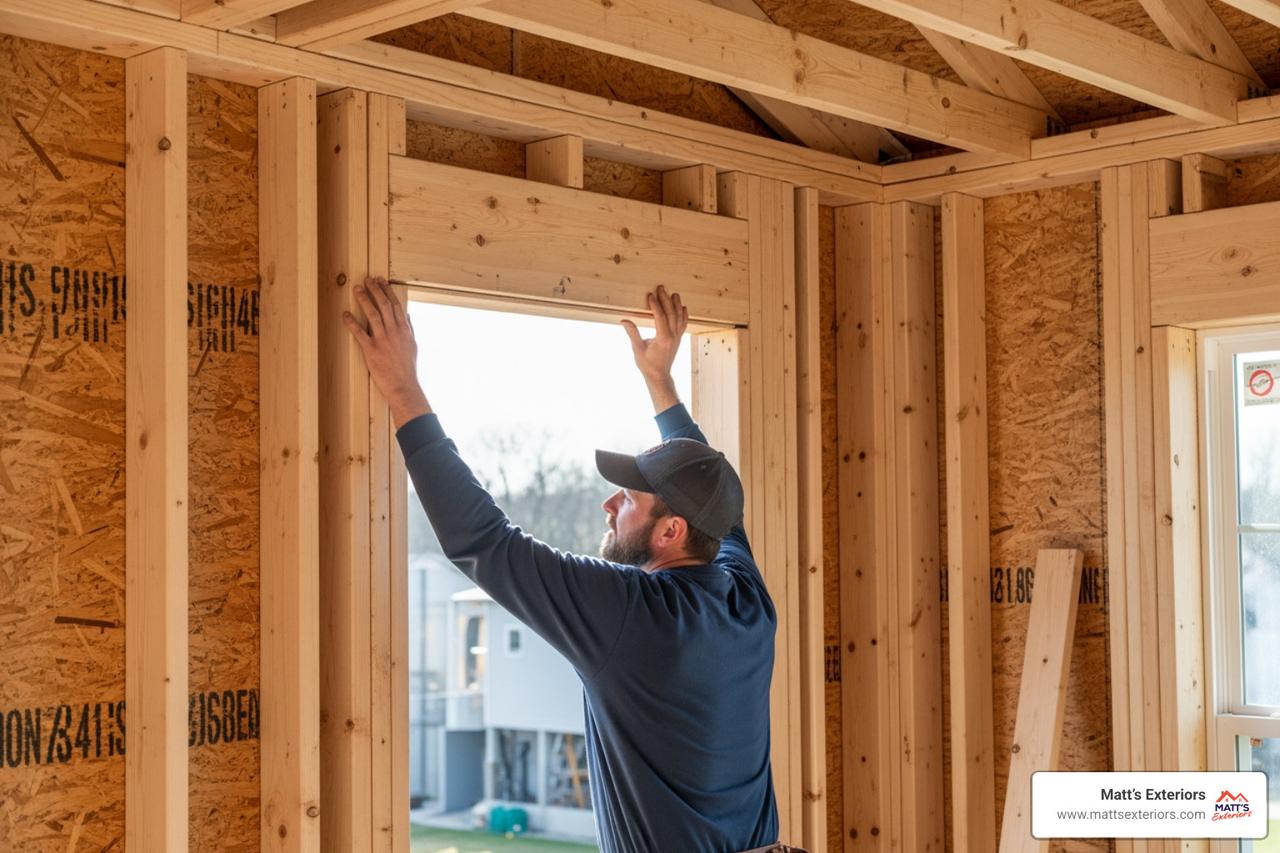
Adding a window is a surgical procedure for your home. We start with a thorough "pre-op" check. Before any saws come out, we have to know what’s hiding inside the wall.
The Utility Check:We use stud finders and electrical testers to locate wires, pipes, or HVAC ducts. If we find a stack of plumbing or a main electrical line, those must be rerouted by a licensed professional before the window project continues. This can add $700 to $1,500 to your budget for plumbing or roughly $2 to $4 per square foot for electrical rewiring.
Once the coast is clear, the process generally follows these steps:
Precision is everything here. We measure the "rough opening" based on the window manufacturer's specs—usually adding about 1/2 inch to the width and 5/8 inch to the height to allow for squaring and flashing.
After cutting out the old studs, we install the new header, king studs, and jack studs. A critical but often overlooked step is the sill pan installation. This is a waterproof flashing at the bottom of the opening designed to catch any water that might sneak past the window and direct it safely back outside.
DIY vs. Professional Installation
Feature DIY Installation Professional Installation Cost Lower (materials only) Higher (labor + materials) Structural Risk High (if framing is incorrect) Low (licensed & insured) Permits Homeowner must navigate Contractor usually handles Warranty Manufacturer only Manufacturer + Workmanship Timeline Multiple weekends 1-2 days
Once the frame is ready, we set the window. We use shims to ensure it is perfectly level, plumb, and square. If it’s even slightly tilted, the window might bind or fail to lock properly.
Weatherproofing is the most important part of the job for the long-term health of your home. We use:
If you're considering adding a window that doubles as a door, such as a French door or a sliding glass door, you can find more info about exterior doors to see how those installations differ.
Budgeting for a new window involves more than just the price tag on the glass. The average cost per window for a brand-new opening typically ranges from $1,500 to $20,600, with most homeowners spending about $5,800.
Here is a rough breakdown of where that money goes:
Not all walls are created equal. The material of your home’s exterior plays a massive role in the final invoice:
Size and style also matter. A standard hallway window is affordable, but window wall costs can range from $200 to $2,900 per linear foot. These "ribbon windows" or floor-to-ceiling glass sections require massive structural support but offer an incredible return in terms of aesthetics and light.
When you’re adding windows to a house, you want the new addition to look like it has always been there. Architectural harmony is key. If your house has traditional double-hung windows with grids (muntins), a sleek, modern casement window might look out of place on the front façade.
Material Choices:
For maintenance, many homeowners prefer tilt-in windows. These allow you to clean the exterior glass from inside your house—a lifesaver for second-story windows!
Sometimes, a standard window isn't the best fit for the space or your budget. If you have a dark hallway or a bathroom where privacy is a concern, consider these options:
Yes, absolutely. It requires more specialized tools (like a diamond-blade masonry saw) and more labor to ensure the structural integrity of the brickwork, but it is a common project for our team in the Metro Atlanta area.
The actual installation usually takes 1 to 2 days per window. However, the entire process—including getting permits, ordering custom windows (which can take 6–8 weeks), and doing the final interior/exterior painting—can take a couple of months from start to finish.
While windows don't increase your home's "square footage," they dramatically increase "appeal." A bright, sunlit home often sells faster and for a higher price than a dark one. Furthermore, replacing old, leaky windows with new energy-efficient ones is consistently rated as one of the best home improvements for ROI.
Adding windows to a house is a "bright idea" that pays off in daily enjoyment and long-term home value. Whether you’re looking to capture a view of your garden in Marietta or brighten up a dark kitchen in Alpharetta, doing it right means balancing structural safety, local codes, and energy efficiency.
At Matt’s Exteriors, we’ve spent years helping Metro Atlanta homeowners transform their houses. As a family-owned company with over 12,000 successful projects since 2007, we pride ourselves on high-quality workmanship and exceptional customer care. From navigating the permit process in Duluth to precision framing in Peachtree City, we handle the hard part so you can just enjoy the view.
Ready to let the light in? Start your window project today with a team you can trust.