
Get Your Instant Quote Now!
Get Started
Aluminum gutter replacement is one of the most impactful home protection projects you can tackle — and with the right guidance, it's manageable as a DIY project.
Here's a quick summary of what you need to know:
Topic Key Facts Average cost $900 – $3,300 total; $7 – $12 per linear foot Lifespan Up to 30 years with proper maintenance DIY vs. pro DIY saves 20–50% on labor; seamless gutters are best left to pros Best style K-style (most homes) or half-round (historic homes) Best size 5-inch standard; 6-inch for steep roofs or heavy rainfall When to replace Sagging, widespread rust, recurring leaks, or gutters over 25 years old
Without functioning gutters, rainwater erodes the soil around your foundation, splashes dirt onto your siding, and can seep into your basement or crawlspace. In Metro Atlanta, where heavy rainfall is common, a failing gutter system isn't just an eyesore — it's a liability.
This guide walks you through everything: costs, materials, tools, installation steps, and how to avoid the mistakes that cause most DIY gutter jobs to fail.
I'm Matt Lopez, founder of Matt's Exteriors, and I've been helping Metro Atlanta homeowners with aluminum gutter replacement and full exterior renovations since 2007. Everything in this guide is based on nearly two decades of hands-on experience installing and replacing gutter systems across Fayetteville, Peachtree City, Marietta, and the surrounding communities.
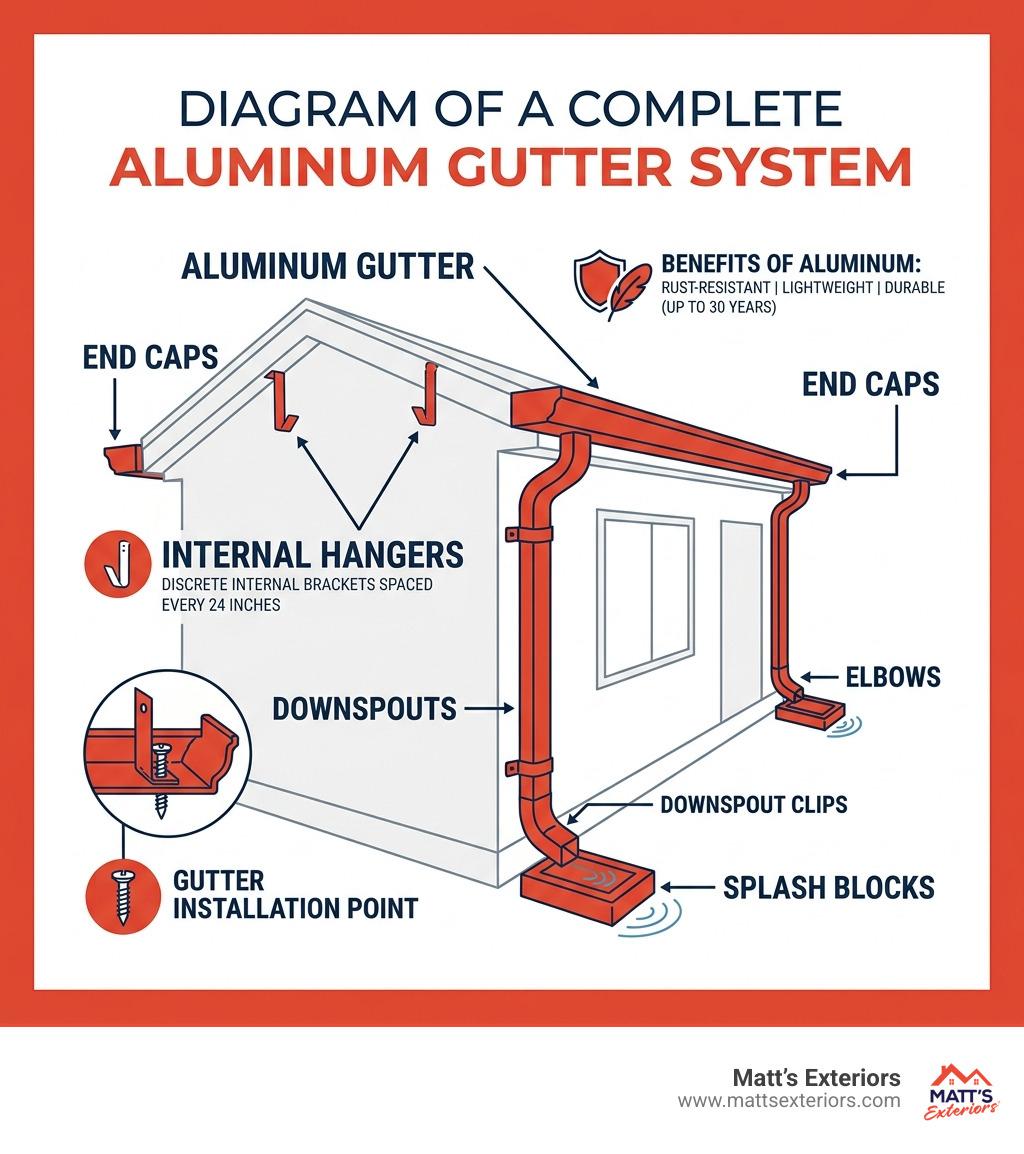
When it comes to protecting your home in Metro Atlanta, aluminum is the "Goldilocks" of gutter materials. It is lightweight, making it easier for a DIYer to handle, and naturally resistant to rust. Unlike steel, which can corrode once the coating is scratched, or vinyl, which can become brittle and crack under the intense Georgia sun, aluminum offers a balanced 30-year lifespan.
The average cost for a professional aluminum gutter replacement typically ranges between $2,400 and $3,300, though smaller projects can start as low as $900. If you are looking at the price per linear foot, expect to pay between $7 and $12 for seamed (sectional) gutters. If you opt for seamless gutters—which are custom-formed on-site—the price usually jumps to $9 to $13 per foot. For more details on budgeting, check out A Comprehensive Guide to Aluminum Gutters: Cost Data, Maintenance Tips.
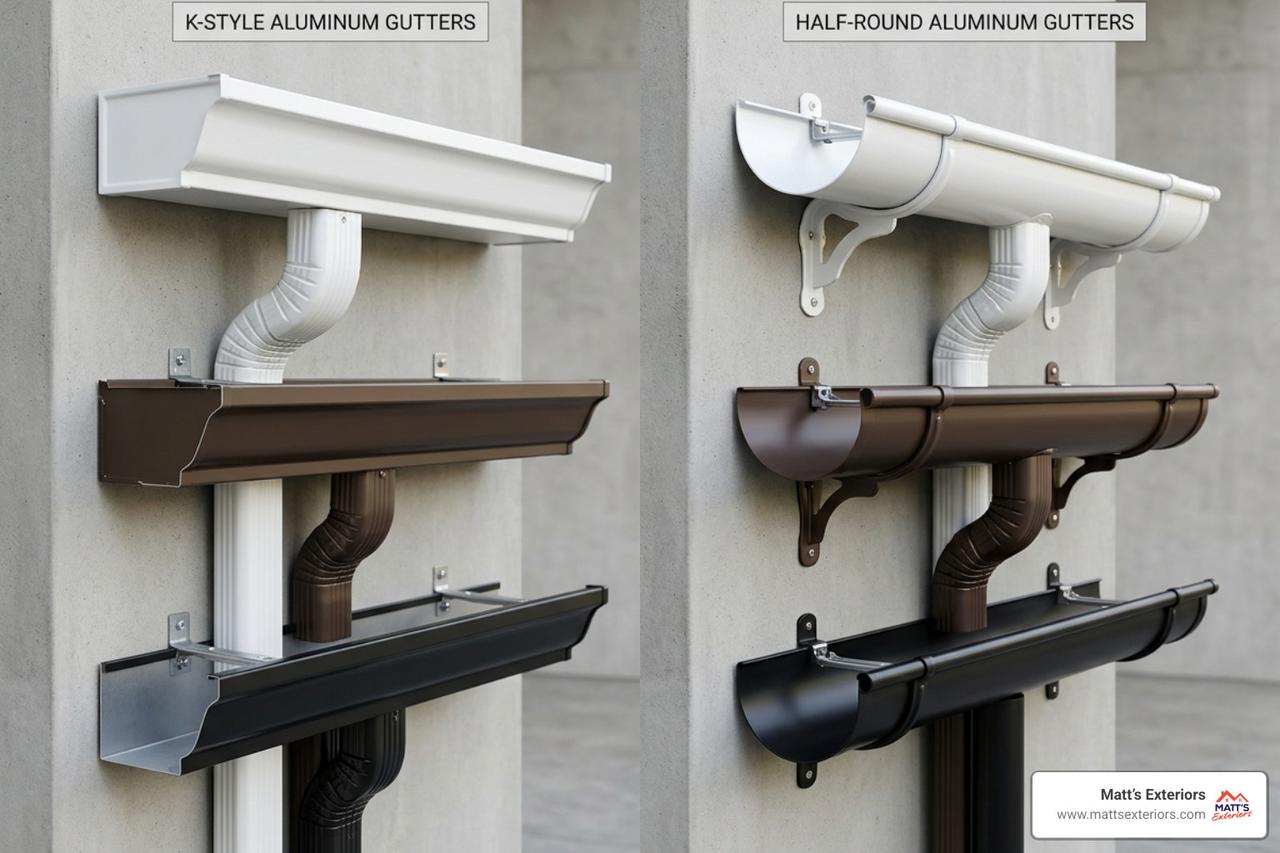
Before you head to the home improvement store in Cumming or Alpharetta, you need a solid plan. Most modern homes use K-style gutters, which look like crown molding and hold more water than the alternative. Half-round gutters are often chosen for historic homes in areas like Marietta or Roswell to maintain an aesthetic charm, though they require specialized brackets.
Size matters, too. A 5-inch gutter is standard for most residential homes, but if you have a very steep roof or live in an area prone to the heavy downpours we often see in Peachtree City, upgrading to 6-inch gutters can handle about 40% more water volume. Don't forget to factor in the downspouts; these are the vertical pipes that carry water to the ground. You can learn more about these costs here: Cost to Replace Gutter Downspout.
Choosing the right material is the foundation of a successful aluminum gutter replacement. While you have options like vinyl, steel, and copper, aluminum remains the most popular choice for 90% of our projects.
We always recommend choosing a "contractor-grade" thickness. Aluminum gutters come in various gauges, but .032-inch is the industry standard for durability. Thinner .025-inch gutters are cheaper but are much more susceptible to denting from ladders or falling branches. Additionally, aluminum allows for color customization. While white is standard, you can find factory-applied finishes in black, forest green, or bronze to match your home's trim perfectly.
Preparation is where most DIY projects are won or lost. You don't want to be halfway up a ladder in Woodstock only to realize you’re missing a rivet gun.
To perform a proper aluminum gutter replacement, you will need:
Before you buy materials, inspect your fascia boards (the wood the gutters attach to). If the wood is soft or rotting, you must repair it first. Installing new gutters on rotted wood is like putting new tires on a broken axle—it won't last. For insights on why the structure matters, read Why Seamless Gutters Matter: Expert Insights from Matt's Exteriors.
The most critical part of the planning phase is the "pitch" or slope. Gutters are not meant to be level; they must slope toward the downspouts so water doesn't sit and stagnate.
The standard rule is a 1/2-inch slope for every 10 feet of gutter run. If you have a run longer than 40 feet, it’s best to pitch the gutter from the middle toward a downspout at each end. Proper drainage also involves where the water goes once it hits the ground. Use splash blocks or flexible extensions to move water at least 3 to 5 feet away from your foundation. In eco-conscious communities like Senoia or Tyrone, many homeowners are even integrating rain barrels into their downspout systems to recycle water for gardening.
Ready to get to work? Follow these steps to ensure your aluminum gutter replacement is professional-grade.
For a deeper dive into the mechanics of hanging, see How To Install Aluminum Gutters - This Old House.
When assembling sectional gutters, you will have joints where two pieces overlap. Always overlap them by at least 8 inches, with the upstream piece inside the downstream piece (to prevent water from catching the edge). Use plenty of siliconized caulk on the inside of the joint and secure the sides with pop rivets. Never put a screw or rivet in the very bottom of the gutter joint, as this is a prime spot for leaks to develop over time.
Even experienced DIYers can trip up. Here are the "big three" mistakes we see in Metro Atlanta:
Your aluminum gutter replacement is an investment. To make it last the full 30 years, you need to keep it clean.
We recommend cleaning your gutters at least twice a year—once in late spring after the pollen and tassels have fallen, and once in late autumn after the leaves are down. If your property in Suwanee or Johns Creek is heavily wooded, you might consider adding gutter guards. These inserts can increase your project cost by $700 to $1,700, but they pay for themselves by reducing the risk of clogs and foundation damage.
Trimming overhanging branches is another pro tip. Not only does this reduce the amount of debris in your gutters, but it also prevents squirrels and other critters from using your gutters as a highway to your roof. If you're not a fan of heights, you can always book a One-Time Gutter Cleaning to keep things flowing.
Most aluminum systems last between 20 and 30 years. In the Metro Atlanta climate, the main factors affecting longevity are humidity and maintenance. If you leave wet leaves in your gutters year-round, the constant moisture can eventually cause the protective coating to fail. However, because aluminum doesn't rust, it generally outlasts steel by a decade or more.
It depends on your comfort level with heights and your budget. Labor typically accounts for 20% to 50% of the total cost. By doing it yourself, you could save over $1,000 on a standard home. However, DIYers are limited to "sectional" gutters from big-box stores. Professionals can provide seamless gutters, which have 95% fewer leak points. If you have a complex multi-story home in Sandy Springs, the safety risk and tool investment might make hiring a pro the smarter move.
If you see widespread rust (on steel components), sagging sections that won't stay put, or recurring leaks at more than three joints, it's time for a full aluminum gutter replacement. Also, if your gutters are over 25 years old and you're noticing foundation erosion or basement dampness, don't wait for a total failure. Replacing them now is much cheaper than fixing a cracked foundation later.
At Matt’s Exteriors, we believe every homeowner in Metro Atlanta deserves a home that is safe, dry, and beautiful. Whether you are tackling a DIY aluminum gutter replacement in Newnan or looking for professional seamless installation in Duluth, the goal is the same: keeping water away from your foundation.
With over 12,000 projects completed since 2007, our family-owned team has the experience to handle the toughest "gutters attack" scenarios. If you decide that the ladders and pop rivets aren't for you, we are here to help with high-quality workmanship and trusted materials. Contact us today for a professional Gutter Replacement and let us protect your home for the next 30 years.