Get Your Instant Quote Now!
Get Started
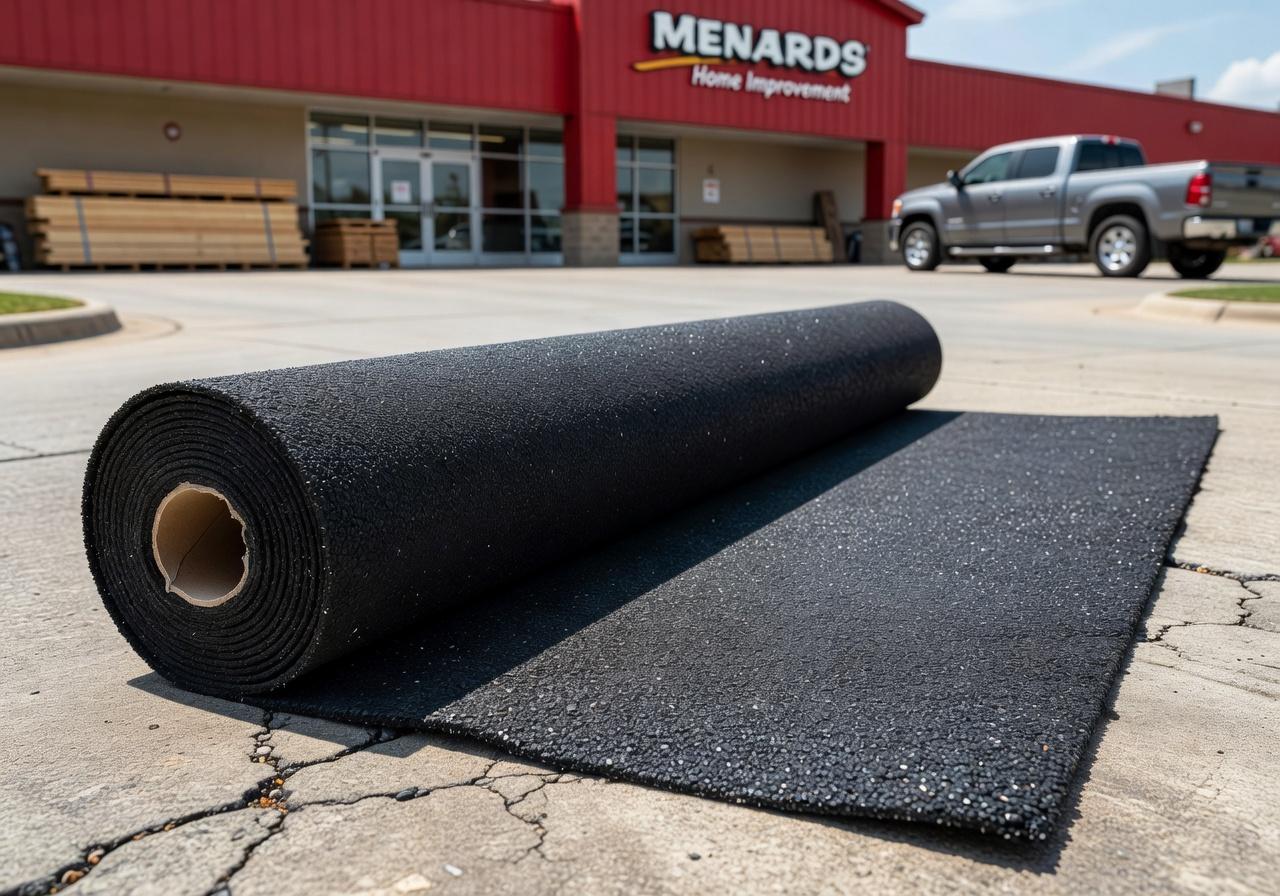
When evaluating the asphalt roll roofing Menards sells, it's helpful to know that these products typically come in 36" x 36' rolls, with each roll covering 100 square feet. Here's a quick overview of what's available at major home improvement centers:
Roll roofing is one of the most budget-friendly roofing materials available. It's lightweight at around 75 pounds per roll, easy to handle, and designed for low-slope roofs with a pitch of at least 2:12.
That said, it's not a one-size-fits-all solution. With a typical lifespan of 10 to 20 years, it trades longevity for affordability and ease of installation. Knowing which product fits your project — and where to buy it — makes all the difference.
This guide covers everything: product options, where to buy, how to install, and how roll roofing stacks up against other materials.
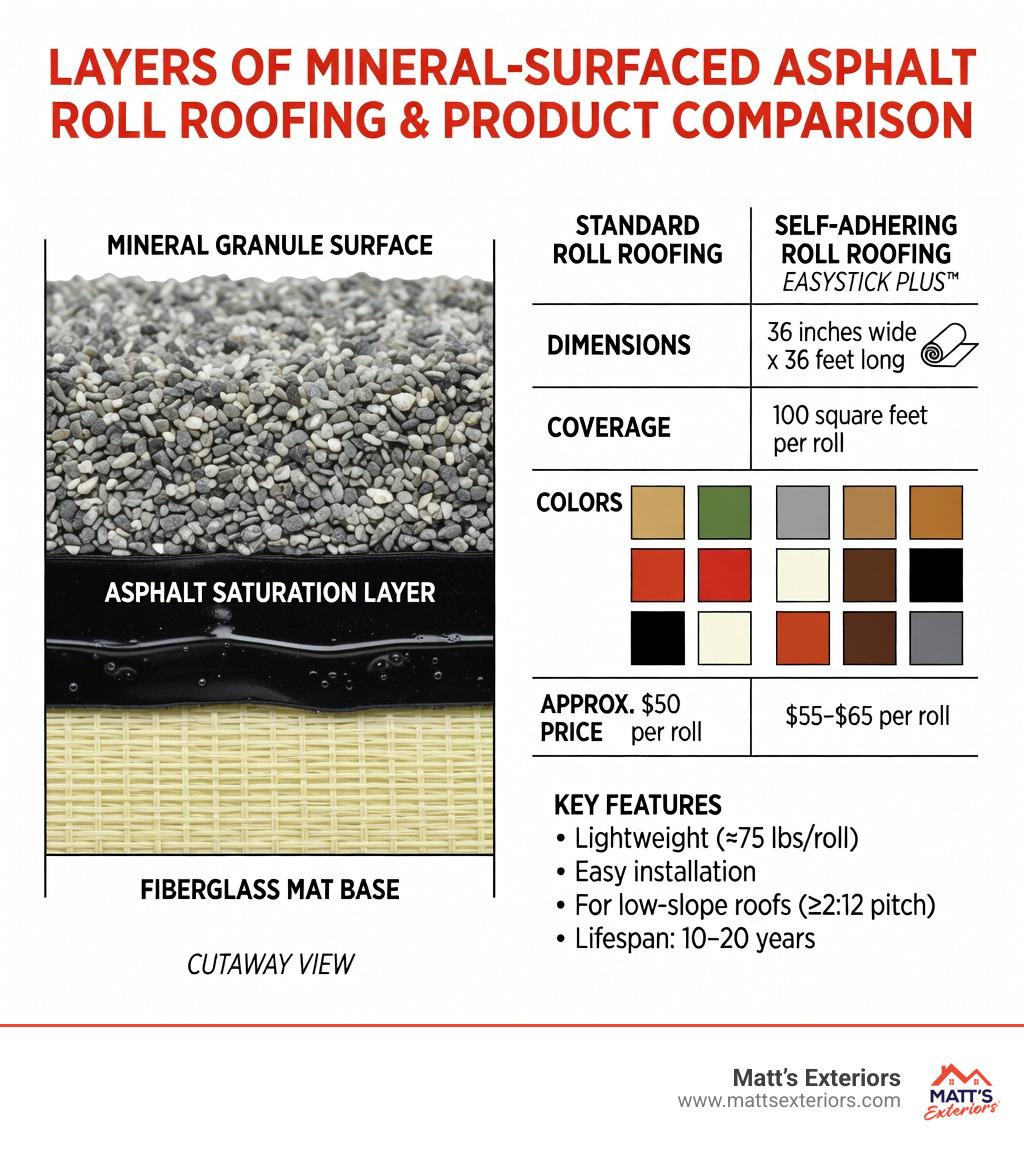
When we talk about asphalt roll roofing, we are looking at a material that is essentially a thinner, lighter, and continuous version of an asphalt shingle. To understand why it works so well for specific projects in the Metro Atlanta area, we have to look at what’s inside the roll.
Most modern roll roofing, including the asphalt roll roofing Menards and other retailers stock, starts with a fiberglass mat. This mat acts as the "skeleton" of the roofing material. It provides the necessary structural integrity and fire resistance. This mat is then heavily saturated with oil-based asphalt. The asphalt is the "muscle" of the operation—it’s what makes the material waterproof and flexible, a standard characteristic of quality materials recognized by the National Roofing Contractors Association (NRCA). Because it is oil-based, it remains pliable enough to be rolled up at the factory and unrolled on your roof without snapping. To learn more about how these parts interact with the rest of your home, check out our What Makes Up Your Roof: A Guide to the Components of a Roof.
The top layer consists of mineral granules pressed into the hot asphalt. These aren't just for looks (though the colors are a nice bonus!). These granules protect the asphalt from UV rays. Without them, the sun would bake the oils out of the asphalt in a single Georgia summer, leaving it brittle and prone to cracking.
A standard roll weighs approximately 75 pounds. While that sounds heavy, compare it to a "square" of shingles (which covers the same 100 square feet but requires three bundles weighing about 240 pounds total), and you’ll see why DIYers love it. In terms of durability, you can expect a lifespan of 10 to 20 years. It’s a sprint, not a marathon—perfect for a xhed or a detached garage, but perhaps not the forever-solution for your primary residence.
If you’ve decided that roll roofing is the right move for your backyard workshop or carport, the next step is picking the specific type. Not all rolls are created equal, and your choice will largely depend on your comfort level with roofing cement and nails.
Feature Standard Fiberglass Roll Self-Adhering (Peel-and-Stick) Dimensions 36" x 36' 36" x 36' Coverage 100 sq ft 100 sq ft Installation Nails & Roofing Cement Peel-and-Stick Adhesive Weight ~75 lbs ~75 lbs Price ~$50.00 ~$119.00 (Premium) Best For Budget-conscious DIY Ease of use / No mess
The standard asphalt roll roofing Menards and other major retailers offer is the "Fiberglass Mineral Surfaced" variety. This is the traditional choice. It requires galvanized roofing nails and lap cement (a thick, tar-like glue) to seal the seams.
One of the biggest perks of shopping at large home improvement stores is the color variety. You aren't stuck with just "utility gray." You can find options like:
If the idea of spreading sticky roofing cement makes you nervous, you might want to look at the EasyStick Plus™ line. These are "self-adhering" rolls. You simply pull off a release film on the back and press the roofing down onto a prepared surface or base sheet. It’s much cleaner and significantly faster, though the price per roll is higher. These are excellent for very low-slope areas where water might sit longer, as the adhesive creates a very tight seal.
In the Metro Atlanta area, you have several options for sourcing these materials. While Menards is a major player in the Midwest, local homeowners in places like Marietta, Alpharetta, or Cumming often look to big-box retailers or specialized roofing distributors.
When choosing a supplier, consider the "hidden" costs. Does the store offer a "rebate" program? Is there a discount for buying in bulk? For a small project, convenience is king, but for a larger outbuilding, price and delivery options will save you more in the long run.
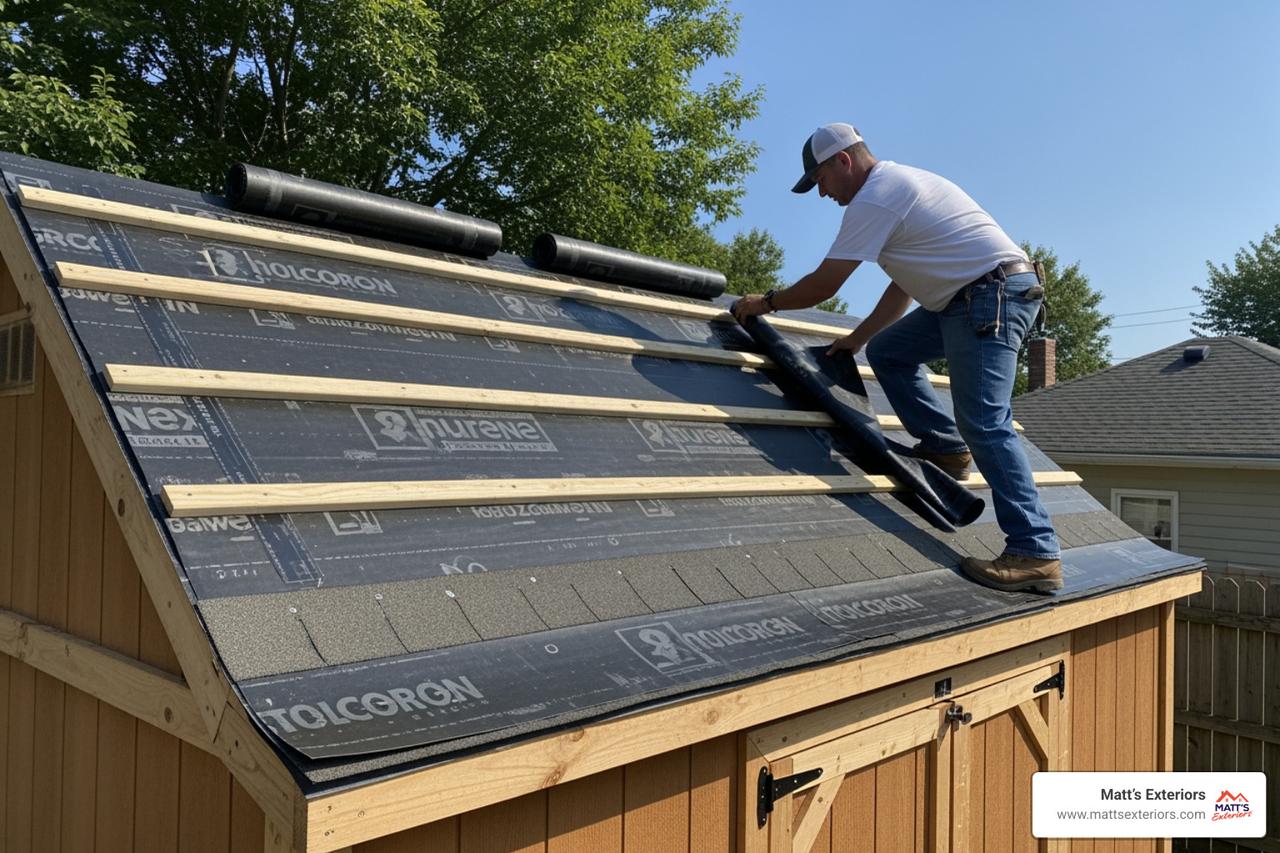
Installing roll roofing is a project many homeowners in Fayetteville or Woodstock take on themselves over a weekend. It’s straightforward, but there are a few "gotchas" that can lead to leaks if you aren't careful.
First, check your roof's pitch. Roll roofing is designed for low-slope roofs, but it has limits. It is generally recommended for roofs with a pitch between 2:12 and 4:12.
Before you start, gather your gear. You’ll need a utility knife (with extra blades—asphalt dulls them fast!), a hammer, 1-inch galvanized roofing nails, a trowel, and a can of roofing lap cement.
If this sounds like more work than you bargained for, or if you’re dealing with a complex roofline, our team at Matt’s Exteriors offers professional Services to handle the heavy lifting for you.
Once your roof is on, you want it to stay there. While roll roofing is a "budget" option, a little bit of maintenance goes a long way.
In the humid Metro Atlanta climate, roofs take a beating. Here is how we recommend keeping your roll roof in top shape:
You might see "Modified Bitumen" rolls at the store. These are like roll roofing’s "big brother." They are thicker, often reinforced with polyester or rubber (SBS), and can last 20+ years. They are more expensive and often require a "torch-down" installation (using a literal blowtorch), which we definitely don't recommend for a DIY project! For most homeowners, the standard asphalt roll roofing Menards and other local retailers carry is the right balance of cost and difficulty.
While a shed is a great DIY project, we often tell our neighbors in Roswell or Peachtree City that for anything attached to the home—like a sunroom or a garage—it’s worth calling in the pros. A local company understands the specific wind and rain patterns of Georgia. You can learn more about the benefits of staying local here: Why Choose a Local Roofing Company.
Is roll roofing suitable for DIY projects?Absolutely. Because it is lightweight and doesn't require specialized tools (unlike metal or torch-down roofing), it is one of the most DIY-friendly materials on the market.
How long does roll roofing last?Generally, 10 to 20 years. If you live in an area with high sun exposure and don't perform maintenance, it may lean toward the 10-year mark. With regular cleaning and a coating, you can push it toward 20.
What is the difference between roll roofing and shingles?Shingles are thicker, heavier, and installed in many small, overlapping pieces. This makes them better for steep roofs and very durable. Roll roofing is thinner, comes in large sheets, and has fewer seams, making it better for low-slope roofs where shingles might let water "wind-drive" underneath them.
Whether you are building a new garden shed in Newnan or patching up an old workshop in Kennesaw, asphalt roll roofing Menards and other local suppliers offer a practical, cost-effective solution. It’s a material that respects your budget while getting the job done.
At Matt’s Exteriors, we’ve seen it all—from small DIY repairs to massive 12,000+ project renovations. We know that every roof, no matter how small, is an investment in your property. If you’re unsure if roll roofing is the right choice for your low-slope project, or if you’ve decided it’s time for a full Roof Replacement, we are here to help.
We serve the entire Metro Atlanta area with the kind of care only a family-owned business can provide. Give us a call, and let’s make sure your next project is covered—literally!