
Get Your Instant Quote Now!
Get Started
The best paint sheen for exterior surfaces depends on what you're painting, but here's what works best for most Metro Atlanta homes:
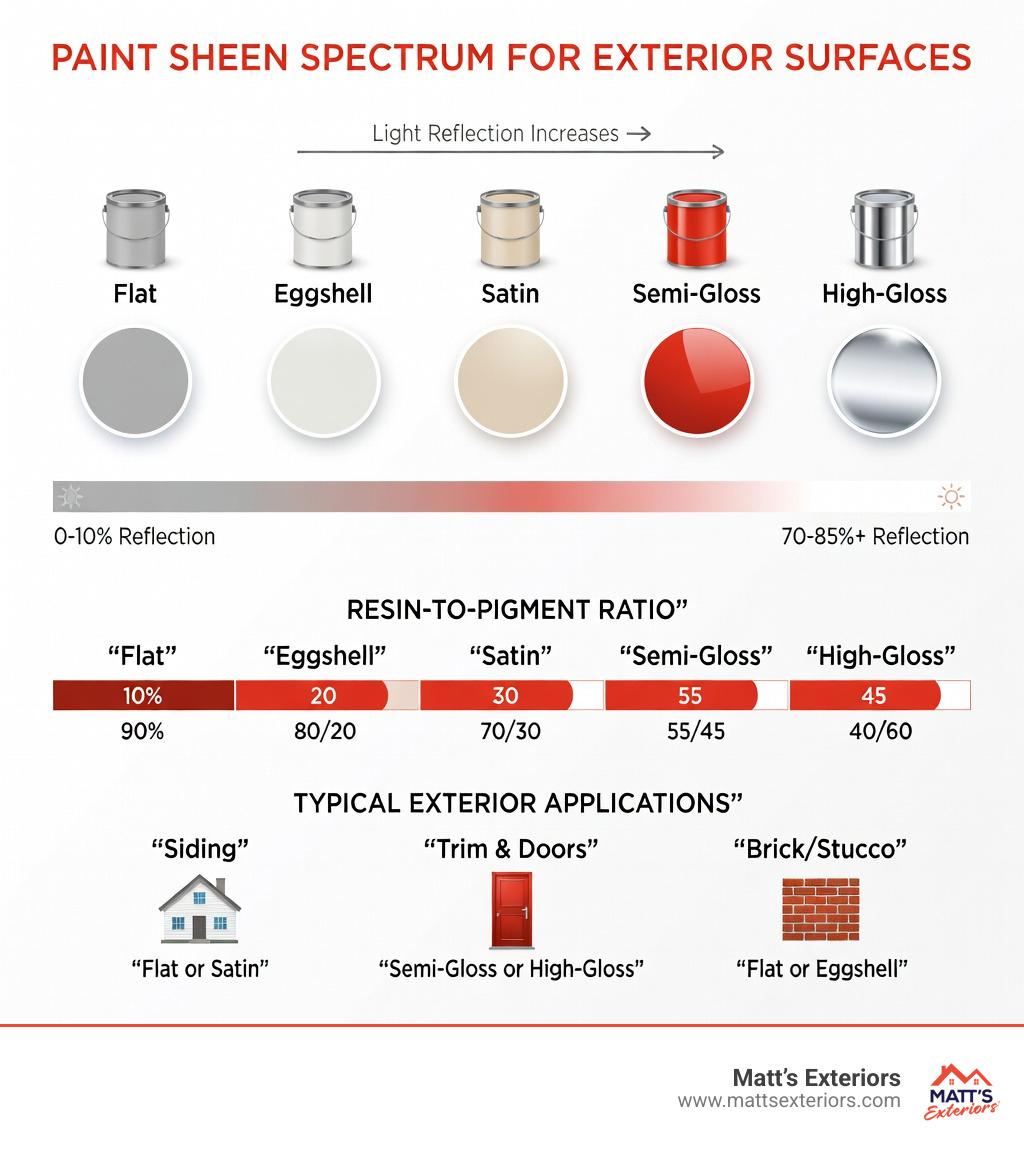
Surface Best Sheen Why It Works Siding Satin or Flat Hides imperfections, resists moisture and dirt Trim & Doors Semi-Gloss or High-Gloss Durable, easy to clean, highlights details Brick/Stucco Flat or Satin Allows moisture to escape, easy to hose down
When you're fixing up a house, deciding which sheen to use is just as important as picking a color. But most homeowners don't realize that sheen isn't just about how shiny the paint looks—it's about protection, longevity, and how well your home stands up to Atlanta's humidity and intense summer sun.
Paint sheen refers to how much light reflects off a painted surface. That reflectivity comes from the ratio of resin and binders to pigment in the paint formula. More resin means more shine—and more shine means easier cleaning but also more visible imperfections.
The main sheen categories are flat (matte), eggshell, satin (low lustre), semi-gloss, and high-gloss. Each one performs differently when it comes to hiding flaws, resisting weather, and standing up to wear and tear.
For most exterior projects, you'll want a lower sheen for siding to hide surface imperfections and a higher sheen for trim and doors to add contrast and durability. This "top-down" approach protects your investment and keeps your home looking great for years.
To understand why one paint lasts ten years while another flakes off in three, we have to look at the "ingredients" inside the can. Paint is essentially a mixture of pigments (the color), resins (the glue/binders), and solvents (the liquid that evaporates).
The level of sheen is determined by the ratio of resins to pigments. High-sheen paints (like semi-gloss or high-gloss) have a higher concentration of resins and binders. These resins create a smooth, hard surface that acts like a protective shell. This is why glossy paints are so much easier to wipe clean; the surface is less porous, so dirt and moisture simply slide off.
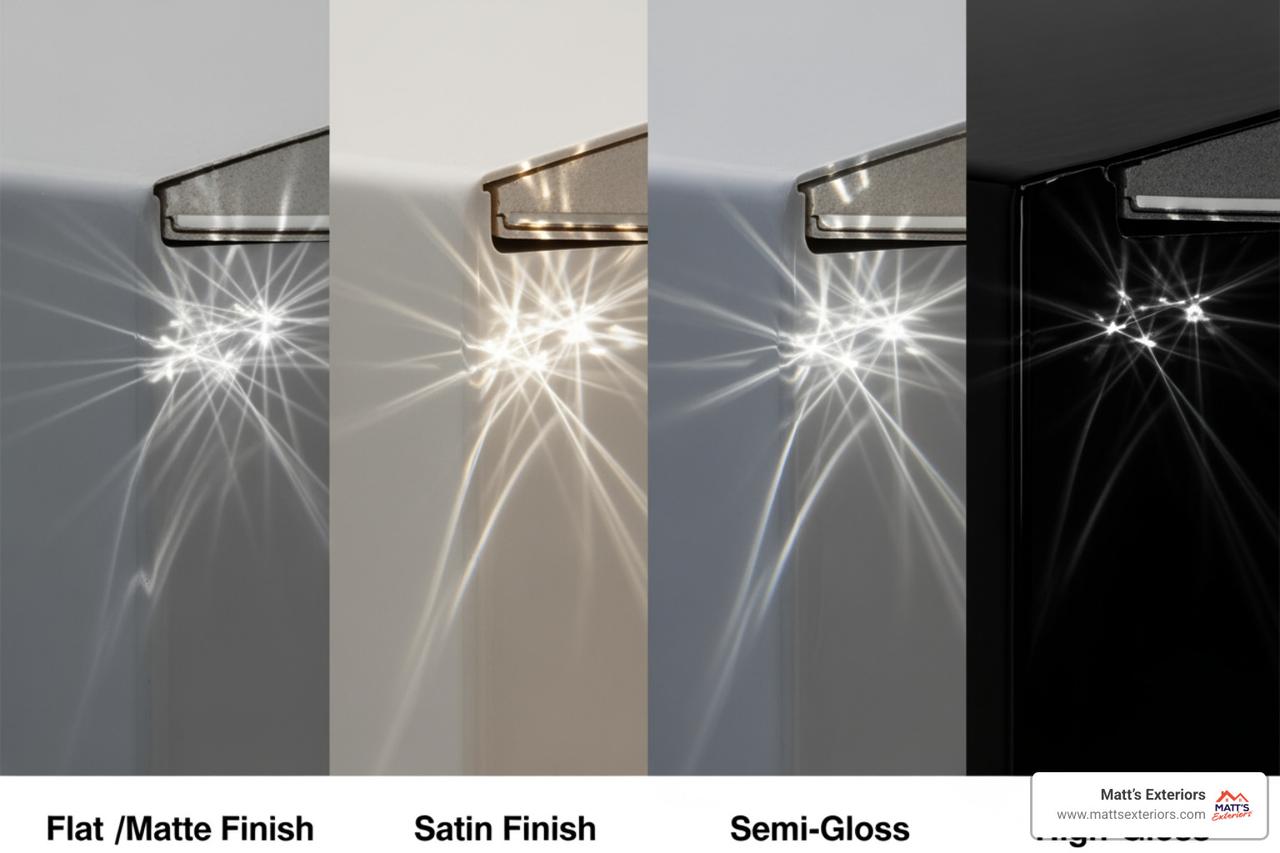
On the flip side, low-sheen paints (like flat or matte) have more pigment and less resin. This creates a slightly rougher surface at a microscopic level. Instead of reflecting light directly back at you, the surface scatters light in different directions. This "scattering" effect is what makes flat paint so good at hiding dents, scratches, or uneven siding.
In the Metro Atlanta climate—where we deal with everything from scorching July heat in Marietta to humid spring rains in Peachtree City—the performance of these resins is critical. High-quality acrylic resins are flexible, allowing the paint to expand and contract as the temperature changes without cracking.
Choosing the best paint sheen for exterior siding is a balancing act between aesthetics and durability. Since the siding makes up the largest surface area of your home, your choice here will define the overall "vibe" of your property.
Here is how the most common siding sheens stack up:
Sheen Level Durability Hide (Hiding Flaws) Maintenance Flat/Matte Moderate Excellent High (traps dirt) Eggshell Good Good Moderate Satin Excellent Fair/Moderate Low (easy to clean) Semi-Gloss Superior Poor Very Low
For most modern homes, especially those with fiber cement or wood siding, satin is the industry standard. However, if you are dealing with older wood siding that has seen better days, a flatter finish might be your best friend. If you're considering a full siding overhaul before painting, you can explore our siding services to see which materials pair best with these finishes.
If we had to pick a "workhorse" for the Atlanta area, it would undoubtedly be satin. Often referred to as "low lustre" by brands like Benjamin Moore or Sherwin-Williams, satin offers a pearl-like finish that provides just enough glow to look fresh without being blindingly shiny.
Satin is widely considered the best paint sheen for exterior siding for several reasons:
While satin is the popular choice, flat (or matte) paint has a dedicated place in exterior renovation, particularly for historic homes in neighborhoods like Roswell or Fayetteville.
Flat paint is the ultimate "eraser" for architectural flaws. If your siding is older, scratched, or has multiple layers of old paint underneath, a glossy finish will highlight every single bump and ripple. Flat paint absorbs light, making the surface appear much smoother than it actually is.
Additionally, flat paint provides a very contemporary, high-end look that is currently trending in modern farmhouse designs. The downside? It’s harder to clean and may require repainting sooner because it tends to "chalk" or fade faster under intense UV exposure.
Once you’ve settled on your siding finish, it’s time to talk about the accents. For trim, doors, and shutters, the rules change. Here, we want higher reflectivity to create a crisp contrast against the flatter siding.
Higher sheen levels like semi-gloss and high-gloss are standard for these areas because they are high-traffic and high-touch. Think about your front door—it gets touched, kicked, and bumped every day. You need a finish that can take a beating and be wiped clean with a damp cloth.
Common High-Traffic Areas for Glossy Finishes:
Choosing the best exterior paint for these details ensures that your home’s architectural features "pop" and stay protected from the elements.
If you want to make a bold design statement, high-gloss is the way to go for your focal points. A high-gloss front door in a deep navy or classic black can look incredibly sophisticated and expensive.
High-gloss is the most durable of all finishes. It is highly resistant to moisture and scuffs. However, be warned: high-gloss requires impeccable surface preparation. Because it reflects so much light, even a tiny grain of sand or a brush mark will look like a mountain on a glossy surface. Professionals often sand these surfaces down to a "glass-like" smoothness before applying the final coat.
At Matt’s Exteriors, we’ve completed over 12,000 projects since 2007, so we’ve seen how the Georgia weather treats different paint sheens.
UV Rays and FadingThe sun is the biggest enemy of exterior paint. Intense UV rays break down the chemical bonds in the paint, leading to fading and "chalking" (that white powdery residue you see on old paint). Higher-sheen paints generally have better UV resistance because they reflect more of the sun's energy rather than absorbing it.
Humidity and MildewIn humid areas like Smyrna or Alpharetta, mildew and mold are constant threats. Glossier finishes (Satin, Semi-Gloss) are less porous, making it harder for mildew spores to take root. Many modern exterior paints also include "mildewcides" to provide an extra layer of protection.
Thermal ExpansionOur temperatures can swing from below freezing in January to over 100 degrees in August. This causes your home’s siding—especially wood and vinyl—to expand and contract. You need a high-quality acrylic paint that remains flexible. Satin and semi-gloss formulas are typically engineered with this flexibility in mind.
No matter which sheen you choose, the finish is only as good as the preparation underneath. If you apply a beautiful satin paint over a dirty, peeling surface, it will fail within a year.
The Professional Prep Process:
When choosing your products, consider VOCs and eco-friendly options%20than%20outdoors.) that are safer for your family and the environment. For more inspiration on how to keep your home current, check out the 2025 Exterior Home Trends Every Homeowner Should Know According to Matt's Exteriors.
For the majority of homeowners, yes. Satin provides the best middle ground. It is easier to clean than flat paint, more durable against the weather, and still does a decent job of hiding minor imperfections. Unless you have a specific aesthetic reason to go flat (like a very old historic home), satin is the safer, longer-lasting bet.
For brick and stucco, flat or satin is usually best. Brick is a porous material that needs to "breathe." Using a high-gloss paint on brick can trap moisture inside, leading to peeling or even structural damage to the masonry. A flat mineral paint or a breathable satin acrylic is ideal because it allows moisture to escape while still making the surface easy to hose down.
Generally, glossier finishes last longer. You might find that a high-quality satin or semi-gloss finish lasts 8 to 10 years in the Atlanta climate, while a flat finish might start looking tired or chalky after 5 to 7 years. Regular maintenance, like an annual soft wash to remove dirt and mildew, can extend the life of any sheen.
Choosing the best paint sheen for exterior surfaces doesn't have to be a stressful experience. By following the "low sheen for the body, high sheen for the accents" rule, you'll create a look that is both beautiful and durable.
At Matt’s Exteriors, we pride ourselves on high-quality workmanship and trusted materials. Whether you're in Marietta, Cumming, or Peachtree City, our family-owned team is here to help you navigate these choices and ensure your home is protected for the long haul.
Ready to give your home a fresh new look? Learn more about our exterior paint services and get a free estimate today. Let us take the stress out of your next renovation!