
Get Your Instant Quote Now!
Get Started
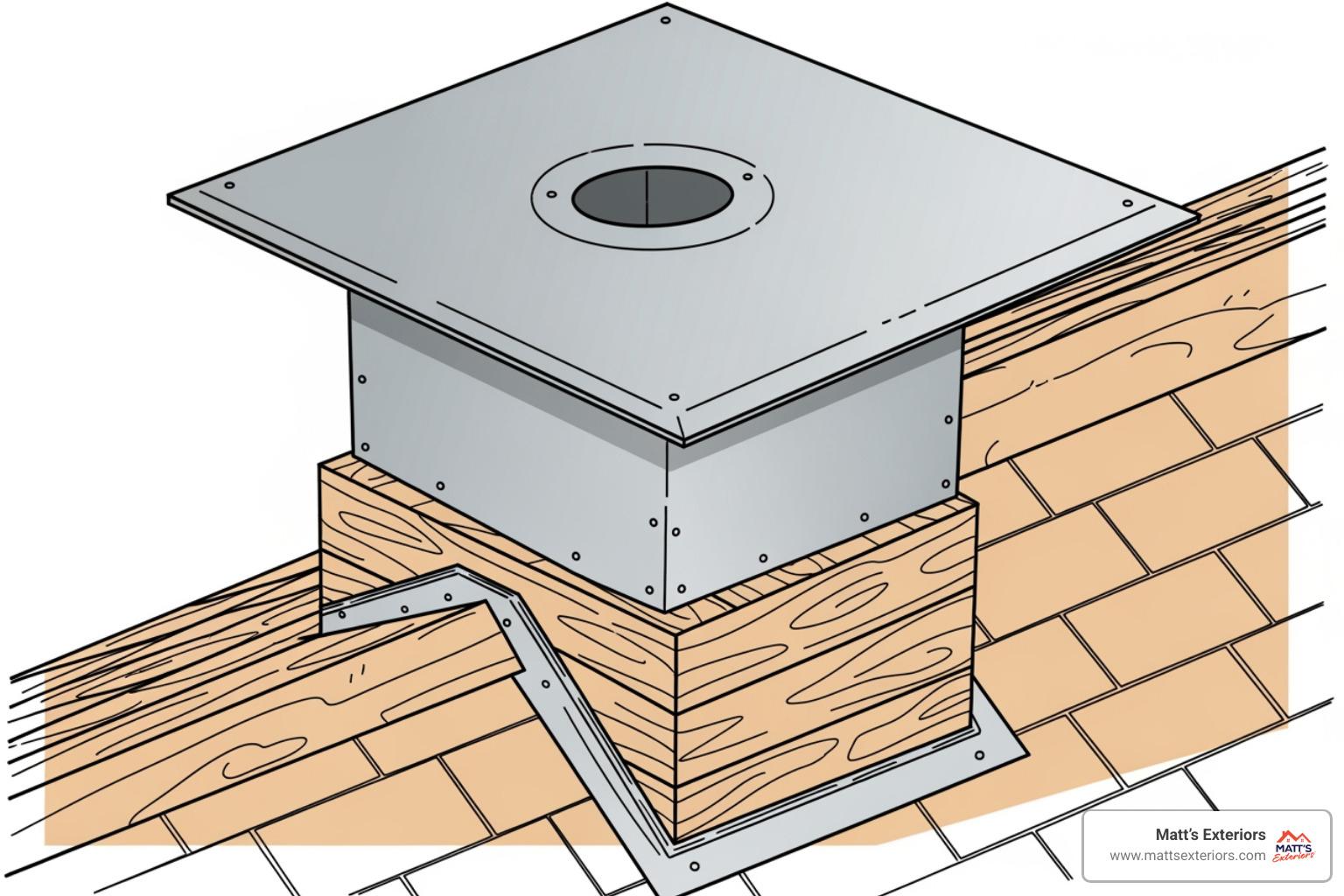
When we talk about a chimney chase cover Atlanta homeowners often ask us, "Is that just a chimney cap?" While they perform similar protective duties, they are structurally different. A chimney cap typically covers just the opening of the flue pipe to keep out rain and critters. In contrast, a chimney chase cover (also known as a rain pan) is the solid metal sheet that covers the entire top of a pre-fabricated or wood-framed chimney.
Think of it like a shoe box lid. The "chase" is the box?the wood-framed structure often covered in siding or stone that houses your metal chimney pipe. The chase cover is the lid that fits snugly over the top, with a hole in the center where the flue pipe exits. This design ensures that rain hits the metal pan and sheds off onto the roof rather than soaking into the wooden skeleton of your chimney.
Because many homes in Metro Atlanta?from Marietta to Peachtree City?feature these factory-built fireplaces, the chase cover is a primary line of defense. Without it, the top of your chimney would be wide open to Georgia?s heavy rains, nesting squirrels, and wind-driven debris. You can learn more about how these parts fit into your home's exterior in our What Makes Up Your Roof: A Guide to the Components of a Roof or explore our specific Chimney Chase Covers by Matt?s Exteriors services. For a broader overview of how chimneys are constructed and protected, see this general reference on chimneys.
How do you know if your "shoe box lid" is failing? You don't always have to climb onto the roof to find out. Your chimney will usually start "telling" you there is a problem through several visual cues:
While you can buy "off-the-shelf" covers, we highly recommend custom fabrication for Atlanta homes. Every chimney chase is slightly different, and a "near-fit" is a "leaky-fit."
When we provide custom Chimney Caps by Matt?s Exteriors, we ensure a precise fit that includes specialized design features. For instance, we can add decorative shrouds to hide the unsightly termination cap and give your home a high-end architectural look. We also ensure every cover includes a spark arrestor, which is vital for wood-burning fireplaces to prevent floating embers from landing on your roof and starting a fire. Furthermore, custom-fitted screens are the only way to effectively keep out Atlanta's persistent pests like raccoons, birds, and squirrels that view your warm chimney as a perfect nesting spot.
In our decades of experience serving Metro Atlanta, we've found that the average lifespan of a standard, builder-grade rain pan is only about 7 to 10 years. Why do they fail so quickly?
The culprit is usually the material and the design. Many original covers are made from low-grade galvanized steel that isn't thick enough to withstand the constant expansion and contraction of Georgia's temperature swings. Atlanta's high humidity creates a "sauna effect" inside the chase, attacking the metal from both sides.
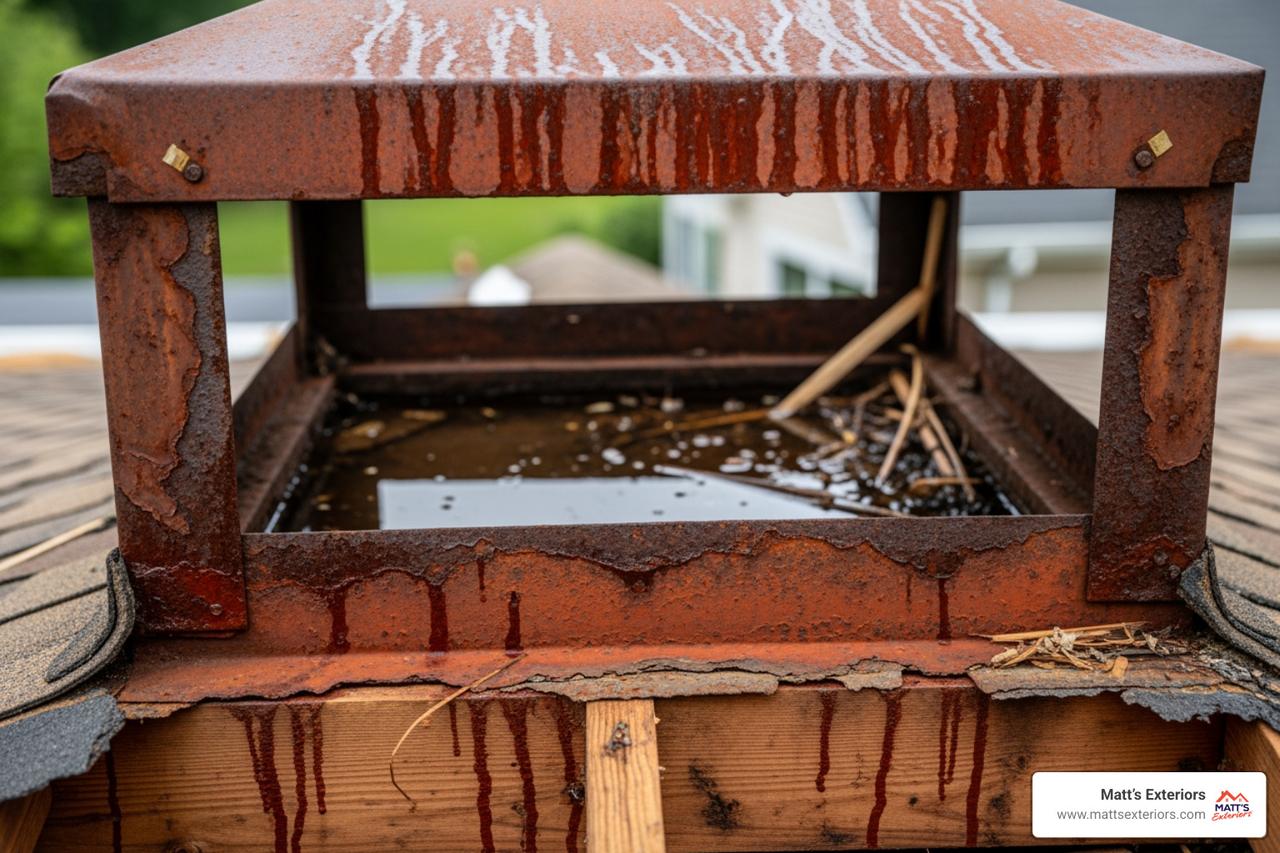
As the metal weakens, it begins to sag. Once the middle sinks, it becomes a collection point for leaves, pine needles, and water. This debris holds moisture against the metal, leading to rust and, eventually, pinholes. Once those holes form, your chimney is no longer a protective structure; it’s a funnel.
A failing chimney chase cover Atlanta isn't just an aesthetic issue; it’s a structural emergency. Because the leaks are often "invisible"—meaning the water stays inside the chimney walls rather than dripping onto your floor—the damage can go unnoticed for years.
We often tell our neighbors in Duluth and Roswell that a chase cover is a "pay now or pay much more later" component. Replacing a chase cover is a straightforward exterior project. However, repairing the damage from a leaky cover is an invasive construction project.
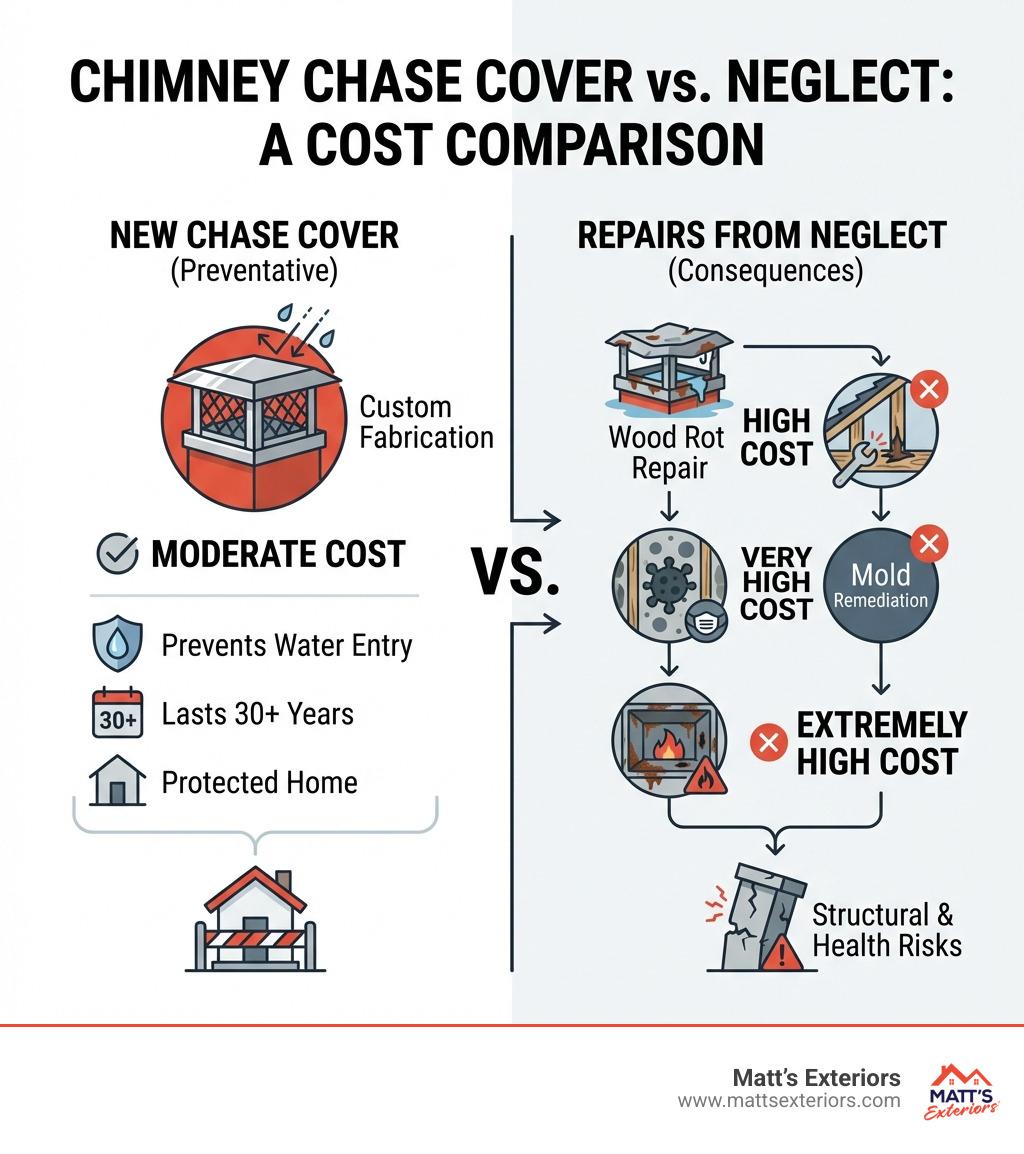
Service Estimated Cost Impact on Home New Chase Cover Moderate Prevents all water entry; lasts 30+ years. Wood Rot Repair High Requires stripping siding and replacing studs. Mold Remediation Very High Requires specialized cleaning and air testing. Firebox Replacement Extreme Often requires a complete fireplace overhaul.
It is also important to note that many homeowner's insurance policies have exclusions for "gradual damage" or "lack of maintenance." If your chimney has been leaking for three years because of a rusted cover, your insurance may deny the claim for the resulting water damage.
When it's time for a Custom Chimney Chase Cover by Matt’s Exteriors, the material you choose determines how long you can forget about your chimney. We typically work with 26-gauge metals to ensure the cover is rigid enough to resist sagging.
If you want the "best value" for an Atlanta home, stainless steel is the winner. Unlike galvanized steel, stainless steel will never rust. It is a "one-and-done" solution. While the upfront cost is higher than galvanized, it will likely outlast the roof itself.
Copper is the premium choice. It offers the same lifetime durability as stainless steel but adds incredible curb appeal. Over time, copper develops a beautiful green patina that is highly sought after in historic or high-end neighborhoods like Buckhead or Alpharetta. If you are considering a Roof Replacement by Matt’s Exteriors, adding a copper chase cover is a fantastic way to elevate the entire look of your home.
For homeowners on a budget, galvanized steel is a viable option, provided it is installed correctly. We use high-quality, pre-coated galvanized metal with baked enamel finishes (often in black or brown) to provide an extra layer of weather protection. A properly installed, high-gauge galvanized cover can last 30 to 40 years, which is a significant upgrade over the 7-year builder-grade versions.
Aluminum is another rust-proof option. It is lightweight and budget-friendly, though it is slightly softer than steel and can be prone to denting in heavy Georgia hailstorms.
Material Pros and Cons:
A chimney chase cover Atlanta is only as good as its installation. Even the best stainless steel pan will leak if the "storm collar" or "flashing" isn't handled by a pro.
At Matt's Exteriors, our Services include a comprehensive approach to fabrication. We use cross breaks—subtle X-shaped creases in the metal—that create a slight slope. This ensures water runs off the edges rather than pooling in the center. We also use wrapped or folded edges that act like a drip edge, guiding water away from the siding and onto the roof.
While a high-quality cover is "low maintenance," it isn't "no maintenance." To get the full 40-year lifespan out of your installation, we recommend these annual tasks:
A standard builder-grade cover usually lasts 7–10 years. However, a custom-fabricated cover made from 26-gauge galvanized steel or stainless steel, installed with proper cross breaks for drainage, can easily last 30 to 40 years or more.
Yes, but the cover itself is only half the battle. To keep critters out, your chase cover should be paired with a screened chimney cap or "shroud." These components allow smoke to exit while the heavy-duty mesh prevents birds, bats, and squirrels from entering your home.
Usually, no. Most insurance companies view a rusted chimney cover as a "maintenance issue." If the damage is caused by a sudden event (like a tree falling on the chimney), it might be covered. But if the damage is from years of slow rust and pinholes, the homeowner is typically responsible for the repairs.
Your chimney is one of the most vulnerable parts of your home's exterior. In the Metro Atlanta climate, a failing chimney chase cover Atlanta is a ticking time bomb for water damage. Whether you are in Marietta, Cumming, or Fayetteville, protecting your wood-framed chimney with a custom-fabricated metal cover is one of the smartest investments you can make for your property's longevity.
At Matt’s Exteriors, we are a family-owned company that has completed over 12,000 projects since 2007. We pride ourselves on high-quality workmanship and using trusted materials that stand up to Georgia weather. Don't wait until you see rust stains on your siding or water spots on your ceiling.
Contact us today for a free estimate and let our expert team ensure your home stays dry and protected for decades to come. For more information on our full range of exterior solutions, visit our Services page.