
Get Your Instant Quote Now!
Get Started

Commercial exterior doors are one of the hardest-working parts of any business building. They handle constant foot traffic, extreme weather, security demands, and strict code requirements — all at the same time.
Here's a quick breakdown of what matters most when choosing one:
Factor What to Know Material Steel and hollow metal dominate for durability; aluminum suits storefronts; wood and fiberglass for premium entries Fire Rating Options include 20, 45, 60, 90, and 180 minutes — required by code based on location and occupancy type Size Most common stock size is 36" x 80"; custom sizes are available with longer lead times ADA Compliance Requires specific thresholds, lever hardware, and maneuvering clearance Security Look for panic bars, closers, mortise locks, and security-grade hinges Energy Efficiency Thermal breaks, weatherstripping, and insulated glass reduce drafts and energy loss
Getting this decision wrong is expensive. Poorly chosen doors can fail building inspections, create security gaps, and wear out fast under heavy daily use.
Think about it this way: millions of people pass through commercial doors every single day. The door you pick needs to handle that load — while also meeting local building codes, protecting your occupants, and holding up against Georgia's heat and humidity.
This guide walks you through every major decision, from materials and fire ratings to pricing and ADA requirements, so you can make a confident choice.
I'm Matt Lopez, owner of Matt's Exteriors, and over nearly two decades of exterior remodeling work across Metro Atlanta, I've seen how the right commercial exterior doors protect a building's long-term value and safety. Let's get into everything you need to know.
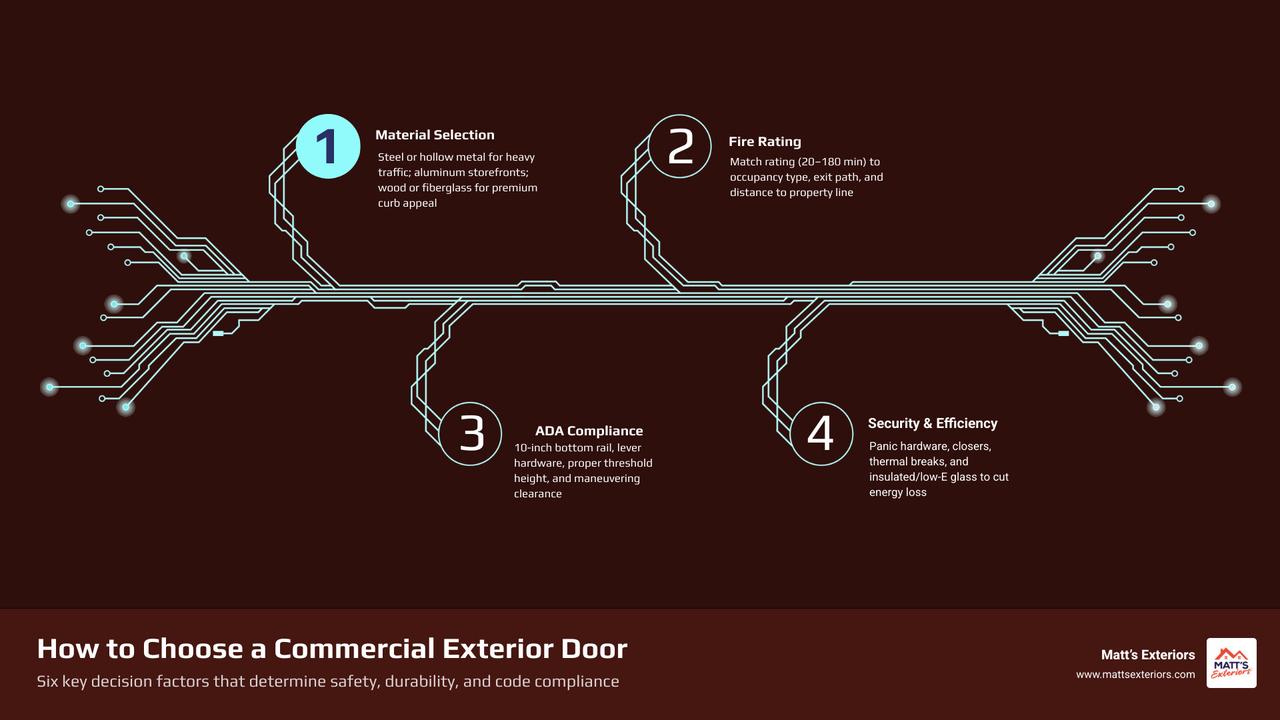
The first big choice is material. Different door types solve different problems, and the best fit depends on traffic level, security needs, weather exposure, and appearance.
Door Type Best For Main Strengths Trade-Offs Steel Service entrances, rear exits, utility areas Strong, secure, commonly fire-rated Can rust if finish is damaged Hollow metal Schools, healthcare, industrial, heavy-traffic entries Very durable, long life, excellent for rated openings More utilitarian appearance Aluminum Storefronts, offices, retail Corrosion resistant, clean look, works well with glass Usually less impact-resistant than hollow metal Glass/storefront Retail visibility, showrooms, modern entries Daylight, visibility, attractive frontage More glazing means higher cost and more planning Wood Premium offices, churches, upscale entries Warm appearance, high-end curb appeal More maintenance, less ideal for harsh exposure Fiberglass Select low-maintenance entry applications Resists dents and rot, can mimic wood Less common in heavy-duty commercial specs
In general, steel commercial doors account for most exterior commercial installations because they balance durability, security, and fire-rating flexibility well.
When people talk about heavy-duty commercial exterior doors, steel and hollow metal are usually what they mean.
Steel slab doors and hollow metal doors are especially common for:
Why they are so common:
Heavy-duty models are often available in 18-gauge steel, while hollow metal frames are commonly heavier gauge as well. That matters because commercial doors are not dealing with the occasional grocery trip. They are dealing with carts, deliveries, weather, slamming, and the occasional mysterious scuff mark that appears out of nowhere.
Hollow metal is especially useful where the opening is exposed to the elements or where code-rated assemblies are required. It is a practical choice when longevity matters more than decorative style.
Aluminum doors are a favorite for storefronts and customer-facing entrances. They offer:
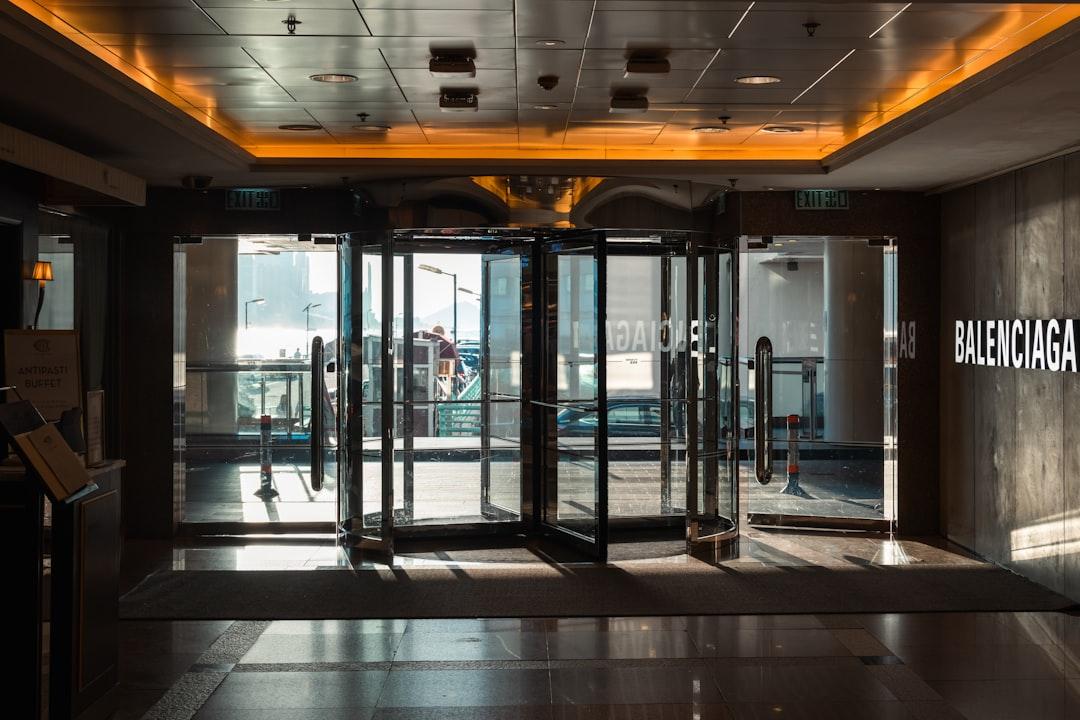
For retail and office environments across Metro Atlanta, aluminum storefront systems often make sense because they create visibility and natural light while still supporting commercial hardware. Better systems may include thermal breaks, which reduce heat transfer through the frame and improve energy performance.
If visibility is part of the business model, full-view glass doors or storefront assemblies can make a huge difference. They help customers see inside, support daylighting, and improve sightlines for safety and supervision.
For premium examples of commercial door systems and design options, see Marvin's Ultimate Commercial Door.
Wood and fiberglass are usually chosen when the entrance needs a more upscale or residential-style look without giving up commercial function.
These are often used for:
Wood brings warmth and character, but it usually requires more upkeep in Georgia's humidity and sun exposure. Fiberglass offers lower maintenance and can mimic wood grain while resisting rot and dents better.
Some specialty products use hybrid construction, such as an aluminum exterior with a wood interior. That combination can provide commercial-grade durability outside with a warmer appearance inside. If you want broader background on styles and materials, our guide to exterior doors is a helpful next read.
Fire ratings are one of the most important parts of selecting commercial exterior doors. Common ratings include:
Which rating you need depends on the opening location, building occupancy, wall rating, and the local authority having jurisdiction, often called the AHJ.
A fire-rated door is not just a thicker slab. It is part of a labeled assembly that may include:
Ratings matter at openings such as:
The key point is simple: the rating must match the code requirements for that opening. A 20-minute label is not a substitute for a 90-minute opening. And swapping hardware or glass later without checking listing requirements can create compliance problems.
In our experience, this is where many projects get tripped up. The opening may look straightforward, but the code requirement is tied to the wall assembly and use of the space, not just the look of the door.
Third-party certifications add real value. Common labels and testing marks come from organizations such as UL and Intertek. These labels help verify that the door and components were tested as a compliant assembly.
Important things to verify:
Not every field change is acceptable. Cutting in a new vision lite, changing hardware prep, or altering the frame on a fire-rated opening can void the label if it is not done according to the listing. That is why manufacturer guidance matters. For an example of a commercial product line with detailed options, see Ultimate Commercial Door | Marvin.
Door handing sounds small until the wrong door arrives and everyone starts staring at the opening in silence.
Handing affects:
Common handing options include:
Inswing vs. outswing is not just preference.
Inswing benefits:
Outswing benefits:
In commercial settings, handing should be coordinated with:
Installer error on handing is one of the most expensive avoidable mistakes on a door order. Before ordering, we always recommend confirming the swing from the secure side and reviewing the hardware set together, not separately.
Accessibility is a major part of commercial door selection. Depending on the opening and occupancy, you may need to account for:
A common detail on commercial glass doors is a 10-inch bottom rail, which can help meet accessibility needs for certain openings. Threshold design also matters. ADA-compliant sills are intended to reduce trip hazards and make passage easier for wheelchairs, walkers, carts, and deliveries.
Some commercial systems, including products shown on Marvin commercial doors, offer multiple ADA-compliant sill options. That is useful because not every entry condition is the same. A protected office vestibule and an exposed retail entrance may need different threshold strategies.
A good commercial entry is always doing three jobs at once:
Vision lites, sidelites, and transoms can improve both function and appearance.
These features can improve safety by reducing collisions and improving sightlines. They can also support surveillance and make storefronts feel more open and welcoming.
But glazing choices matter. Depending on the application, glass may be:
For security-sensitive openings, laminated glass can help improve resistance to forced entry compared to standard glazing. For customer-facing spaces, frosted or privacy glass may offer a nice middle ground between visibility and discretion. If that is relevant to your project, see our guide to a frosted glass exterior door.
Panic bars and exit devices also play a big role here. They are often required on certain occupancies and occupant loads, and they can improve emergency egress while still supporting controlled entry from the exterior side.
Other common security hardware includes:
In Georgia, heat, humidity, and driving rain can be rough on doors. Energy performance is not just about utility bills. It also affects comfort, condensation, and hardware life.
Helpful features include:
For conditioned spaces, these details can make a noticeable difference. Some commercial products offer Energy Star-qualified options or insulated glazing with Low-E coatings. Better weathersealing can also reduce air infiltration, which helps keep dust, moisture, and outside air where they belong: outside.
Commercial doors come in common stock sizes, but that does not mean every opening is standard.
Typical stocked sizes often include:
Of those, 36 x 80 is usually the most commonly stocked option.
Pricing varies a lot depending on material, rating, glazing, hardware, and whether you are buying just a slab or a full assembly.
Broadly speaking:
Retailer listings such as commercial doors at The Home Depot show how price changes with size, material, fire label, handing, and features like vision lites or weatherstripping.
The biggest cost drivers are usually:
If budget is a primary concern, our guide to cheap exterior doors with frame can help you understand where to save and where not to cut corners.
Customization is one of the biggest reasons commercial doors get delayed.
Common custom options include:
Made-to-order units are often worth it when the opening is unusual or the look matters, but they require more planning. In 2026, custom finishes, special glazing, and coordinated hardware still tend to extend lead times more than standard stock units.
For example, premium commercial systems may offer dozens of exterior color choices, interior finish options, and custom hardware configurations. Great for design flexibility. Less great for anyone hoping to solve the problem by Friday.
If you are comparing affordable options and upgrades, our cheap exterior doors guide is a useful planning resource.
A prehung unit includes the door already mounted in a frame. A slab-only door is just the leaf.
Prehung pros:
Prehung cons:
Slab-only pros:
Slab-only cons:
As a rule, if the frame is worn, rusted, twisted, or noncompliant, prehung is usually the smarter long-term move. If the frame is solid and the project is a straightforward replacement, slab-only may be reasonable.
The most commonly stocked size is usually 36 x 80. It is widely available and fits many standard commercial openings. That said, stock size does not guarantee fit.
Before ordering, verify:
If you are comparing standard dimensions, our cheap exterior doors 32X80 guide offers a useful reference point alongside other common sizes.
Yes. They matter more than many buyers expect.
A good warranty can cover issues like:
The exact terms vary, so always read the details. A long warranty on finish does not necessarily mean the same coverage for closers, locks, or weatherstripping.
Certifications matter because they support safety and compliance. UL and Intertek listings help verify that doors and components were tested to recognized standards. On rated openings especially, labels and certifications protect long-term value and reduce risk during inspections, renovations, or insurance reviews.
Customization can have a major impact.
Usually, the fastest options are:
Lead times tend to increase with:
Some manufacturers offer fast-track options on select products, but once you move into custom color matching or specialty glazing, scheduling gets tighter. For business owners, that means planning door orders early instead of treating them as the final line item. Doors have a way of becoming the schedule boss if you let them.
Choosing the right commercial exterior doors comes down to a simple checklist:
For businesses across Metro Atlanta, the best door is the one that performs well year after year, passes inspection, protects people, and does not become a maintenance headache six months later.
At Matt's Exteriors, we believe exterior upgrades should deliver long-term value, not short-term surprises. As a family-owned company with more than 12,000 projects completed since 2007, we focus on high-quality workmanship, trusted materials, and clear guidance from start to finish.
If you are exploring options for your next entry upgrade, start with our main exterior doors page for more helpful resources.