
Get Your Instant Quote Now!
Get Started
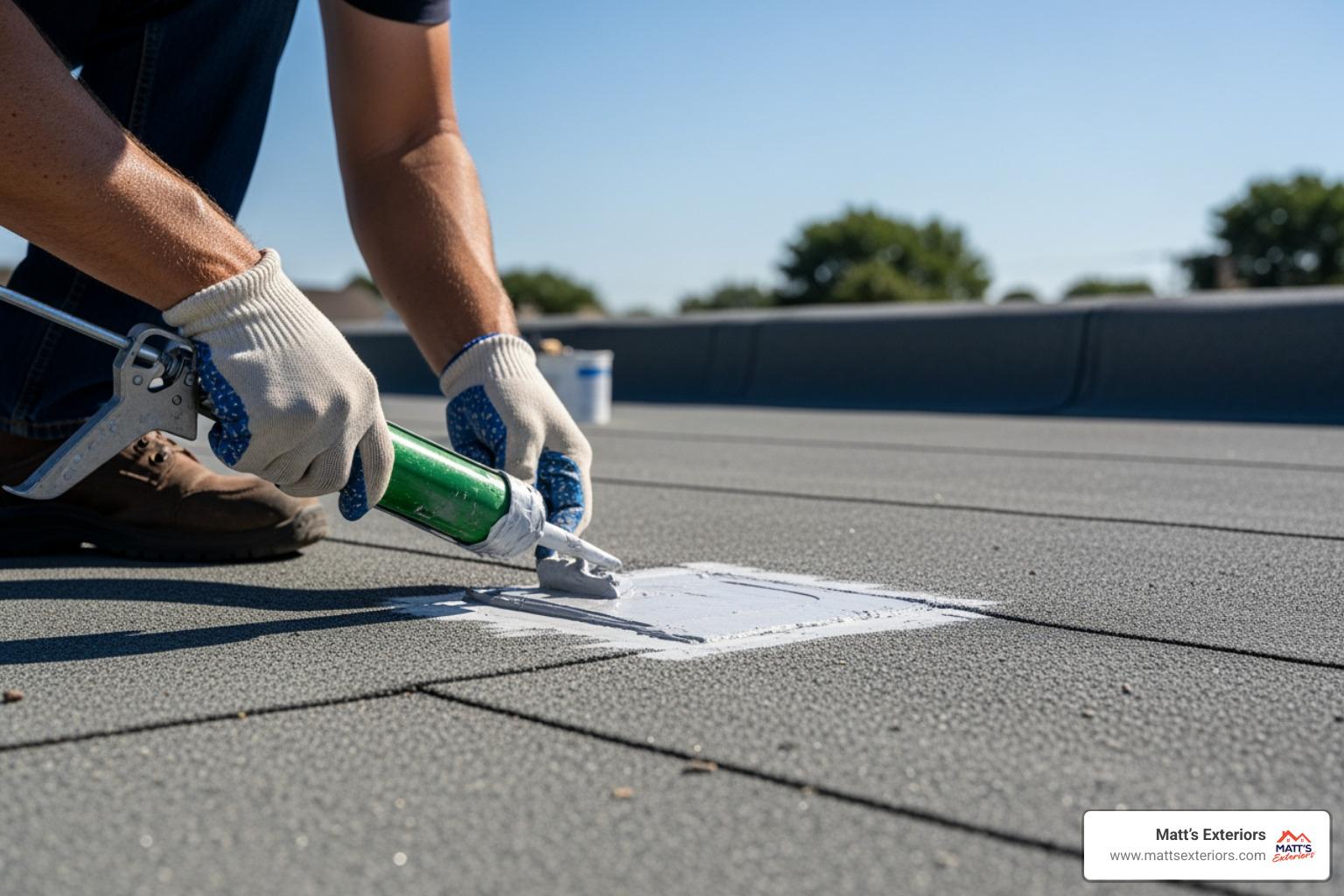
Flat roof repair is something most Metro Atlanta homeowners can tackle themselves — at least for small damage.
Here's a quick overview of the core steps:
For larger damage, torn seams, or a roof over 15 years old, professional repair or full replacement is likely the smarter call.
A flat roof can feel like a ticking clock. One heavy rainstorm and that small, ignored crack becomes a waterfall over your living room. The good news? Research shows that over 60% of flat roof failures start with minor issues — cracked seals, clogged drains — that are well within a homeowner's ability to fix.
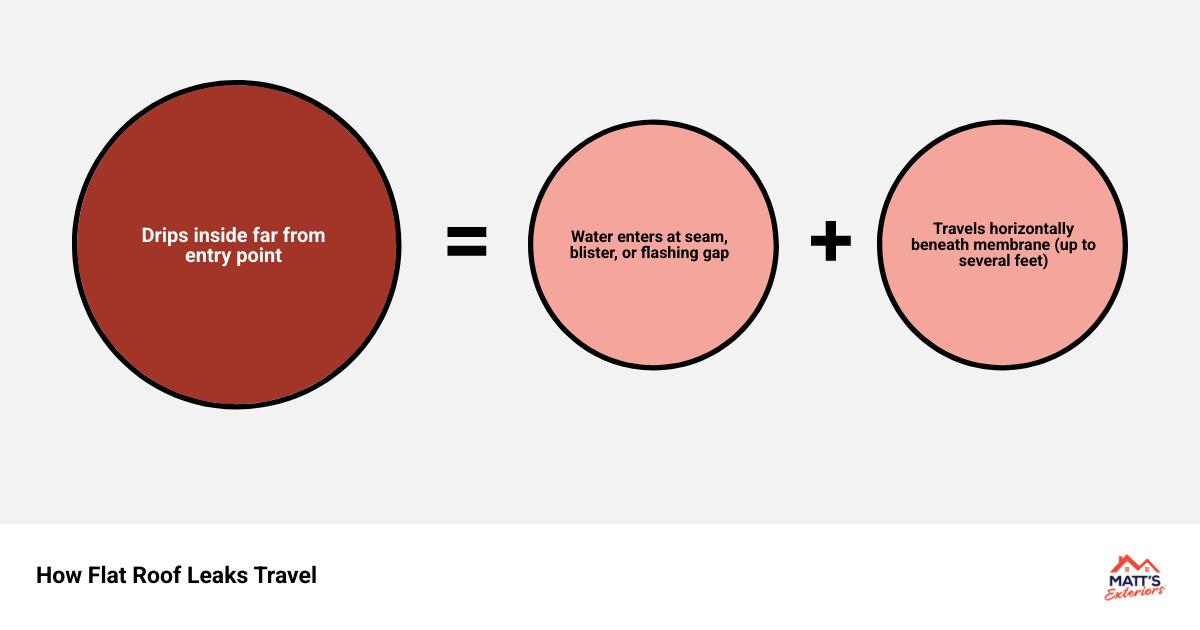
The tricky part isn't always the repair itself. It's finding the leak. Water on a flat roof doesn't drip straight down. It travels — sometimes several feet — before finding a way through. That's why so many homeowners patch the wrong spot and still end up with a bucket on the floor.
This guide walks you through everything: finding the real source, fixing the most common types of damage, and knowing when it's time to stop patching and call a pro.
Flat roofs, or "low-slope" roofs, are popular in many Metro Atlanta neighborhoods for their modern aesthetic and the potential for extra living space. However, because they don't shed water as quickly as a pitched roof, they are uniquely vulnerable to certain types of damage.
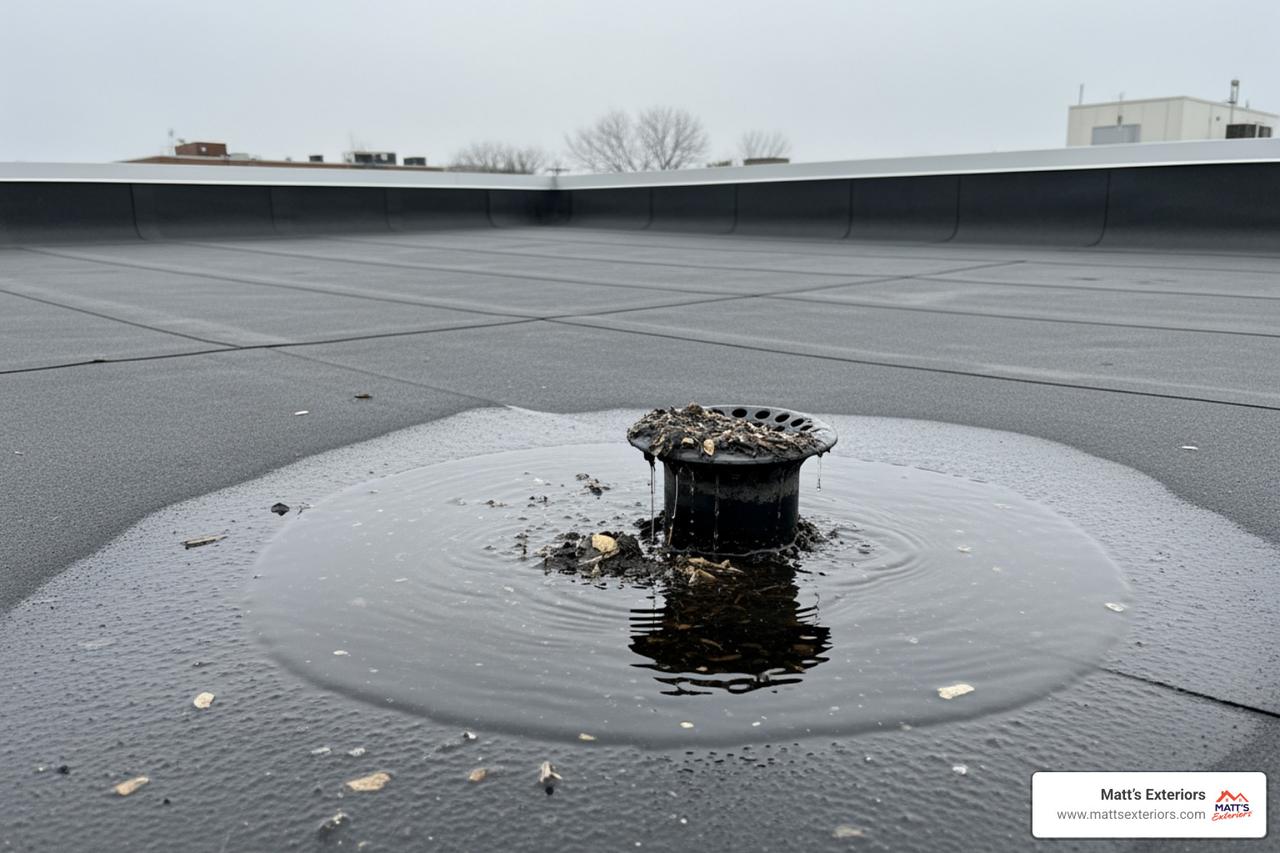
One of the most frequent issues we see is ponding water. If water stays on your roof for more than 48 hours after a rainstorm, it becomes a major threat. This standing water accelerates the breakdown of membranes and sealants. Over time, UV radiation from our hot Georgia sun causes "alligatoring"—a network of small cracks that look exactly like reptile skin. This is a clear sign that the bitumen has lost its oils and is becoming brittle.
Other culprits include:
Finding a leak on a flat roof is a bit like detective work. Because water travels horizontally along the roof deck or joists, the drip in your kitchen might be ten feet away from the actual hole in the membrane.
The best way to find it is to go inside and measure from the water stain to the nearest two perpendicular walls. Transfer those measurements to the roof. Once you're in the general area, look "upslope" (even flat roofs have a slight pitch). Check for seam separation, punctures from fallen branches, or popping screws.
According to The National Roofing Contractors Association (NRCA), proactive maintenance and early detection are the most effective ways to avoid massive repair bills. A quick visual inspection after a storm can save you thousands.
While a small crack is a great DIY project, some issues signal that the roof has reached its limit. If you see widespread blistering across more than 10% of the roof surface, or if you notice structural sagging (dips where water pools deeply), it’s time to put down the trowel.
Recurring leaks in the same spot usually mean the insulation underneath is saturated and needs to be replaced. For complex structures like offices or industrial units, the drainage systems are often too intricate for a simple patch-and-go approach.
Ready to get to work? Most minor flat roof repair jobs can be completed in 1–3 hours with about $50–$150 in materials.
Step 1: Surface PreparationYou cannot stick a patch to a dirty roof. Use a stiff broom to sweep away all dirt, leaves, and loose gravel. If the area is wet, use a towel or a leaf blower. The surface must be bone-dry for the adhesive to bond.
Step 2: The X-Cut Technique (for Blisters)If you are fixing a blister, use a utility knife to cut an "X" through the bubble. Peel back the flaps and let the interior dry completely. If there is trapped water, the repair will fail within weeks.
Step 3: Adhesive and MeshApply a 1/8-inch thick layer of roofing cement (also called "mastic") under the flaps and press them down. Then, apply a generous layer of cement over the top, extending at least 6 inches beyond the edges of the cut. Embed a piece of fiberglass mesh into the wet cement, then cover the mesh with a second layer of cement.
Step 4: Gravel SurfacingIf your roof has a gravel topping, sprinkle some of the old gravel back into the wet cement. This isn't just for looks; the gravel protects the patch from UV rays, which would otherwise bake the cement until it cracks.
Before you climb that ladder, make sure you have:
You might also consider whether your roof needs a full patch or just a sealant. Understanding the difference between rolled roofing and shingles is helpful here, as low-slope roofs require specialized materials that form a continuous, watertight seal.
Not all flat roofs are made of the same stuff. Treating EPDM like Modified Bitumen is a recipe for a leak.
Knowing what makes up your roof is the first step in choosing the right repair kit.
One of the hardest questions for any homeowner is: "Can I just patch this one more time?"
As a general rule, if the damage covers more than 10% of the roof, or if the roof is over 15 years old, patching is often just throwing good money after bad. Most flat roofs last between 10 and 20 years. If you’re at the 12–15 year milestone and leaks are popping up in multiple places, the membrane is likely reaching the end of its life.
Repairing a flat roof is actually more expensive per square foot than replacing it because of the labor involved in detail work and minimum service fees. However, if the roof is young and the damage was caused by a specific incident—like a fallen branch—a repair is perfectly appropriate. If you're unsure, it's worth looking into the details of a full roof replacement to see if the long-term warranty and energy savings outweigh the cost of constant patching.
The best flat roof repair is the one you never have to do.
Safety First:Working on a flat roof feels safer than a steep one, but the edges are still dangerous. Always work on a dry, sunny day. Wear non-slip shoes and, if you're working near the edge, use a safety harness. Ensure your ladder is stable and extends at least three feet above the roof edge.
Maintenance Checklist:
Most flat roofs last 10–20 years. EPDM and Modified Bitumen usually fall in the 12–15 year range, while high-quality PVC roofs can last up to 30 years if maintained properly. Regular maintenance can easily add 5 years to these estimates.
Not immediately, but it is a sign of a future leak. The "48-hour rule" is the industry standard: if water is still there two days after the rain stops, your drainage is insufficient. This standing water puts constant structural stress on the roof deck and eventually breaks down the membrane.
We generally recommend leaving TPO and PVC to the pros. These materials require heat-welding to create a truly watertight bond. While "peel-and-stick" products exist for these materials, they are often temporary fixes that don't hold up as well as a welded patch.
Taking care of your home means staying ahead of the weather. Whether you’re tackling a small patch yourself or realizing it’s time for a professional eye, addressing flat roof repair early is the key to protecting your investment.
At Matt’s Exteriors, we’ve spent years helping our neighbors across Metro Atlanta—from Alpharetta down to Peachtree City—keep their homes dry and secure. As a family-owned company with over 12,000 projects completed since 2007, we pride ourselves on high-quality workmanship and using only the most trusted materials.
If your DIY fix feels like it might be out of its league, or if you want the peace of mind that comes with a professional inspection, check out our full range of roofing services. We’re here to help you stop the drip for good!