
Get Your Instant Quote Now!
Get Started
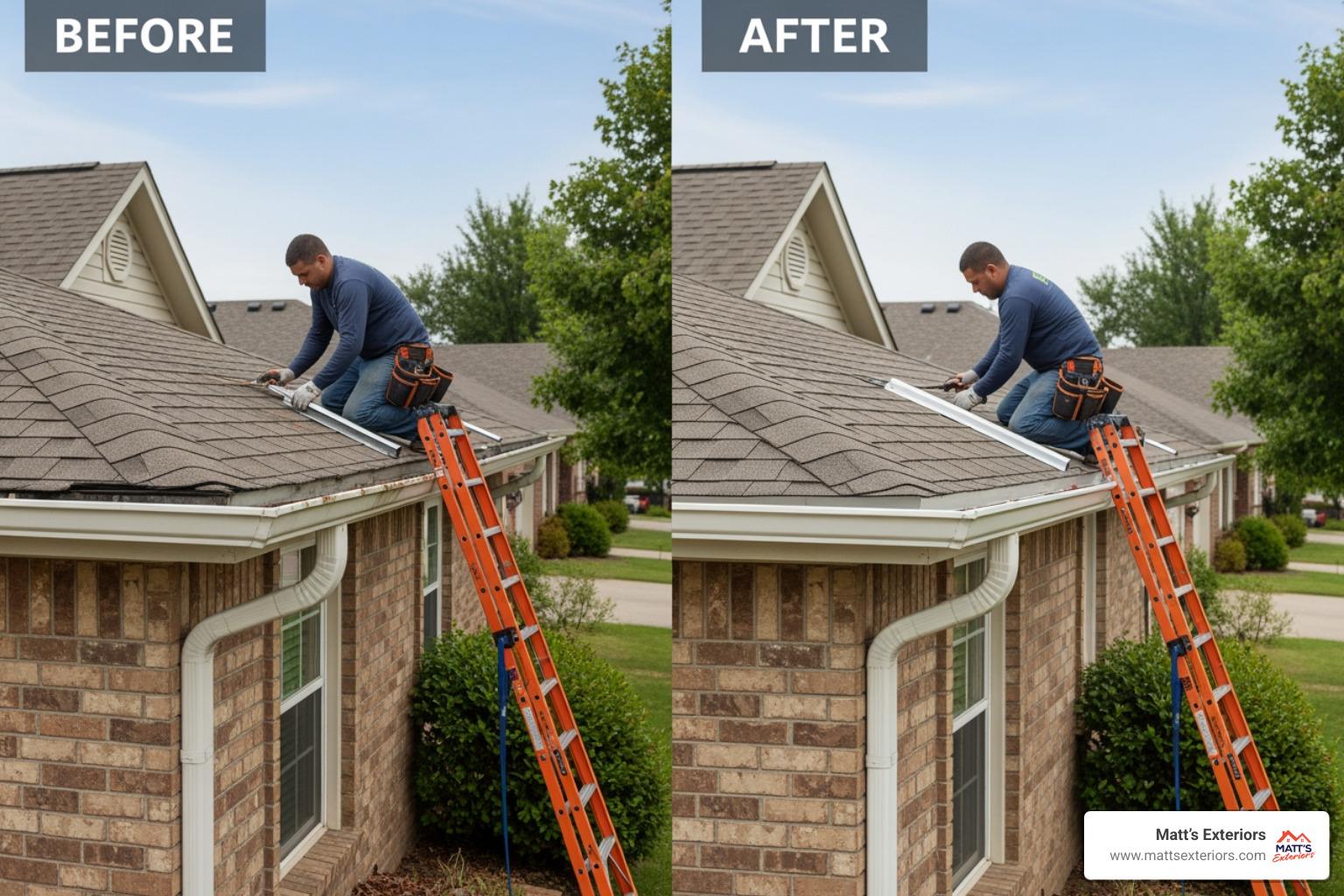
Gutter and downspout replacement is one of the most impactful home maintenance projects you can tackle — and one of the most overlooked.
Here's a quick overview of what you need to know:
When to replace vs. repair:
Typical costs:
Most common materials:
Think about this: just one inch of rainfall on an average-size roof generates roughly 1,900 gallons of water rushing off your eaves. Your gutters and downspouts are the only thing standing between that torrent and your foundation, siding, and landscaping.
When that system fails — or was never installed right in the first place — the consequences are serious. Foundation repairs alone can run $10,000 or more. And in Metro Atlanta, where heavy rain is a fact of life, a compromised gutter system isn't something you can afford to ignore.
This guide walks you through everything: how to spot the warning signs, how to choose the right materials, and how to replace your gutters and downspouts the right way — whether you're doing it yourself or hiring a pro.
It is easy to ignore your gutters when the sun is shining, but they are the unsung heroes of your home’s exterior. In Georgia, from Alpharetta down to Peachtree City, our homes face intense summer thunderstorms and occasional ice. These elements take a toll.
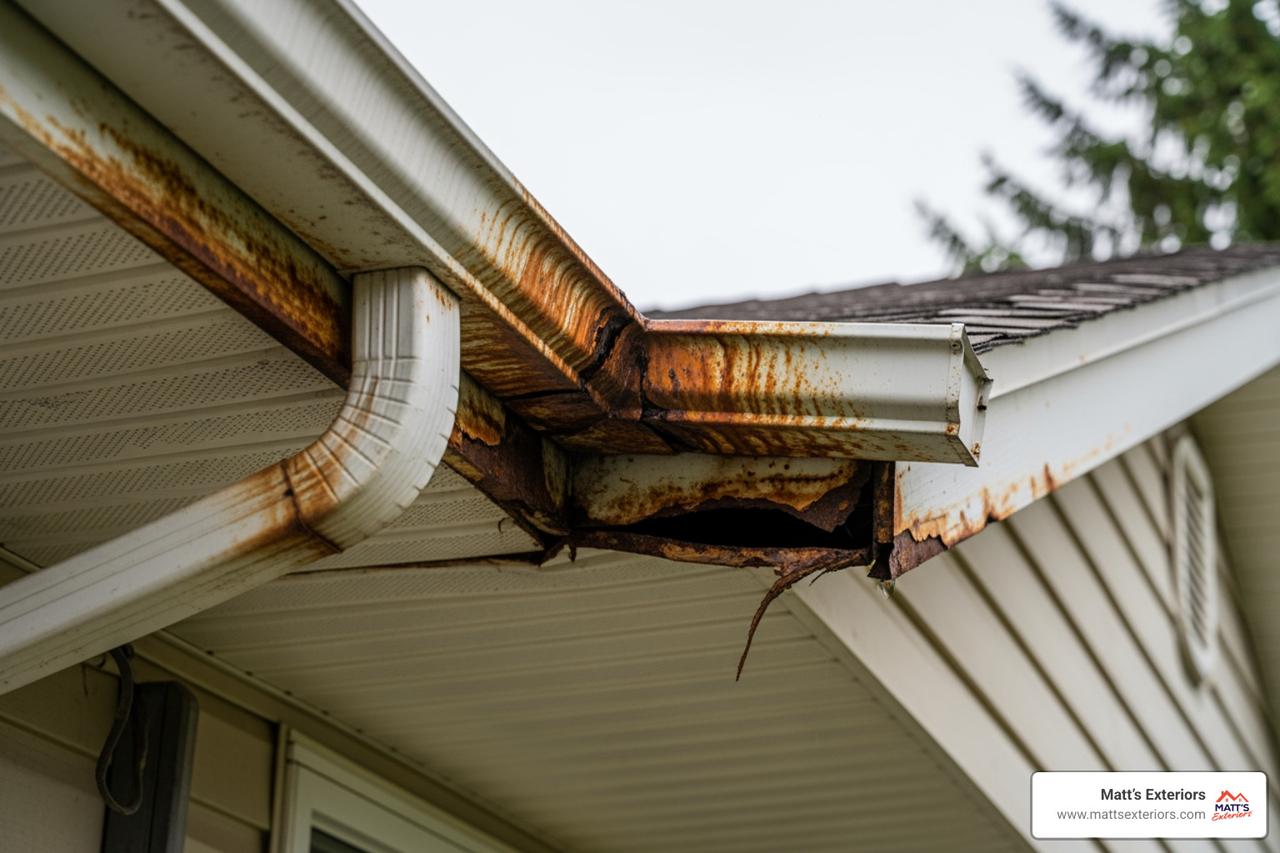
If you notice any of the following, it’s time to take a closer look:
For a deeper dive into how these systems fail, you can read more about how to identify gutter failure.
We often get asked: "Can I just patch it?" The answer depends on the extent of the damage.
When you weigh the cost of a new system ($800–$1,700 for an average home) against the $10,000+ cost of foundation repair, the choice becomes clear. Check out more info about gutter replacement to see which path fits your home.
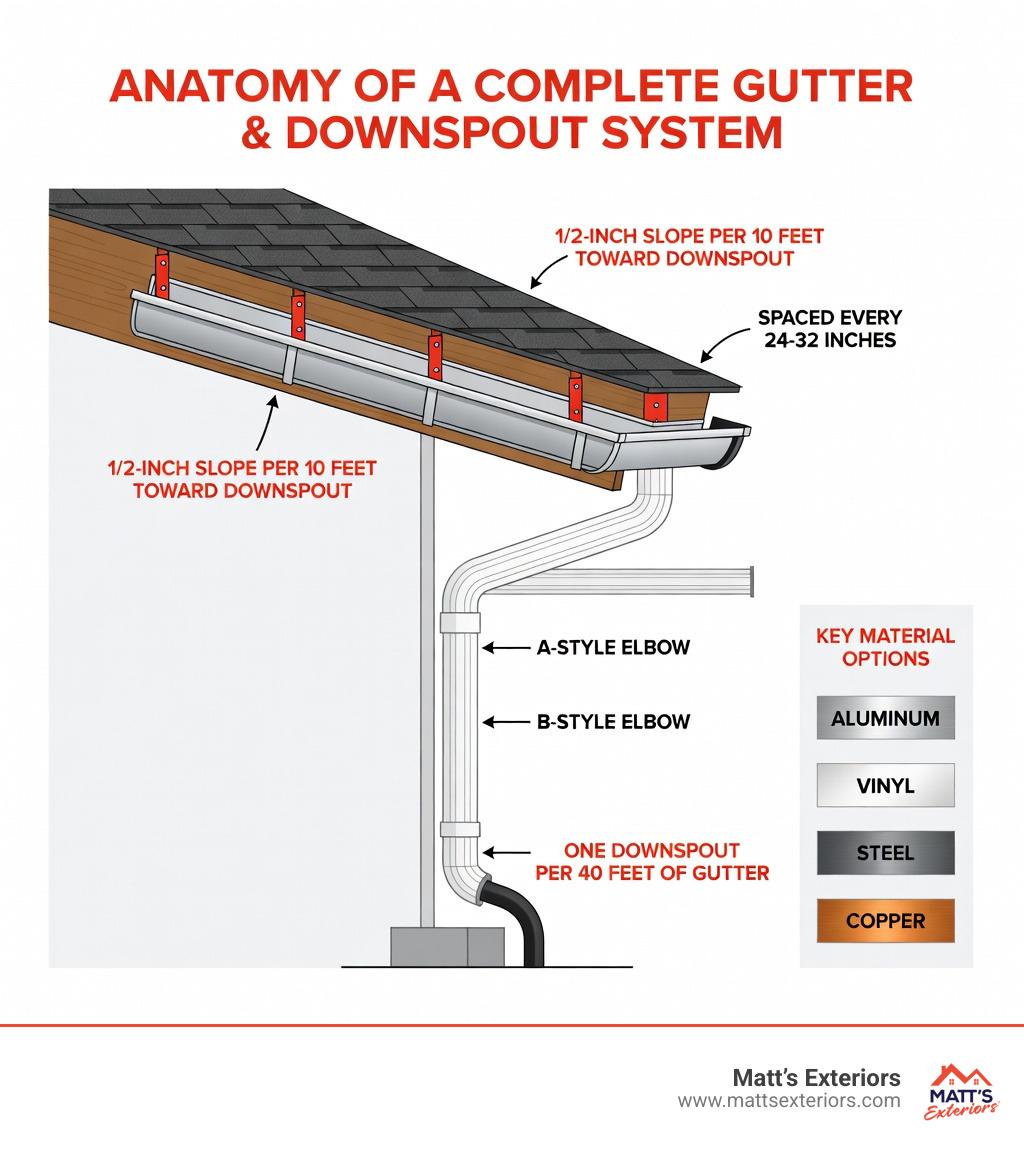
Not all gutters are created equal. The material you choose affects the price, the "look" of your home, and how long the system will last.
The shape also matters. K-style gutters are the most common in Metro Atlanta because they can handle more than twice the runoff of a half-round gutter of the same width. For more help deciding, see this guide to choosing gutter materials.
We also highly recommend looking into the benefits of seamless options. You can learn why seamless gutters matter to understand how eliminating joints prevents the most common cause of leaks.
In areas like Marietta or Sandy Springs, we get sudden, heavy downpours. A standard 5-inch gutter is often enough for smaller homes, but if you have a steep roof pitch or a large surface area, you should upgrade to 6-inch gutters.
Pairing these with larger 3x4-inch downspouts ensures that debris doesn't clog the system and that the 1,900-gallon "torrent" from your roof has somewhere to go quickly.
If you’re a handy homeowner in Cumming or Woodstock, you might consider a DIY approach. It’s an intermediate-level project that requires a Saturday and a steady hand on a ladder.
Your Tool Kit Should Include:
Before you head to the home center, you need a plan. Measure the total length of your eaves. Count how many corners (miters) you have and how many end caps you'll need.
Pro Tip: Note where your downspouts currently land. If water is pooling there, plan to move the new downspouts or add extensions. While you're looking at your exterior, it's also a great time to inspect your siding for water damage; check our siding services if you see rot or warping.
Safety first! Always have a spotter hold the ladder.
The secret to a functional system is the slope. Gutters shouldn't be perfectly level; they need to tilt toward the downspout.
If you find that your roof edge is also showing wear during this process, it might be time to look into a roof replacement to ensure the entire water-shedding system is sound.
Once your gutter and downspout replacement is complete, you want it to last. Maintenance is the difference between a 10-year system and a 30-year system.
A downspout that dumps water right at the base of your house is a job half-done. You need to move that water away.
For more tips on keeping your system running smoothly, check out this guide on how to extend gutter lifespan.
While a one-story ranch in Fayetteville might be a manageable DIY project, many homes in Metro Atlanta are more complex.
When to hire a pro:
At Matt’s Exteriors, we’ve completed over 12,000 projects since 2007. We provide custom-fabricated systems with precision miters and offer lifetime warranties that a DIY project simply can't match. Plus, we offer financing options to make the project fit your budget.
Seamless gutters are the gold standard for gutter and downspout replacement. Because they are manufactured on-site to the exact inch, they eliminate the seams where 99% of leaks occur. They look cleaner, last longer, and add significant curb appeal to your home.
Ready to see the difference? Contact Matt's Exteriors for a free consultation.
For a standard 2,000 sq ft home with about 180 linear feet of gutters, you can expect to pay between $800 and $1,700 for professional aluminum installation. DIY costs are lower, with 10-foot sections of gutter costing less than $8 and downspouts less than $13 at local home centers.
Aluminum gutters are highly durable and typically last 20 to 30 years with regular cleaning and maintenance. In the humid Georgia climate, they are preferable to wood or galvanized steel because they do not rust.
While 5-inch is standard, 6-inch gutters are becoming the preferred choice for Metro Atlanta homeowners. They hold significantly more water, which prevents overflowing during our heavy tropical-style downpours.
Your gutter system is your home’s first line of defense against the elements. A proper gutter and downspout replacement isn't just about curb appeal — it's about protecting your foundation, your basement, and your peace of mind.
Whether you choose the DIY route or want the precision of a professional seamless installation, don't wait for the next big storm to find out your system is failing. Invest in your home’s longevity today. For expert help from a family-owned team that knows Georgia homes, visit our gutter replacement page and let’s get your home protected.