
Get Your Instant Quote Now!
Get Started
Gutter repair and installation is one of the most important — and most overlooked — parts of protecting your home from water damage.
Here's a quick answer to help you decide:
Situation Recommended Action Small leaks, loose brackets, minor clogs Repair Sagging sections, widespread rust or cracks Replace Gutters older than 20+ years with repeated problems Replace Fascia board rot behind gutters Replace Single isolated joint or seam failure Repair
Not sure which camp you're in? You're not alone. Most Atlanta homeowners don't think about their gutters until something goes wrong — and by then, the damage has already started.
Here's why it matters: just one inch of rainfall on an average-size roof sends roughly 1,900 gallons of water rushing off your eaves. Without a working gutter system, that water has nowhere to go except straight down — pooling against your foundation, soaking into your siding, and quietly working its way into your basement.
The good news is that most gutter problems are fixable. Some just need a patch. Others need a full replacement. And knowing the difference can save you thousands of dollars.
This guide walks you through exactly how to tell the two apart.
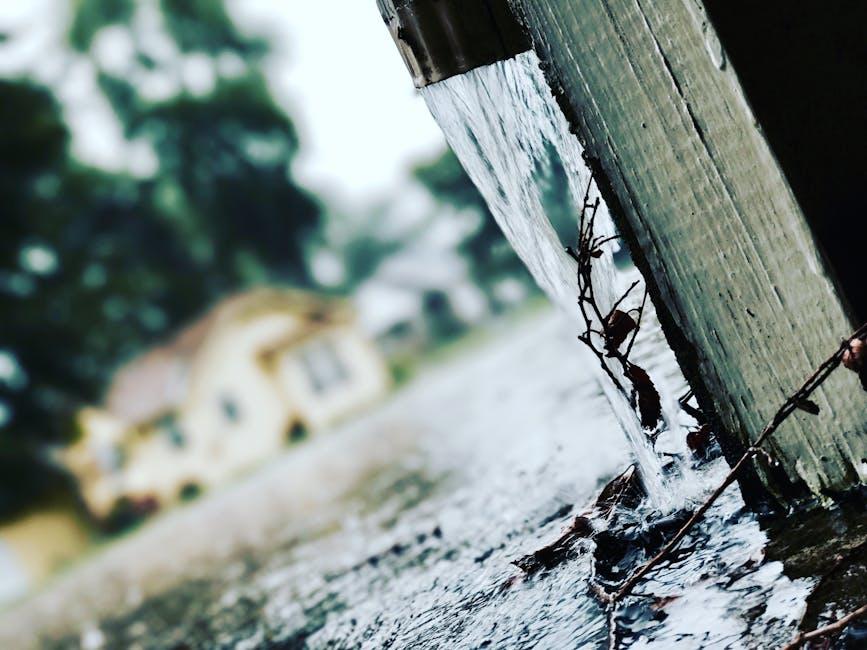
When it comes to your home's exterior, your gutters are the unsung heroes. They don't just sit there looking pretty (though a fresh set of copper or seamless aluminum gutters certainly can); they perform a vital chore. If you’ve ever stood outside during a Georgia thunderstorm, you’ve seen the "waterfall effect" that happens when gutters fail.
Identifying the signs of failure early can be the difference between a simple afternoon of gutter repair and installation of a few new brackets and a massive bill for foundation stabilization. According to research from Gutters: How to Choose, Install, and Clean Them, that 1,900-gallon torrent from a single inch of rain is no joke. If that water isn't channeled away, it creates puddles around your foundation that can lead to hydrostatic pressure, eventually cracking your basement walls.
Sometimes the signs are subtle. You might notice small rust spots on steel gutters or orange streaks on the ground. These indicate that the protective coating has worn away and the metal is beginning to oxidize. Other red flags include:
Before you assume you need a total overhaul, check the "gunk" factor. In Metro Atlanta—especially in heavily wooded areas like Marietta, Roswell, or Alpharetta—debris is the number one gutter killer. Pine needles are particularly notorious; they are small enough to slip through many guards and heavy enough to create "dams" that turn your gutters into elevated planters.
Regular maintenance is key to extending the life of your system. If you see birds nesting or grass growing out of the eaves, it’s time for a deep clean. We often tell our neighbors that keeping gutters clear is the best way to avoid unnecessary repair costs. You can learn more about how we handle these and other exterior services to keep your home in top shape.
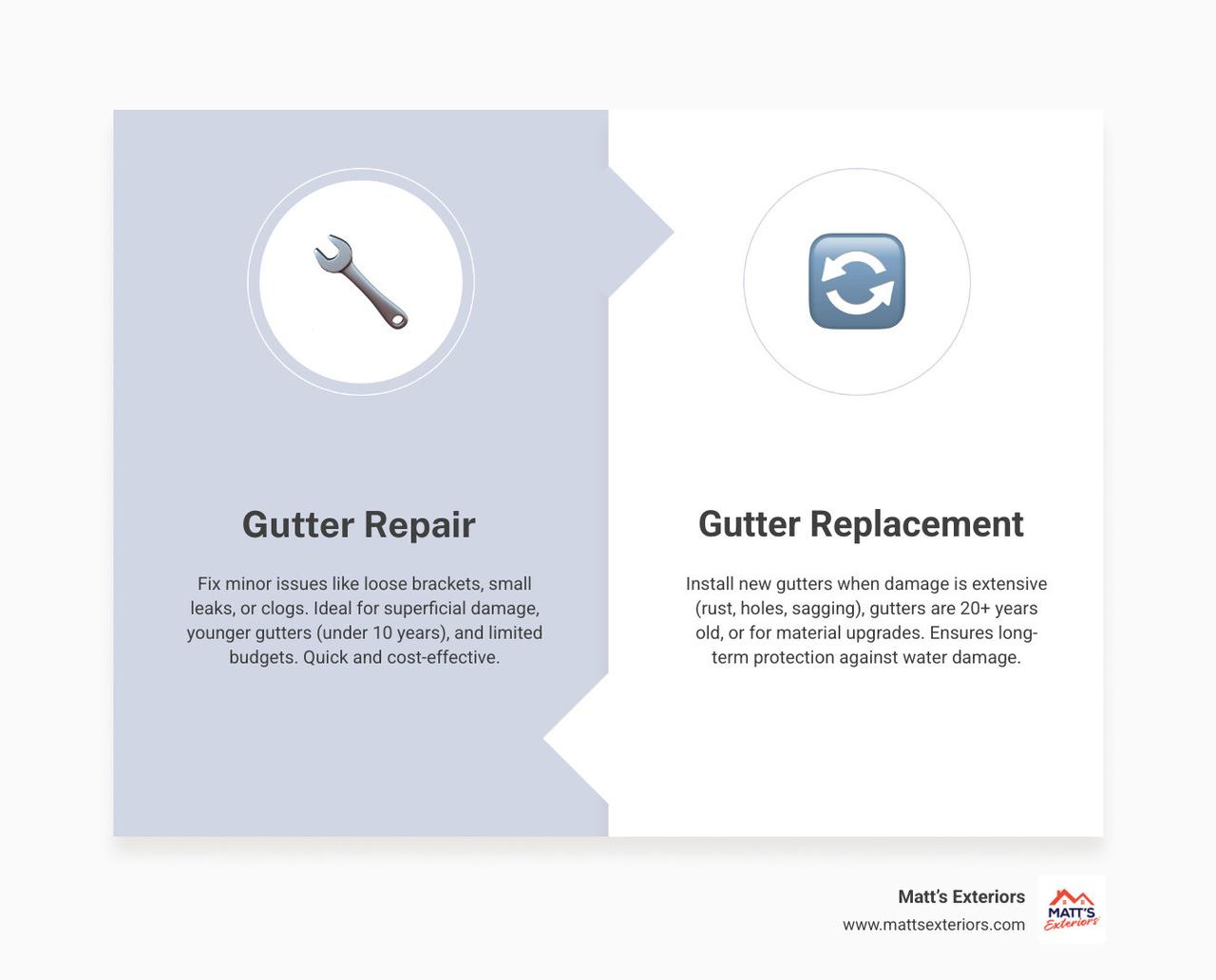
Deciding whether to patch up what you have or start fresh is a common dilemma. At Matt’s Exteriors, we believe in being honest with our customers. If a $50 tube of high-grade sealant can buy you another three years, we’ll tell you. But if you’re throwing good money after bad, we’ll explain why.
Many issues fall under the "weekend warrior" or simple professional fix category:
Replacement becomes the smarter financial move when the structural integrity of the system is gone. If you see extensive corrosion (holes you can stick a finger through) or if the gutters have pulled away so many times that the fascia board is rotted, a simple repair won't hold.
Furthermore, if your home still uses old-fashioned sectional gutters with seams every 10 feet, you might want to consider Gutter Replacement. Modern systems offer far better protection and curb appeal, especially when dealing with the heavy rainfall we see in Georgia.
If you've decided on a new gutter repair and installation project, the next step is picking your "flavor." Not all gutters are created equal, and the material you choose will dictate how often you're up on a ladder for the next 20 years.
Material Average Cost (per foot) Lifespan Pros Cons Vinyl $11.92 – $34.41 10-15 Years Cheap, DIY friendly Can crack in cold; fades Aluminum $13.17 – $34.52 20-30 Years Rust-proof, many colors Can dent easily Steel $16.78 – $37.17 15-20 Years Very strong Can rust over time Zinc $36.18 – $61.84 50+ Years No rust, beautiful patina Expensive Copper $29.85 – $51.52 50-100 Years Ultimate durability Highest cost
The shape, or "profile," of your gutter changes how much water it can hold.
If there is one "pro tip" we can give every homeowner, it’s this: go seamless. Standard gutters come in 10-foot sections that you "snap" together. Every one of those snaps is a potential leak waiting to happen.
Seamless gutters are custom-fabricated on-site using a special machine that rolls out a single piece of metal to the exact length of your roofline. No seams means no leaks. It also means a much cleaner, more professional look for your home. To understand the technical advantages, check out Why Seamless Gutters Matter: Expert Insights from Matt's Exteriors.
Installing gutters might look like just "hanging a pipe," but there is a surprising amount of physics involved. If the math is wrong, the water won't move, and you'll end up with a 40-foot-long mosquito breeding ground attached to your house.
When you get a quote for gutter repair and installation, several factors influence the price:
Many DIY attempts fail because of three specific errors:
In the Metro Atlanta area, we recommend cleaning your gutters at least twice a year—once in the late spring after the oak tassels and pollen have fallen, and again in the late fall once the leaves are down. However, if you live in a heavily wooded lot in Woodstock or Cumming, you might need to do it quarterly. The "cement-like" mixture of pine needles and pollen can clog a system in a single season.
Gutter guards are covers that sit over your gutters to keep debris out while letting water in. Are they worth it? Generally, yes—but they aren't "maintenance-free." They significantly reduce the frequency of cleanings, but you should still inspect them once a year to ensure small debris hasn't built up on top of the mesh. High-quality micro-mesh guards are usually the best choice for our local climate.
If your home is more than one story tall, or if you want seamless gutters, you should hire a professional. Seamless gutters require a specialized machine that most homeowners can't rent. Furthermore, working on a ladder at 20 or 30 feet is dangerous. Professionals have the insurance, safety equipment, and experience to ensure the pitch and sealing are perfect, which protects your home's warranty and foundation.
Your gutters are the first line of defense for your home's foundation. Whether you are in Alpharetta, Suwanee, or Newnan, the Georgia weather doesn't take it easy on your roofline. Taking the time to decide between gutter repair and installation of a new system today can prevent a massive headache tomorrow.
At Matt’s Exteriors, we’ve handled over 12,000 projects since 2007. As a family-owned business, we treat every home like it’s our own—whether we’re just tightening a few brackets or installing custom-fitted seamless aluminum gutters. We serve the entire Metro Atlanta area with high-quality workmanship and materials you can trust.
Don't wait for the next big storm to find out your gutters aren't up to the task. If you’re seeing sagging, leaks, or pools of water where they shouldn't be, reach out to us. We’re here to help you protect your investment.