
Get Your Instant Quote Now!
Get Started
When you sit down with a local commercial roofer to discuss a project in Metro Atlanta, the first thing you’ll notice is that "one size fits all" does not apply. Commercial buildings—from retail strips in Alpharetta to warehouses in McDonough—require specific solutions based on their slope, usage, and budget.
Understanding the components of a roof is the first step in making an informed investment. Unlike residential homes that primarily use shingles, commercial properties often utilize membrane systems designed for flat or low-slope surfaces.
Material Primary Benefits Typical Lifespan Cost Range (per sq. ft.) TPO Heat-reflective, energy-efficient, weldable seams 20–30 Years $5.00 – $9.00 EPDM Durable rubber, handles extreme cold/heat well 20–30+ Years $4.00 – $8.00 PVC Chemical/grease resistant, very strong seams 20–30 Years $6.00 – $10.00 BUR Multiple layers, high redundant protection 20–30 Years $4.00 – $8.00
TPO is currently the "cool kid" on the commercial block. It is a single-ply reflective membrane that is great for the Georgia heat. Because it is white, it reflects UV rays, helping to keep your cooling costs down during those sweltering July afternoons in Marietta.
Often called "rubber roofing," EPDM is a synthetic black membrane. It’s incredibly durable and flexible. While it doesn't reflect heat as well as TPO unless coated, its ability to withstand thermal shock and hail makes it a staple for many industrial buildings.
PVC is the go-to for restaurants or manufacturing plants because it resists chemicals, oils, and greases that might be exhausted onto the roof. Meanwhile, BUR (Built-Up Roofing) uses alternating layers of bitumen and reinforcing fabrics topped with gravel. It’s the "old faithful" of the industry, providing thick, multi-layer protection. For those wondering about rolled roofing vs shingles for low slopes, membranes like these are almost always the superior choice for commercial durability.
In Metro Atlanta, energy efficiency isn't just a buzzword; it’s a survival tactic for your bottom line. We often recommend "cool roofs"—systems using highly reflective surfaces or specialized coatings. These materials reduce the "urban heat island" effect and significantly lower HVAC strain.
By reflecting sunlight rather than absorbing it, your building stays cooler naturally. This limits thermal expansion and contraction, which is the leading cause of premature seam failure. Before we start any project, we often check weather planning via NWS to ensure the installation window is perfect for the specific adhesives and coatings being used.
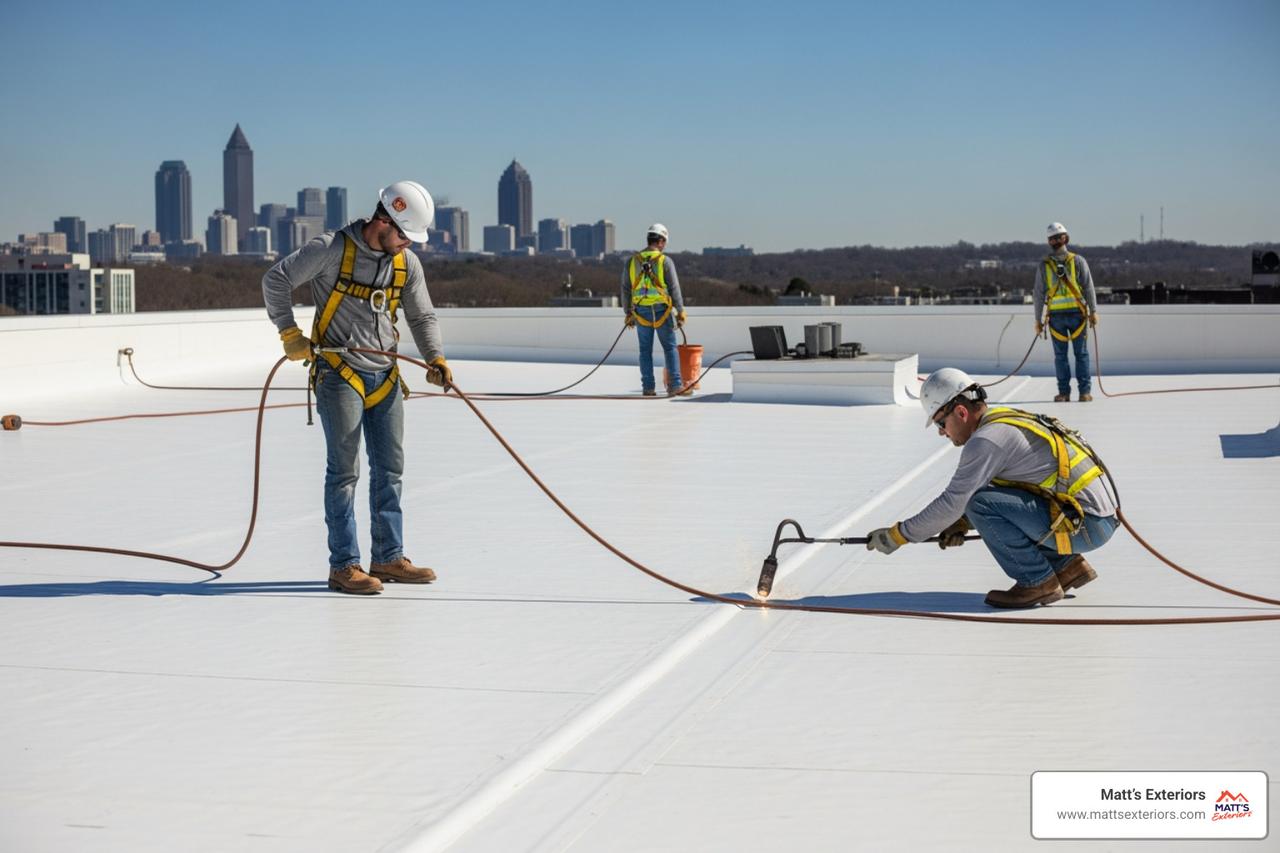
A commercial roof is a 20-to-30-year investment. The secret to that longevity lies in the seams. Systems like TPO and PVC use heat-welded seams, creating a physical bond that is actually stronger than the membrane itself. This is vital for preventing "ponding water" issues—where water sits on a flat surface for more than 48 hours—which can lead to leaks if the membrane isn't perfectly watertight.
Let’s talk numbers. We know that for business owners in Peachtree City or Woodstock, the budget is a primary concern. Commercial roofing is generally priced by the "square" (a 100-square-foot area), but for simplicity, most estimates are broken down by the square foot.
A standard roof replacement for a commercial building generally ranges between $5.00 and $12.00 per square foot. Here is how those costs are typically distributed:
Not every 10,000-square-foot roof costs the same. A wide-open warehouse roof in Suwanee is much cheaper per foot than a complex retail center in Buckhead with 20 different AC units to flash around.
Other factors include:
Price is important, but a cheap roof that leaks in two years is the most expensive roof you’ll ever buy. Always verify that your local commercial roofer is licensed and carries substantial liability insurance.
We also recommend checking their standing with organizations like the Roofers Local 30 Benefits Plans or similar trade groups. This ensures the crew working on your building is well-trained and treated fairly. A happy, professional crew does better work. Look for:
Why should you hire a local commercial roofer instead of a national "storm chaser" or a massive out-of-state corporation? It comes down to accountability and knowledge of the "neighborhood."
When you choose a local roofing company, you are hiring someone who has to see you at the grocery store or the local chamber of commerce meeting. Our reputation in communities like Duluth and Fayetteville is everything to us.
A roofer from out of state might not realize how intense Georgia's "pop-up" afternoon thunderstorms are. A local commercial roofer understands that our roofs need superior drainage systems to handle 3 inches of rain in 30 minutes. We know the specific wind zones in North Georgia and how to fasten a roof so it stays put during a tornado warning.
If a tree limb punctures your roof in Sandy Springs at 3:00 AM on a Tuesday, you don't want to call a 1-800 number and wait for a callback from a dispatch center in another time zone.
Local proximity allows for:
Navigating the bureaucracy of building permits in places like Atlanta or Roswell can be a nightmare if you don't do it every day. Your local commercial roofer already has relationships with local inspectors. We know the licensing and code resources (similar to the standards set by state departments) required to ensure your roof is 100% legal and up to OSHA safety standards.
You wouldn't buy a brand-new fleet of delivery trucks and never change the oil, right? Your roof is the same. Proactive maintenance is the difference between a roof that lasts 30 years and one that fails at 12.
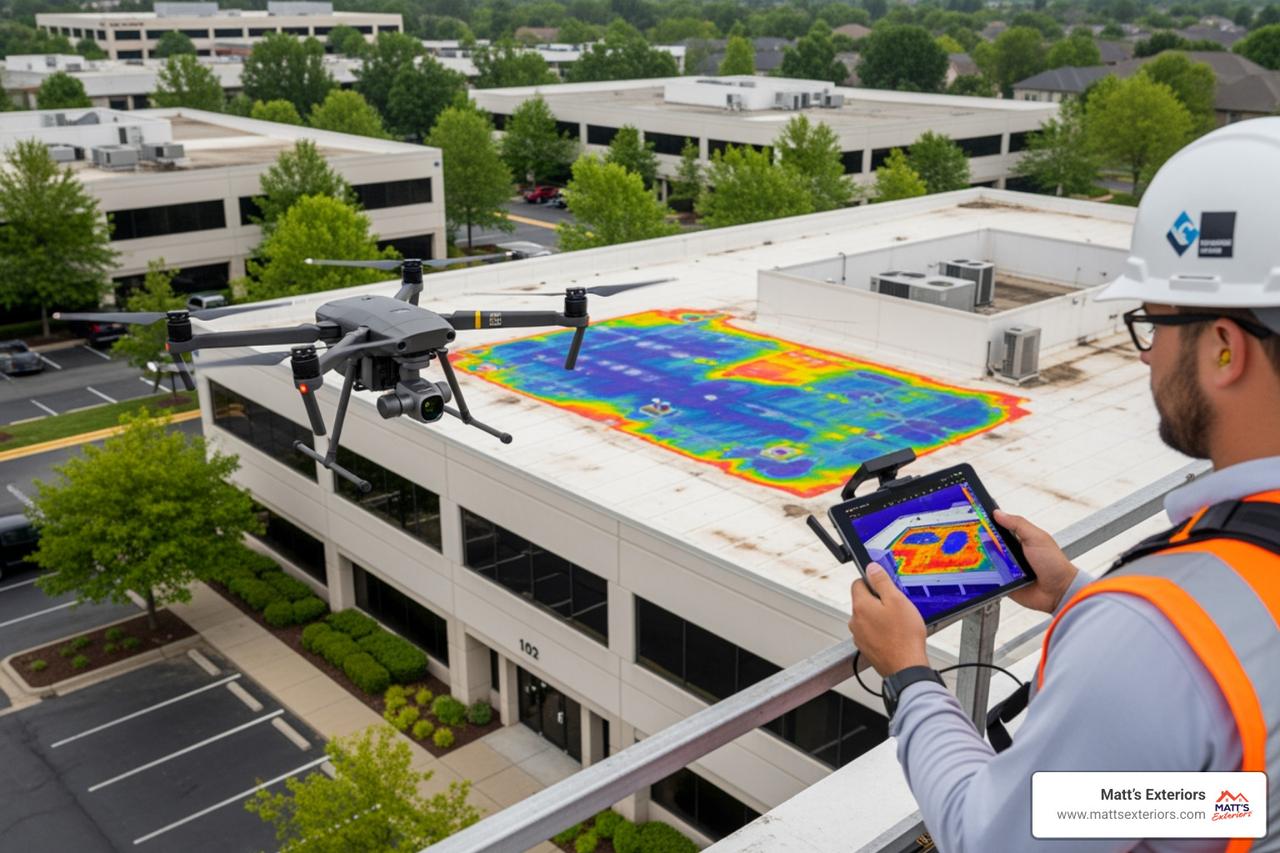
We recommend bi-annual inspections—once in the spring and once in the fall. During these visits, a technician should:
Don't wait for a puddle on your warehouse floor to call us. Watch for these "silent" killers:
By catching a $500 seam repair early, you avoid a $50,000 interior damage claim later. We help our clients with "Roof Asset Management." This involves creating a five-year capital forecast so you can budget for your next roof years in advance, rather than being hit with a surprise expense during a bad storm season.
If you've never managed a commercial roofing project, the process might seem daunting. Here is how we handle things at Matt’s Exteriors to ensure a smooth "Bill of Health" for your building.
In the Metro Atlanta area, pricing typically ranges from $5.00 to $12.00 per square foot. This varies based on whether you choose a budget-friendly EPDM rubber or a high-performance PVC system, as well as the amount of insulation required to meet local energy codes.
Minor repairs or a small retail shop might take 1–3 days. However, a full replacement on a 50,000-square-foot industrial facility can take several weeks. We always provide a clear timeline before we start and work to minimize the "footprint" of our crews on your daily operations.
The "Big Three" are active leaks (water inside), ponding water (water that stays on the roof for more than 48 hours after rain), and visible membrane damage like punctures or blistering. If you see any of these, call a local commercial roofer immediately.
At Matt’s Exteriors, we aren't just contractors; we are your neighbors. As a family-owned business that has completed over 12,000 projects since 2007, we understand the unique challenges of maintaining a commercial property in Metro Atlanta. From the busy streets of Johns Creek to the growing industrial hubs in Newnan, we’ve seen it all.
Your roof is a massive asset. Don't leave its care to someone who doesn't know the local climate or the local codes. Whether you need a simple repair, a preventative maintenance plan, or a full system overhaul, we are here to provide high-quality workmanship and exceptional customer care.
Ready to protect your investment for the next 30 years? Schedule your professional roof replacement with us today and let’s make sure your building's "best friend" is on the job.