
Get Your Instant Quote Now!
Get Started
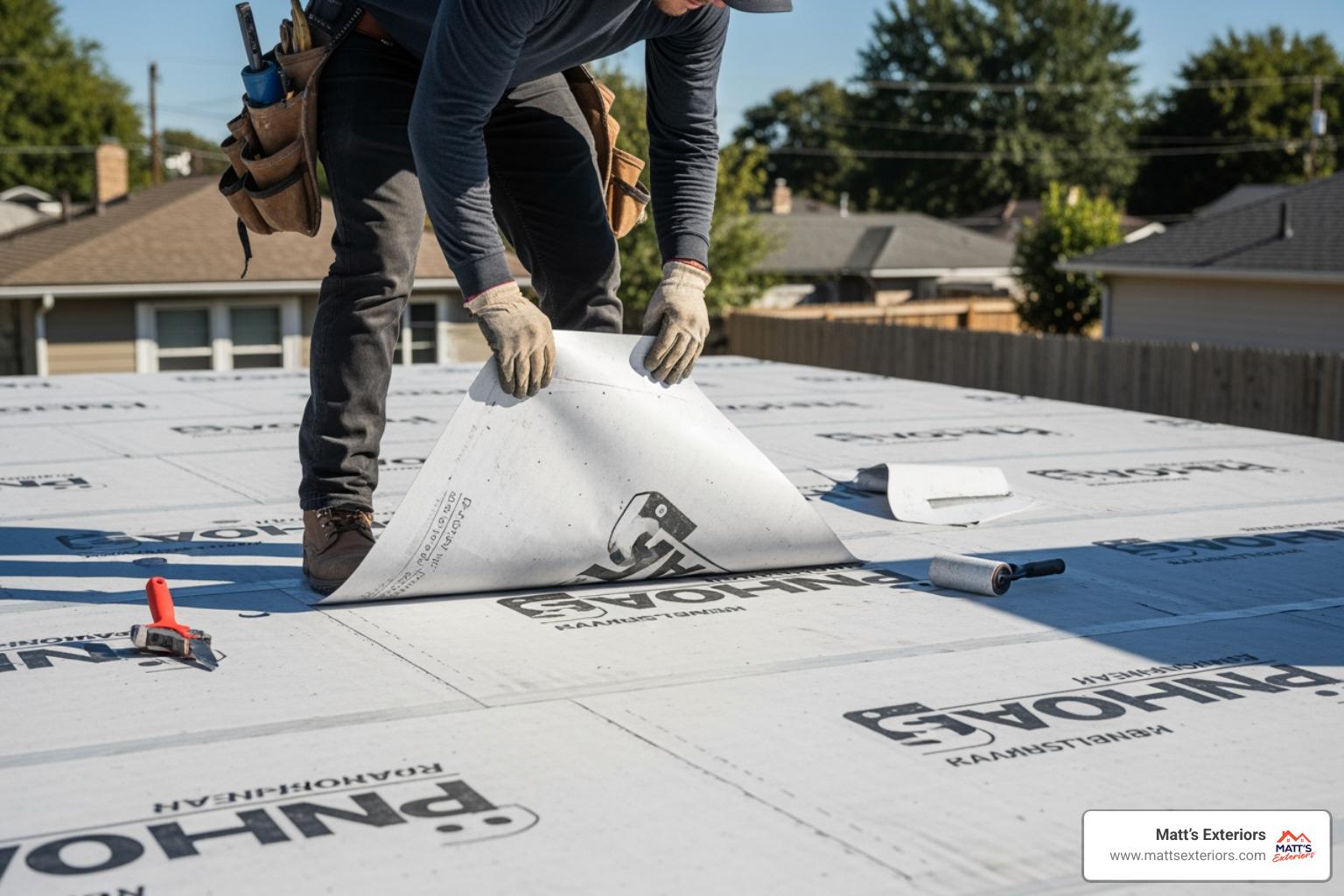
Peel and stick roofing is a self-adhering roofing membrane made from modified bitumen with a rubberized asphalt adhesive that bonds directly to your roof deck without torches, hot asphalt, or messy solvents. Simply peel off the protective backing and press it into place.
Quick Overview:
Feature Details What it is Self-adhesive membrane with rubberized asphalt backing Main materials Modified bitumen, polyethylene, fiberglass reinforcement Best for Low-slope roofs, flat surfaces, valleys, eaves, penetrations Lifespan 15-30 years with proper installation and maintenance Temperature range Standard: up to 180°F; High-temp versions: up to 260°F Key benefit Creates watertight seal that self-heals around nails
For Metro Atlanta homeowners, peel and stick roofing represents a significant upgrade from traditional felt underlayment. The technology uses polymer-modified asphalt that seals around fasteners and creates a continuous waterproof barrier—critical protection during our region's heavy rainstorms and occasional severe weather.
Unlike conventional roofing materials that require open flames or hot asphalt application, self-adhering membranes install cleanly and efficiently. The rubberized asphalt adhesive bonds immediately to properly prepared surfaces, eliminating the safety risks and complexity of torch-applied systems.
The real value? These membranes work as both underlayment beneath your primary roofing material and as standalone systems for low-slope applications. Some products reflect up to 45° more heat than standard roofing surfaces, potentially reducing your cooling costs during Atlanta's hot summers.
This guide walks you through everything you need to know about peel and stick roofing—from the science behind the materials to installation best practices, costs, and whether it's the right choice for your home.
At its core, peel and stick roofing is an advanced evolution of the traditional roofing system. Think of it as a heavy-duty, industrial-strength sticker designed to protect your home from the elements. While traditional felt underlayment acts as a temporary barrier, self-adhering membranes (often called SAMs) are engineered to bond at the molecular level with the roof deck.
How does it work? These membranes utilize modified bitumen—asphalt that has been chemically altered with polymers (usually SBS, or Styrene-Butadiene-Styrene) to give it rubber-like qualities. This "rubberized asphalt" is what allows the material to remain flexible in the winter and stable in the summer. When you peel back the release liner, the adhesive side is exposed. Once pressed onto a clean substrate, it creates a bond so tight that water cannot migrate underneath it, even if the primary roofing material (like shingles) is damaged.
One of the most impressive features we see in the field is its self-healing property. When a roofing nail or staple passes through the membrane, the rubberized asphalt "squeezes" around the shank of the fastener, creating a gasket-like seal. This is a massive improvement over traditional felt, which often tears or leaves gaps around nails.
To better understand how this fits into your overall structure, you can explore our guide to the components of a roof.
The performance of peel and stick roofing isn't just about the "sticky" part; it's about the layers of reinforcement inside. High-quality membranes are typically reinforced with a fiberglass or polyester mat.
For those who love the technical details, you can view the technical data on SBS membranes to see exactly how these materials are rated for fire resistance and tensile strength.
We often recommend peel and stick roofing for specific high-risk areas of a roof. Because it provides a "sealed roof deck" effect, it is the gold standard for:
Whether you are looking for a full system or targeted protection, our roofing services can help you determine the best placement for these materials.
Why are so many homeowners in Marietta, Alpharetta, and McDonough switching to this technology? The benefits go far beyond just keeping the water out.
When comparing your options, it's helpful to look at how different materials perform on different slopes. Check out our comparison of rolled roofing vs shingles to see which fits your home's architecture.
In Metro Atlanta, we deal with a unique climate—swinging from freezing winter nights to humid, 100-degree summer afternoons. This "thermal cycling" can wreak havoc on inferior materials.
Peel and stick roofing is sensitive to temperature during installation. Most standard products require an outdoor temperature of at least 50°F to bond properly. If it’s too cold, the adhesive won’t "wet out" and stick. Conversely, on a scorching day, the material can become very tacky and difficult to reposition.
For roofs that will be under metal panels or in extremely sun-exposed areas, we use High-Temperature (HT) versions. These are rated to withstand temperatures up to 260°F without the adhesive softening or "bleeding" out from under the roof. This is a critical consideration for homeowners in sun-drenched areas like Peachtree City or Fayetteville.
While the "peel and stick" name makes it sound easy, the secret to a 30-year roof is all in the preparation. You can't just slap this down over a dirty deck and expect it to work.
The substrate (usually plywood or OSB) must be bone-dry, clean, and smooth. Any dust, sawdust, or old roofing bits will prevent the adhesive from bonding. We often use a leaf blower or a stiff broom to ensure the deck is spotless.
In many cases, especially with older wood or in cooler weather, a specialized asphalt primer is required. We typically apply this at a rate of roughly 1/2 gallon per 100 square feet. This "primes the pump" for the adhesive, ensuring a permanent bond.
You don't need a torch, but you do need the right gear:
For a deep dive into the technical requirements, you can review the detailed installation instructions used by pros.
The seams are where most roofs fail, so we pay extra attention here. Best practices dictate a 3 to 6-inch overlap on all side laps and end laps.
We often use split-release sheets. This allows us to position the roll perfectly, peel back half the liner to secure it, and then peel the second half. This prevents the membrane from sticking to itself or getting crooked—a mistake that is very hard to fix once that adhesive touches the wood!
Common Installation Mistakes to Avoid:
Investing in peel and stick roofing is generally more expensive upfront than traditional felt or basic synthetic underlayment. However, the long-term value is hard to beat.
We recommend bi-annual inspections (spring and fall). Check for:
Most reputable manufacturers offer significant protection for these systems. For example, you can find up to a 20-year limited warranty on many products. You can read more in these warranty information and technical guides.
While it's "cleaner" than hot tar, we usually advise against DIY for full-roof applications. The adhesive is extremely unforgiving—once it touches the surface, it’s stuck. If you get a wrinkle or a misalignment, you often have to tear up the wood deck to fix it. Plus, to qualify for a manufacturer's warranty, professional installation is usually required.
No. Peel and stick roofing requires a smooth, clean substrate like plywood or OSB to bond correctly. Installing it over shingles would leave air gaps and prevent a watertight seal. If you're doing a re-roof, the old materials must be stripped down to the deck.
Most high-end self-adhering membranes meet or exceed ASTM D1970 standards (the standard for self-adhering polymer-modified bituminous sheet materials). They are also approved under the Florida Building Code and Miami-Dade requirements, which are the strictest in the country for wind and rain resistance.
To stay updated on the latest roofing trends and home maintenance tips, read our latest blog posts.
At Matt’s Exteriors, we’ve seen how peel and stick roofing has revolutionized home protection in Metro Atlanta. Whether you’re in Smyrna, Woodstock, or Peachtree City, the peace of mind that comes from a self-healing, watertight barrier is invaluable. It’s a modern solution that combines convenience with high-tier performance.
With over 12,000 projects completed since 2007, our family-owned team knows exactly which materials will stand up to the Georgia sun and our sudden afternoon downpours. Don't leave your home's safety to chance—invest in a system that sticks.
Ready to upgrade your home’s defense? Contact us for a professional consultation and see why we are the trusted roofing experts for the entire Metro Atlanta area.