
Get Your Instant Quote Now!
Get Started
A professional chase top install is one of the most important — and most overlooked — exterior upgrades a homeowner can make. If your home has a prefabricated chimney, a small metal cover sitting at the very top is the only thing standing between your home's interior and the rain, snow, debris, and pests that want in.
Here's a quick summary of what you need to know:
The problem is that most original chase tops are made from cheap galvanized steel. Over time, rain, ice, pine straw, and other debris create an acidic mix that eats right through the metal. Once rust sets in on the outside, the inside is usually already damaged — and water is already finding its way in.
By the time you notice rust stains on your siding or hear dripping inside the chimney, the damage has often already begun.
This guide covers everything Metro Atlanta homeowners need to know — from spotting a failing cover to choosing the right material to understanding exactly what a professional installation involves.
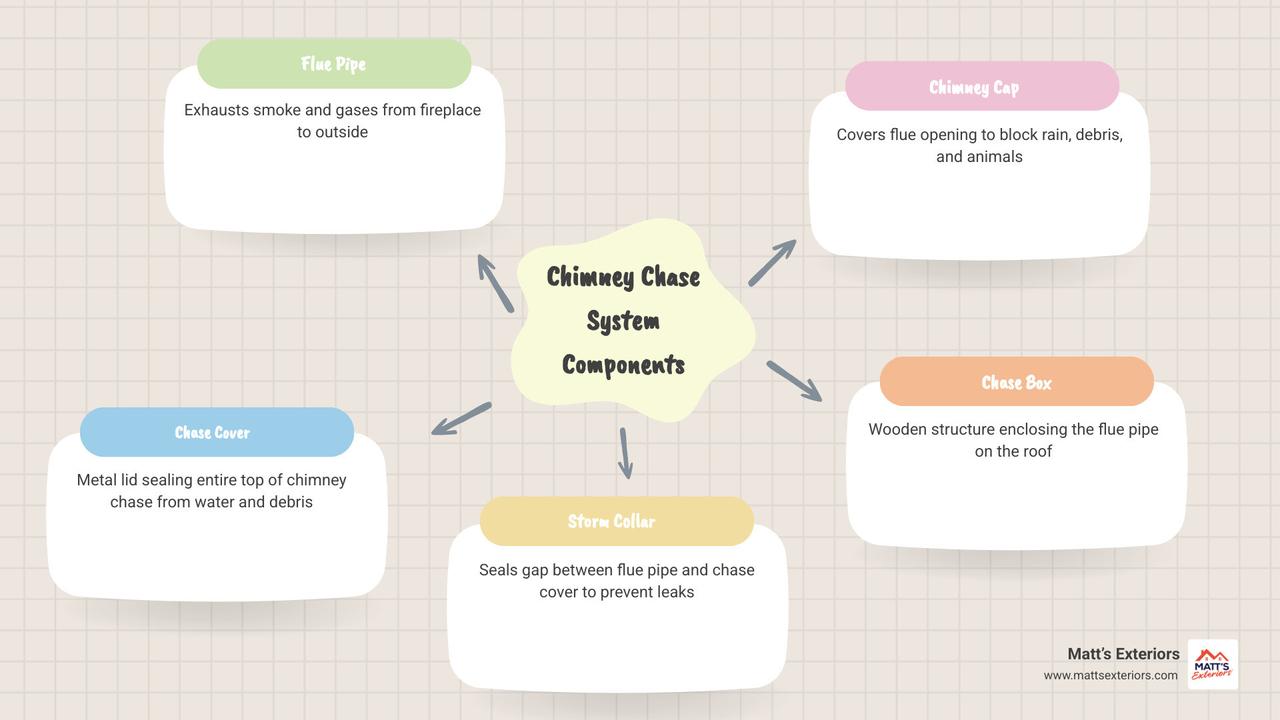
When we talk about a chimney chase top, we aren't talking about the little hat that sits on top of the pipe. That is a chimney cap. The chase top (or chase cover) is the large, flat metal "lid" that covers the entire top of your chimney structure. Think of it like an upside-down baking pan that sits over the wooden or sided box (the chase) that houses your fireplace's flue pipe.
Its primary job is simple: keep water out. In the humid, often rainy climate of Metro Atlanta—from the suburbs of Marietta to the neighborhoods of Peachtree City—water is the number one enemy of your home's structure.
The chase top acts as a "rain pan." It is designed with a slight pitch or cross-break (a "kink" in the metal) to ensure water runs off the sides rather than pooling in the middle. If water pools, it eventually finds a way through.
While the chase top protects the structure, it works in tandem with Chimney Caps. The cap covers the actual opening of the flue pipe to prevent rain from falling directly into your fireplace and to keep birds and squirrels from moving in.
If you have a traditional brick chimney, you likely have a concrete masonry crown. However, prefabricated chimneys (the ones with siding or stone veneer) rely entirely on this metal chase cover. Unlike concrete, which can crack over time, a metal cover is designed to be a single, seamless barrier—provided it is a professional chase top install using the right materials.
Understanding how this component fits into your overall roofing system is vital. As we discuss in our What Makes Up Your Roof: A Guide to the Components of a Roof, every penetration in your roofline is a potential leak point. The chimney is the largest of these penetrations.
Key Functions of a Chase Top:
Most homes in areas like Alpharetta, Cumming, and Suwanee were built with galvanized steel chase tops. Builders use galvanized steel because it’s cheap and looks fine for the first few years. But galvanized steel is just regular steel with a thin coating of zinc. Once that zinc wears off, the steel begins to rust.
In Georgia, we have plenty of trees. Pine straw and leaves often land on top of the chimney. When these mix with rainwater, they create a mildly acidic mixture. This "acidic soup" sits on the flat surface of a cheap chase top and eats through the galvanized coating. Eventually, the metal begins to "pit," creating tiny holes that allow water to seep into the wooden chase.
Ignoring a rusty chase top is a gamble where the house always loses. Research shows that repair costs from a failing chase cover typically range from $1,500 to $10,000. Why so high? Because the water doesn't just stay in the chimney. It travels down the framing, rots the wood, ruins your insulation, and creates a breeding ground for black mold inside your walls.
By the time you see a water stain on your ceiling in the living room, the chimney's internal structure might already be compromised. In severe cases, we have seen chimneys that require a full teardown because the wooden "studs" inside the chase have rotted away to nothing.
For those curious about the technical specifications of how these structures are framed, you can review the Minimum Chase Requirements for Standard Wall Installation to see just how much space needs to be protected.
When we perform a professional chase top install, the material choice is the most significant factor in how long the repair will last. You don't want to be back on the roof in five years doing this again.
Material Lifespan Rust Resistance Best For Galvanized Steel 5–10 Years Low Temporary fixes / Low budget Stainless Steel 20+ Years High Most homeowners (Best Value) Copper 50+ Years Excellent Luxury homes / Historic aesthetics Aluminum 15–20 Years Medium Coastal areas (but prone to wind damage)
For 95% of our clients in Metro Atlanta, stainless steel is the clear winner. Specifically, 22-gauge 304 stainless steel is the industry standard for high-quality chimney work. It is thick enough to resist warping and strong enough to handle the high winds we sometimes see during Georgia’s summer storms.
Unlike galvanized steel, stainless steel is rust-resistant all the way through. It doesn't rely on a thin coating. If it gets scratched by a falling branch, it still won't rust. This is why we often refer to it as a "lifetime" solution.
If you live in a high-end estate in Buckhead or Milton, you might consider copper. Copper is the "Rolls Royce" of chase tops. It is naturally antimicrobial, never rusts, and over time, it develops a beautiful green patina that adds significant curb appeal. While it is more expensive upfront, its lifespan often exceeds 50 years.
A chase top is not an "off-the-shelf" product. Every chimney is slightly different. To ensure a watertight fit, we perform precision measurements. This includes:
If these measurements are off by even half an inch, the cover won't sit flat, and water will find its way in. For those interested in the math behind the fit, Take a look at this measuring guide to see the level of detail required.
Remember the statistics: galvanized steel chase tops commonly show rust and damage after 20 years, but in the humid South, they often fail much sooner—sometimes in as little as 5 to 10 years. Stainless steel, on the other hand, is a "set it and forget it" upgrade. Aluminum is an option, but because it is a softer metal, high winds can actually cause the fasteners to pull through, leading to the cover blowing off entirely.
For more technical mounting details, you can refer to these How to Guides.
A professional chase top install is about more than just slapping a piece of metal on a chimney. It requires a systematic approach to ensure the seal remains intact for decades.
Roof work is inherently dangerous. Our teams use professional-grade safety harnesses, non-skid footwear, and specialized ladders. We also check the weather—trying to seal a chimney in the middle of a humid Georgia afternoon or right before a rainstorm can prevent the silicone from curing properly.
For a visual walkthrough of this process, you can Watch this installation video for a visual guide.
We often get asked: "Can't I just do this myself?" While some homeowners are quite handy, a professional chase top install is usually not the place for DIY experimentation.
Installing a lifetime-warrantied chimney chase cover can save you $100 to $300 annually. This comes from two places:
At Matt's Exteriors, we take pride in our Services. With over 12,000 projects completed since 2007, we understand the specific challenges Metro Atlanta homes face. You can learn more About Matt's Exteriors and our commitment to using only the best materials for our neighbors in Fayetteville, Newnan, and beyond.
We recommend an annual inspection. The best time to do this is in the fall, before you start using your fireplace for the winter. During a standard roof inspection, we look for:
Technically, yes, but if you choose stainless steel, it’s usually not necessary. Stainless steel has a clean, modern look. However, if you want it to match your roof or siding, you must use a high-temperature, exterior-grade paint designed for metal. Proper surface preparation (cleaning and priming) is essential, or the paint will peel off in the sun.
This is the most common point of confusion!
A rusted chimney chase top is more than just an eyesore; it’s a ticking time bomb for your home’s structural integrity. Whether you are in Alpharetta, Marietta, or McDonough, the humidity and rainfall in Georgia demand a high-quality, professional chase top install.
By choosing durable materials like 22-gauge stainless steel and trusting experts who understand precision measurement and sealing, you protect your investment and your family's safety. At Matt’s Exteriors, we have spent nearly two decades serving the Metro Atlanta area with high-quality workmanship and trusted materials.
If you’ve noticed rust stains on your chimney or it’s been more than a few years since your last inspection, don't wait for the next heavy downpour to find a leak. Whether you need a simple cover replacement or a full Roof Replacement, our family-owned team is here to help.
Schedule your professional chase top install and chimney cap consultation today and breathe easy knowing your home is protected from the top down.