
Get Your Instant Quote Now!
Get Started
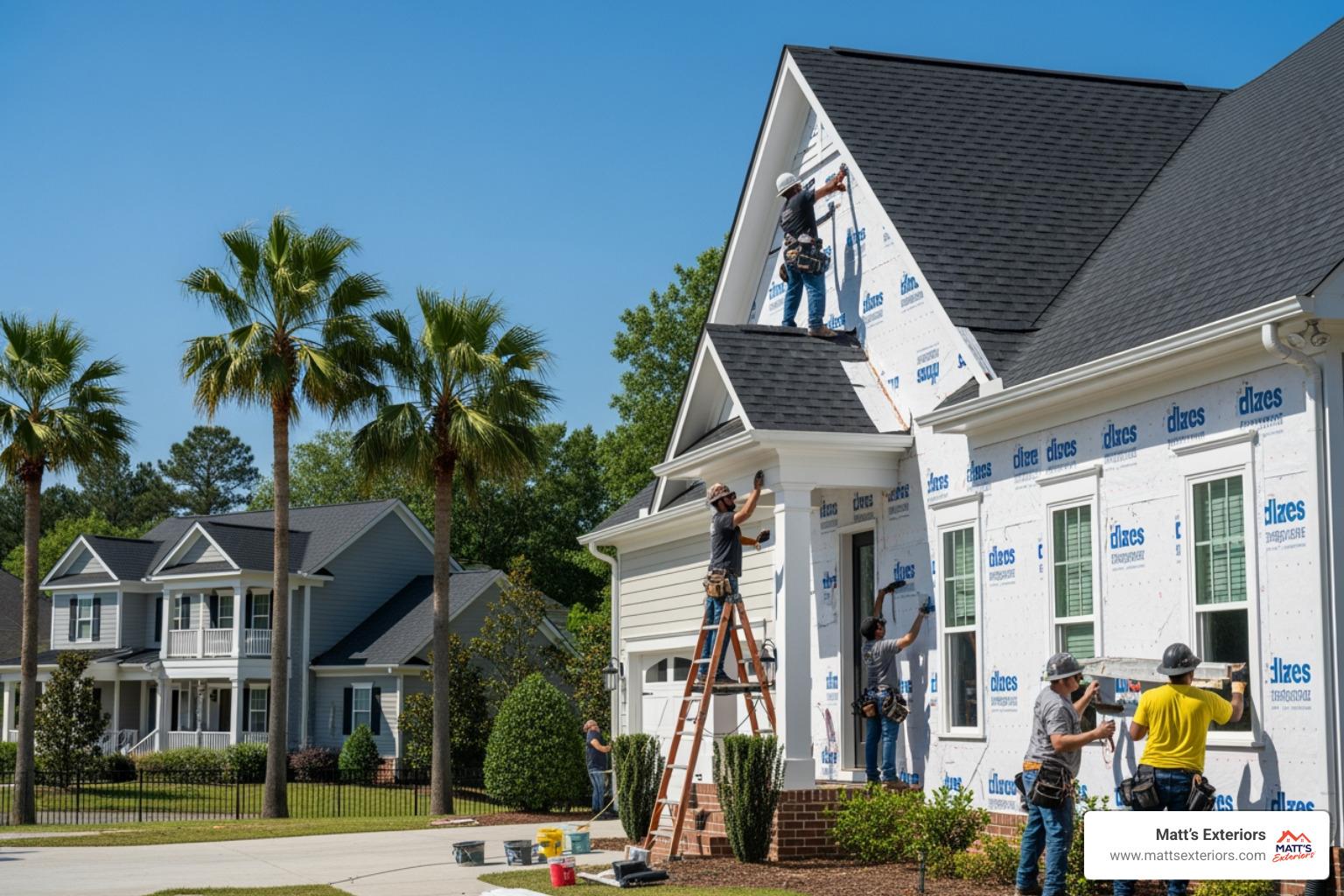
Siding installation Atlanta homeowners need is one of the most important exterior decisions you'll make for your home. Here's a quick overview of what you need to know:
Top Atlanta siding options at a glance:
Siding Type Starting Cost (per sq ft) Best For James Hardie Fiber Cement ~$14.50 Durability, humidity resistance Vinyl ~$12.25 Budget-friendly, low maintenance Cedar / Wood ~$18.00 Natural aesthetics
Quick answers for Atlanta homeowners:
Atlanta's climate is tough on homes. Hot, humid summers, rainy winters, and the occasional severe storm put real stress on your exterior. Old or poorly installed siding doesn't just look bad — it lets in moisture, drives up energy bills, and can cause serious structural damage over time.
The good news? New siding transforms both the look and the long-term health of your home. But only if you choose the right material and the right contractor.
This guide walks you through everything — from picking the right siding for Atlanta's weather to vetting contractors and understanding what a quality installation actually looks like.
When we sit down with homeowners from Marietta to Peachtree City, the first question is always: "What material should I use?" In Metro Atlanta, your siding has to be a bit of a superhero. It needs to fight off 90-degree humidity in July, resist rot during rainy winters, and look good doing it.
In our neck of the woods, moisture is the enemy. Whether you're in Alpharetta or Fayetteville, humidity can seep into small cracks, leading to mold and structural rot. This is why we prioritize materials with high moisture resistance and always ensure a high-quality house wrap is installed underneath the siding.
Material Type Durability Maintenance Level Estimated Cost Fiber Cement Exceptional (50+ years) Low (Paint every 15 yrs) Moderate-High Vinyl Good (20-30 years) Very Low Budget-Friendly Engineered Wood High (30+ years) Moderate Moderate Natural Cedar Moderate (Variable) High (Stain every 3-5 yrs) Premium
If you want to dive deeper into the specific brands we trust, check out our siding services page for more details.
If you’ve spent any time looking at home renovations in Georgia, you’ve heard the name James Hardie. There’s a reason most top-tier contractors recommend it. James Hardie fiber cement is specifically "Engineered for Climate." For our region, that means it’s designed to withstand the specific combination of heat, humidity, and sun found in the Southeast.
One of the biggest perks is ColorPlus® Technology. Instead of just painting the siding after it's installed, the color is baked into the boards at the factory. This makes it incredibly fade-resistant—a huge plus when the Georgia sun is beating down on your house all afternoon.
Beyond aesthetics, it's practically bulletproof (metaphorically speaking). It’s fire-resistant, termite-proof, and won't rot or warp like traditional wood or cheaper plastics. High-quality siding projects ensure that customers receive rapid service paired with an excellent product that stands the test of time.
Talking about cost can be tricky because every house is a unique puzzle. However, we believe in being transparent. A typical siding installation Atlanta project can range significantly based on a few key "price movers."
Homeowners are consistently happiest when contractors stay on schedule and on budget. At Matt’s Exteriors, we work hard to provide accurate estimates so there are no scary surprises at the end. We also offer financing options to help make these essential upgrades more manageable for your family budget.
How do you know if you actually need a full siding installation Atlanta service or just a quick repair? Sometimes the house practically screams for help, and other times the signs are more subtle.
If you're seeing any of these red flags, it might be time to explore our full range of services to see how we can help protect your investment.
We’ve completed over 12,000 projects since 2007, so we’ve got the process down to a science. We don't just "slap on some boards." A professional siding installation Atlanta project follows a very specific rhythm to ensure quality.
Every project starts with a thorough inspection. We look at the roofline, the windows, and the foundation. We want to identify any existing issues—like leaky gutters or window flashing problems—that might have caused your old siding to fail in the first place.
We carefully remove the old cladding. This is the "messy" part, but we take great care to protect your landscaping and clean up debris daily. Once the walls are bare, we inspect the sheathing (the wood underneath). If there’s rot, we fix it now. You never want to put new siding over old rot!
This is arguably the most important step for Atlanta homes. We install a high-quality moisture barrier (often called house wrap). Think of this as a "Gore-Tex" jacket for your house—it lets water vapor out so the walls can breathe, but keeps liquid water from getting in.
Before the main siding goes up, we install flashing around windows, doors, and corners. This directs water away from the most vulnerable parts of your home's structure.
Now the magic happens. Whether it's James Hardie lap siding or modern vinyl, our crews install each piece with precision. We use specific nailing techniques (often hand-nailing for certain materials) to ensure the siding can expand and contract naturally with Georgia’s temperature swings.
We do a final walk-through with you to make sure every detail is perfect. We pick up every last nail and scrap of waste. Our goal is to leave your home looking better than we found it.
Want to see the faces behind the work? Learn more about our company history and our family-owned roots.
Choosing a contractor in a big metro area like Atlanta can feel overwhelming. You want someone who knows the local building codes and understands the specific challenges of our climate.
When you're interviewing companies for your siding installation Atlanta project, keep this checklist handy:
While we install siding year-round, many homeowners prefer the fall and spring. The mild temperatures are easier on the crews and ideal for materials like vinyl, which can become brittle in extreme cold or overly flexible in extreme heat. However, winter is also a great time to schedule because contractor calendars are often more flexible, and you can get your home ready before the spring rainy season hits.
Most people think of windows or attic insulation when they think of energy bills, but your siding plays a huge role. Modern siding installation Atlanta projects often include:
Check out our gallery of projects to see how we've helped homes from Woodstock to McDonough look better and run more efficiently.
You should expect two types of protection. First, a Manufacturer’s Warranty (like James Hardie’s 30-year limited warranty) which protects you against defects in the product itself. Second, a Labor/Workmanship Warranty from the contractor. At Matt’s Exteriors, we pride ourselves on our long-term commitment to our customers, ensuring your investment is protected for years to come.
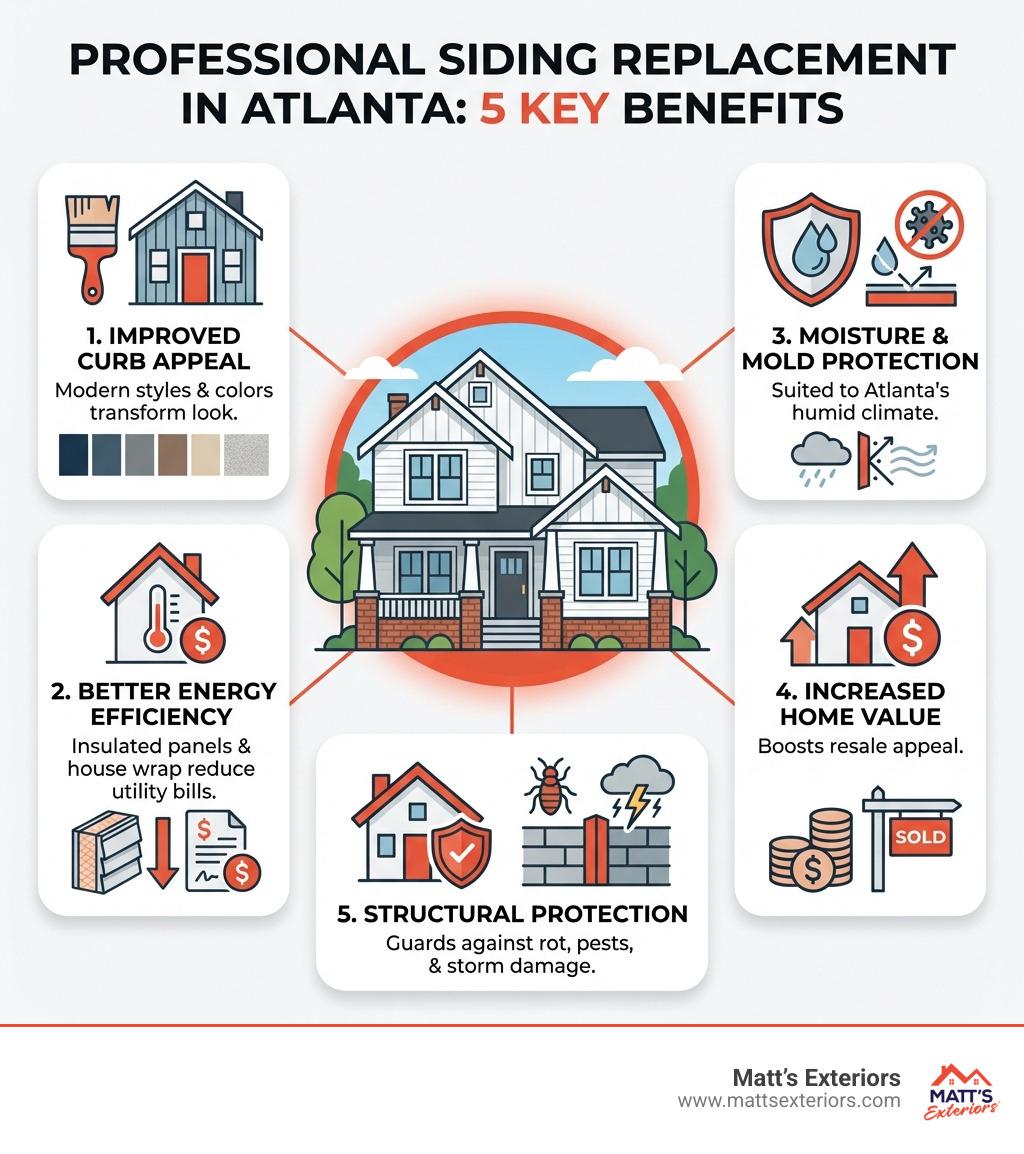
Your home is likely your biggest investment. Protecting it with quality siding installation Atlanta is one of the smartest moves you can make. Whether you’re in Smyrna, Kennesaw, or Peachtree City, the right siding will boost your curb appeal, slash your energy bills, and give you peace of mind during those heavy Georgia thunderstorms.
At Matt’s Exteriors, we bring over 12,000 projects' worth of experience to every job. We’re a family-owned business that treats your home like our own. We don't use high-pressure sales tactics; we use high-quality materials and expert craftsmanship.
Ready to give your home the exterior it deserves? Schedule your professional siding installation today and let us help you fall in love with your home all over age.