
Get Your Instant Quote Now!
Get Started
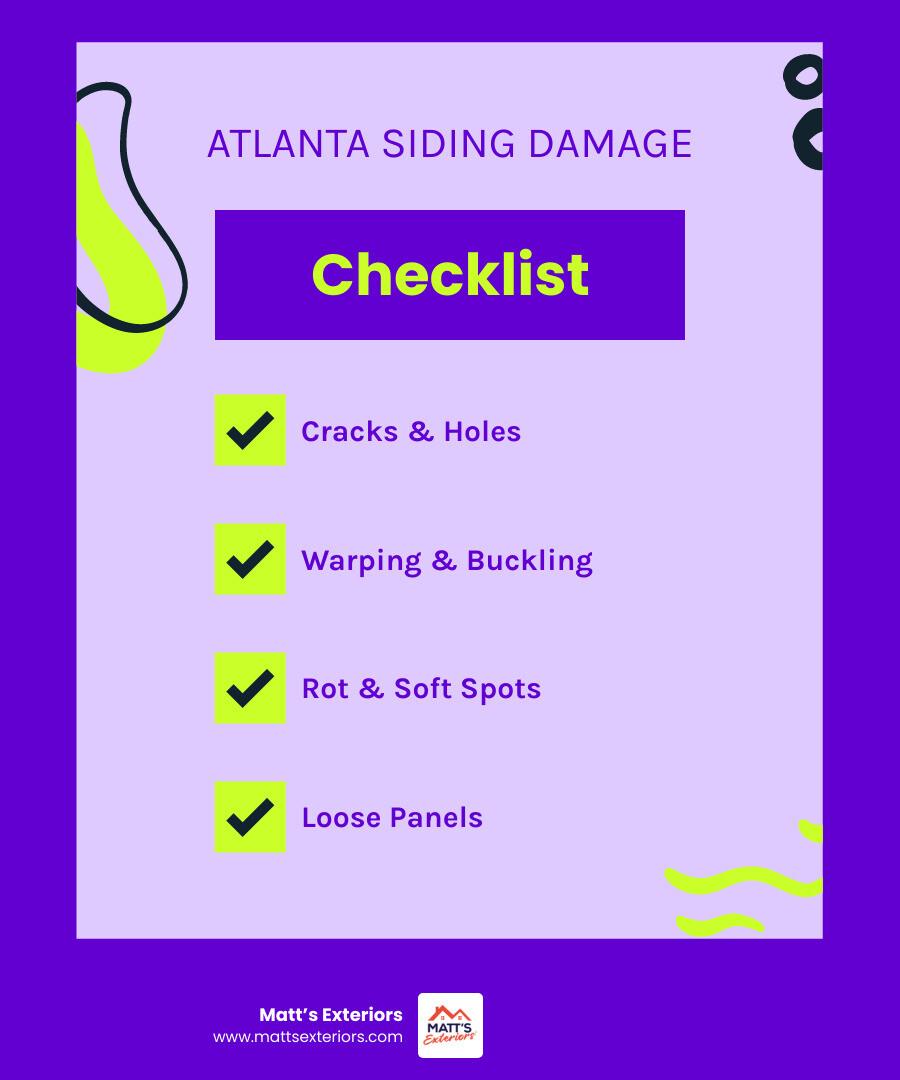
Siding repair Atlanta homeowners need most often falls into these categories:
Damage Type Common Cause Urgency Cracks or holes Hail, impact, age High Warping or buckling Heat, moisture, poor install High Rot or soft spots Humidity, water infiltration Very High Faded or peeling paint UV exposure, age Medium Loose or missing panels Wind, storm damage Very High
Atlanta's weather is tough on homes. Hot, humid summers. Sudden storms. The occasional hail hit. Your siding takes the brunt of all of it.
When siding fails, it's not just a cosmetic problem. Water gets in. Mold grows. Energy bills climb. What starts as a small crack can become a costly structural repair if you leave it too long.
The good news? Most siding damage — when caught early — can be fixed without a full replacement. And fixing it before storm season hits is always cheaper than fixing it after.
At Matt's Exteriors, we've seen what Atlanta weather does to homes. This guide walks you through exactly how to identify damage, decide between repair and replacement, and get it done right — before the next storm rolls through.
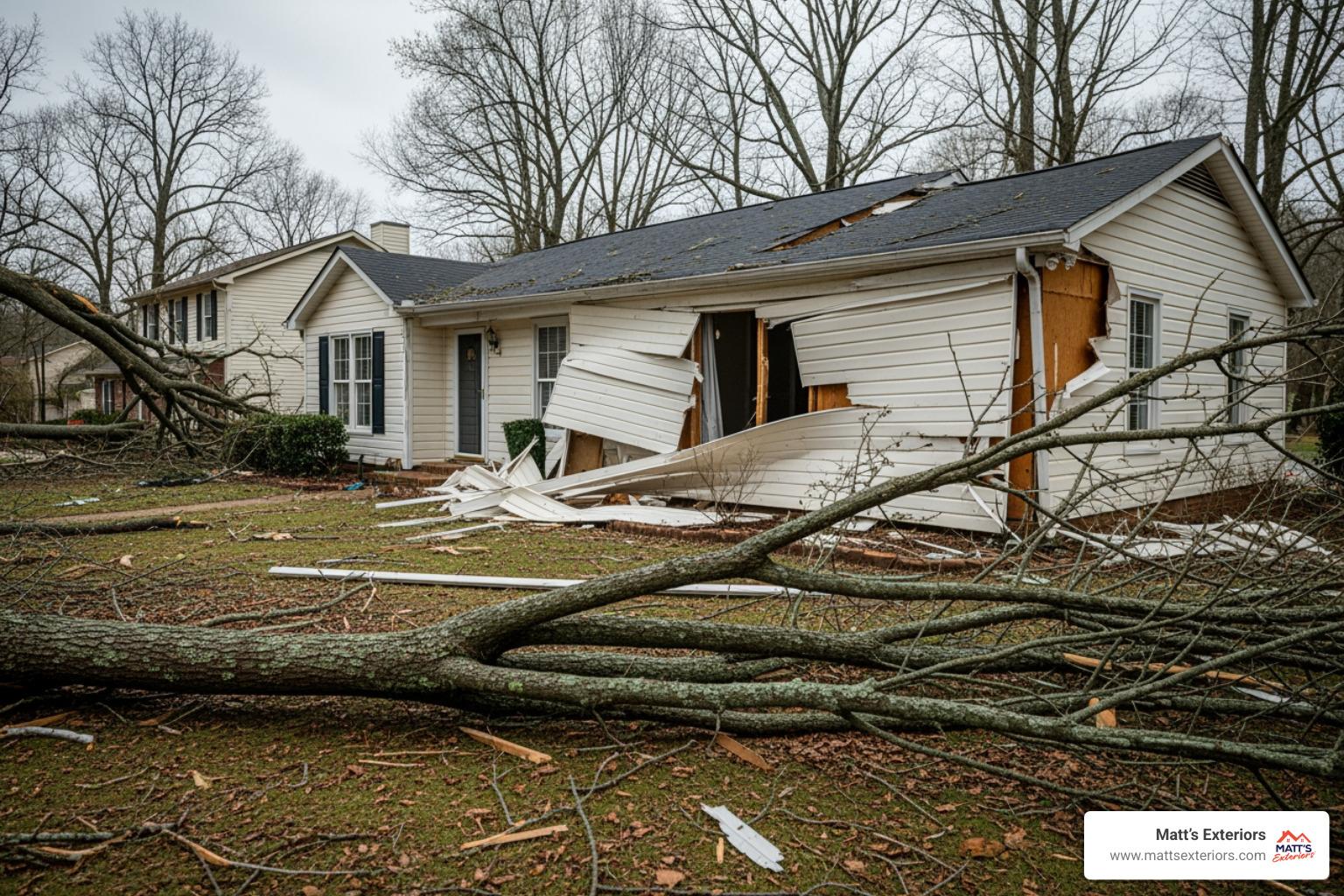
Living in Metro Atlanta means dealing with a humid subtropical climate. While we love our lush green landscapes in Marietta and Roswell, that same humidity is a silent killer for home exteriors. Siding isn't just a pretty face for your house; it’s a protective envelope. When that envelope is breached, the humid Georgia air moves in and starts causing trouble.
One of the most frequent issues we see is thermal expansion. In places like Alpharetta or Sandy Springs, the temperature can swing wildly. This causes materials like vinyl to expand and contract. If the original installer nailed the panels too tight, the siding has nowhere to go, leading to unsightly warping and buckling.
Then there’s the biological factor. Termites love the damp warmth of a Georgia summer, and if your siding is touching the soil or has moisture trapped behind it, you’re essentially putting out a "Welcome" mat for pests. We also frequently deal with woodpecker damage, especially on cedar or older wood-based siding. These birds aren't just making noise; they’re drilling holes that allow rain to seep directly into your wall studs.
Moisture is the primary enemy of siding repair Atlanta projects. Because the damage often starts behind the panels, you have to look for subtle clues:
For more details on how we address these specific issues, check out our Siding Services page.
We always tell our neighbors in Cumming and Peachtree City that an ounce of prevention is worth a pound of cure. To keep your siding in top shape, follow these steps:
The biggest question we get is: "Do I need a few boards fixed, or is it time for the whole house?"
Generally, if the damage is localized—like a few holes from a stray hailstone or one section of rot near a leaky gutter—a repair is the way to go. Modern fiber cement siding, like James Hardie, can last 30 to 50 years when properly maintained. However, if your siding is over 20 years old and you're seeing widespread fading, cracking, or rising energy bills, a full replacement might be more cost-effective in the long run.
New siding does more than just stop leaks. It significantly boosts your home's valuation and curb appeal. Plus, modern materials come with incredible warranties. For example, some premium fiber cement products hold paint 3 to 4 times longer than traditional wood. Professional renovations can completely change the feel of a home and improve its long-term durability.
Budgeting for siding repair Atlanta depends on several variables. No two homes in Fayetteville or Newnan are exactly alike, but here is what typically drives the price:
Many homeowners are surprised to learn that storm damage is often covered by homeowners' insurance. If a tree limb hit your house in Smyrna or hail dented your panels in Kennesaw, we can help with insurance claim assistance to ensure you get the coverage you deserve. Working with experienced professionals ensures these complex projects are handled correctly and efficiently.
When it comes to the Georgia heat, some materials simply perform better than others:
At Matt's Exteriors, we don't believe in "patch and dash" jobs. Our process is designed to ensure that once a repair is made, you won't have to worry about it again for a long time.
We start with a thorough inspection. Sometimes we even use drone diagnostics to see high-up areas on three-story homes in Buckhead or Johns Creek. We look for the "why" behind the damage—if we just replace a rotten board without fixing the leaky gutter above it, the rot will just come back.
Before you hire anyone for siding repair Atlanta, make sure you vet them properly. Don't be afraid to ask the tough questions:
While small repairs can start around $500 to $600 for a minimum service fee, the total cost depends on the material and the extent of the hidden damage. Fiber cement is generally more expensive to repair than vinyl because it requires more specialized labor and painting.
Yes! If the damage was caused by a "sudden and accidental" event like wind, hail, or a falling tree, it is typically covered. We recommend having a professional inspection before you file a claim so you have a detailed report of the damage to show your adjuster.
Your home's siding is its first line of defense against the elements. Whether you're in Suwanee, McDonough, or right in the heart of Atlanta, keeping that defense strong is essential for protecting your investment.
At Matt's Exteriors, we are a family-owned company that treats every home like it's our own. With over 12,000 projects under our belt since 2007, we have the experience to handle everything from minor leak repairs to full exterior transformations. We serve the entire Metro Atlanta area, including Tyrone, Senoia, and Woodstock.
Don't wait for the next big storm to find out your siding is failing. Contact us today for a free estimate and let us help you keep your home beautiful and bone-dry.
For more information, visit our Siding Services page.