
Get Your Instant Quote Now!
Get Started
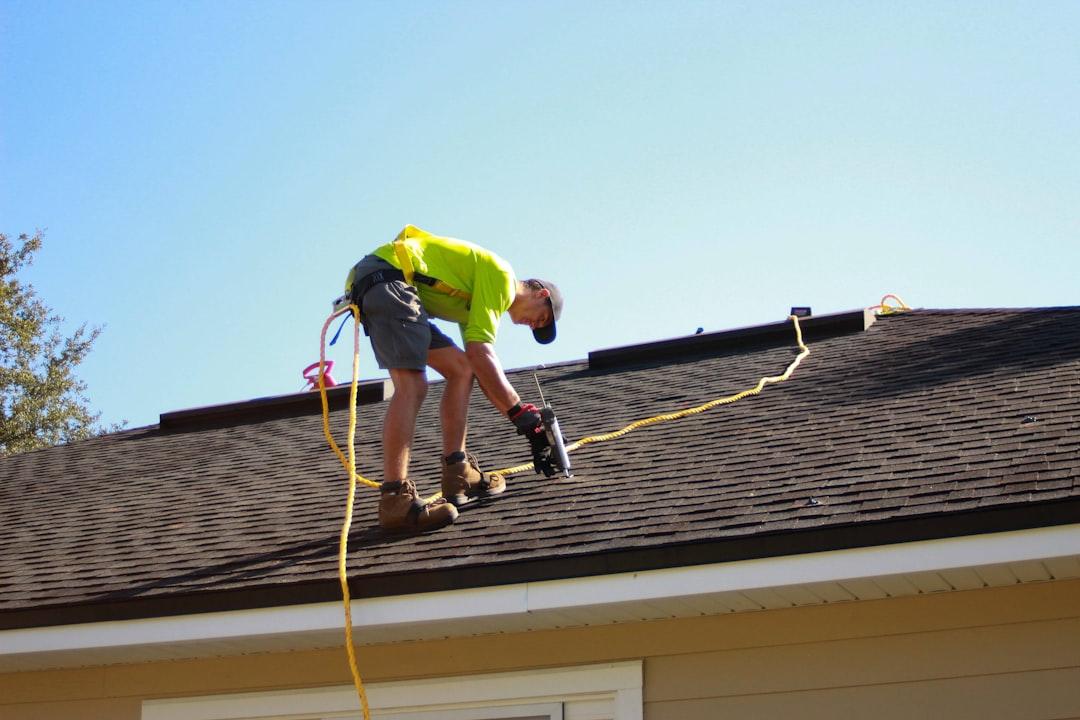
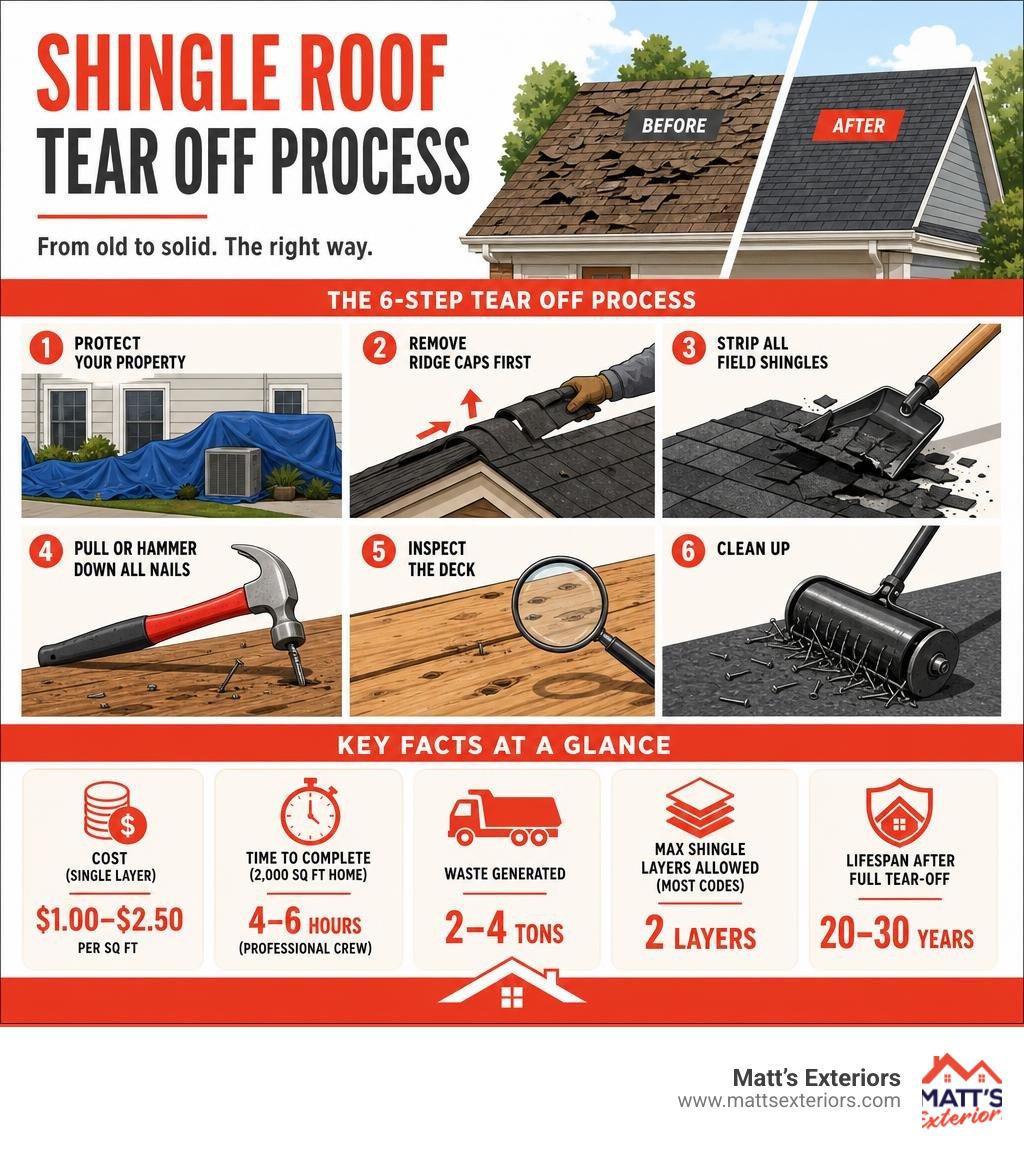
A shingle roof tear off is the process of stripping all existing roofing materials — shingles, underlayment, and flashing — down to the bare wood deck before installing a new roof.
Here's a quick overview of what the process involves:
Key facts at a glance:
Factor Typical Range Cost (single layer) $1.00–$2.50 per sq ft Time to complete (2,000 sq ft home) 4–6 hours (professional crew) Waste generated 2–4 tons Max shingle layers allowed (most codes) 2 layers Lifespan after full tear-off 20–30 years
Replacing a roof is one of the biggest home investments you'll make. The tear-off phase — often overlooked — is actually what determines how well your new roof performs and how long it lasts. Skip it or cut corners, and you risk installing a brand-new roof over hidden rot, moisture damage, or a deck that can't support it.
That's a costly mistake no homeowner should have to make.
I'm Matt Lopez, owner of Matt's Exteriors, and with nearly two decades of experience managing full shingle roof tear off projects across Metro Atlanta, I've seen what a proper tear-off reveals — and what a rushed one hides. In the sections below, I'll walk you through everything you need to know to manage this process with confidence.
When it’s time for a new roof, homeowners in Metro Atlanta generally face two options: a complete roof replacement (which starts with a full shingle roof tear off) or a roof recover (commonly called an overlay). An overlay involves leaving the old shingles in place and nailing a new layer directly on top of them.
While an overlay might sound like an easy way to save time and money, the long-term consequences often outweigh the short-term savings. When we look at the structural load, moisture risks, and manufacturer warranties, a full tear-off is almost always the superior choice.
To begin with, consider the structural load. A single layer of asphalt shingles on a 2,000-square-foot home weighs several thousand pounds. Doubling that weight by adding a second layer puts massive stress on your home's framing and rafters. If your roof deck has any pre-existing weakness, that extra weight can lead to sagging or even structural failure.
Furthermore, overlays are notorious for trapping heat and moisture. Because the old shingles remain underneath, they act as an insulator, trapping summer heat. This extra heat cooks the new shingles from below, causing them to curl, blister, and degrade much faster. In humid climates like we experience here in Georgia, trapped moisture between the layers can quickly turn into mold, mildew, and wood rot without you ever knowing it.
Your roof's lifespan and manufacturer warranty are also heavily impacted by your choice. A roof installed after a complete tear-off typically lasts 20 to 30 years. An overlay roof, however, usually lasts only about 16 years—a 10% to 15% reduction in lifespan. Worse yet, many shingle manufacturers will void or severely limit their warranties if the shingles are installed over an existing layer. They simply cannot guarantee their product’s performance when it is nailed into a potentially unstable base.
Finally, let's look at resale value. A professionally installed, single-layer roof is a massive selling point. According to national remodeling data, a new roof can add between $12,000 and $15,000 to a home’s resale value, yielding an average ROI of 60% to 70%. Buyers and home inspectors look incredibly unfavorably on double-layered roofs because they know the next owner will face double the tear-off costs down the road.
To help you visualize the differences, we’ve put together this quick comparison guide. For a deeper dive into how these systems are put together, check out our A Comprehensive Guide to Roof Installation and consult the Roof Tear-Off: Process, Cost & What to Expect (2026) | ShinglesCalculator.
Feature Roof Tear-Off (Complete Replacement) Roof Overlay (Recover) Upfront Cost Higher (includes labor & disposal) ~25% lower upfront Expected Lifespan 20 to 30 years ~16 years Deck Inspection Full inspection and repair of wood deck None (deck remains hidden) Manufacturer Warranty Fully backed by manufacturer Often voided or highly limited Resale Value Impact Adds $12K–$15K; highly attractive to buyers Can deter buyers; signals future expenses Structural Weight Normal Doubled (adds stress to rafters)
To appreciate why a tear-off is so valuable, it helps to understand what happens when we strip a roof down to its bare deck. The wood decking (usually plywood or OSB sheets) is the structural foundation of your entire roof.
During a proper shingle roof tear off, we remove every single layer of old shingles, the old felt underlayment, and the worn-out flashing. This leaves us with a completely clean slate.
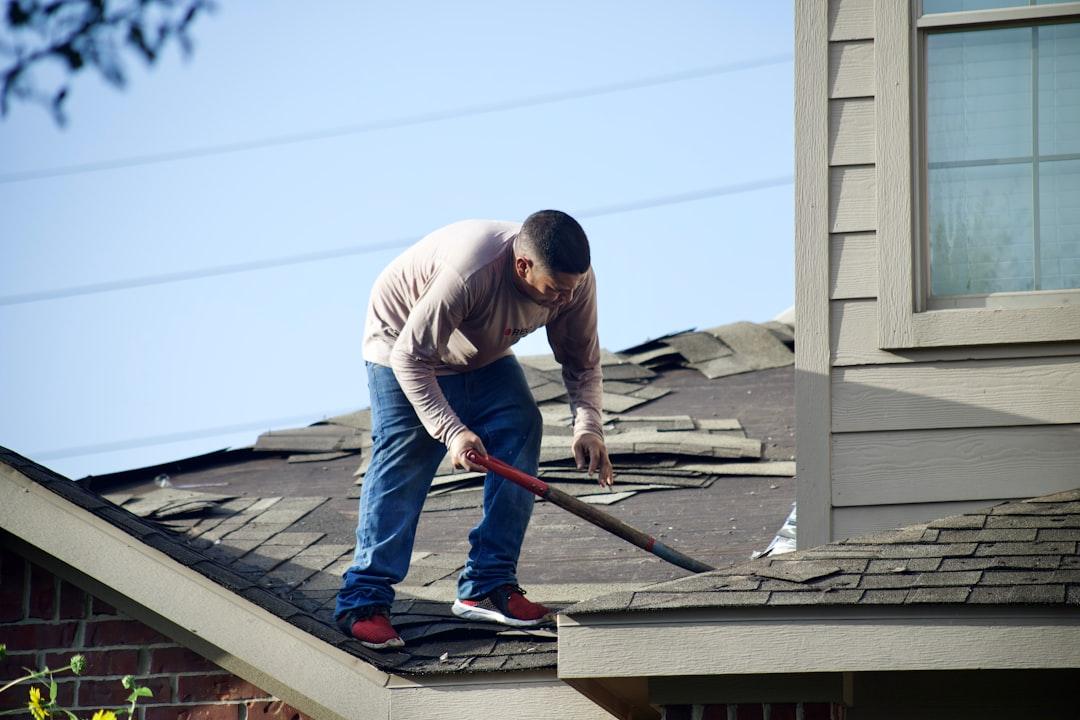
With the bare deck exposed, our crews can inspect every square inch of the wood. We look for soft spots, water stains, mold, and rusted nails. If we find any damaged wood, we replace it immediately. Once the deck is solid, we lay down modern, high-performance underlayment and ice and water protectors. This creates a continuous, watertight barrier that shields your home from the elements.
Without stripping the roof first, installing these critical modern water protection layers properly is impossible. To learn more about how these parts work together, read our guide on What Makes Up Your Roof: A Guide to the Components of a Roof.
Is an overlay ever a good idea? Yes, but only under very specific, ideal conditions. We might consider an overlay if:
Even when these conditions are met, local building codes must be verified. Most municipalities strictly prohibit more than two layers of roofing. If you already have two layers, a tear-off is legally required. If you are looking for cost-effective ways to manage your roof without sacrificing quality, read our tips on Budget Friendly Roof Repair.
Let’s talk numbers. In 2026, a full shingle roof tear off typically adds about $1.00 to $2.50 per square foot (or $100 to $250 per roofing square) to the total cost of a roof replacement project. For a standard 2,000-square-foot residential home, the tear-off portion alone generally costs between $1,500 and $3,500 for a single layer of asphalt shingles.
While this upfront cost is higher than an overlay, it represents a long-term investment. The labor costs of a tear-off cover the physical stripping of the roof, pulling thousands of nails, and sweeping the area. Disposal fees are also factored in; a typical residential tear-off generates between 2 and 4 tons of heavy waste material that must be hauled to a local landfill or recycling center.
However, the return on investment makes this expense highly worthwhile. Because a clean tear-off allows for perfect shingle installation and preserves the full manufacturer warranty, your roof will last up to twice as long as an overlay. This longevity, combined with the $12,000 to $15,000 boost in home value, means the tear-off easily pays for itself over time. If you are planning your budget, you can learn more on our Roof Replacement service page.
When budgeting for a roof replacement, it's important to prepare for potential hidden costs that can only be uncovered once the shingles are removed.
The most common hidden cost is rotted plywood decking. If water has slow-leaked through your old shingles, the underlying wood may be soft, moldy, or completely rotted. This wood must be replaced before new shingles can be nailed down. Replacing rotted decking typically costs between $75 and $120 per 4x8 sheet (including materials and labor). A typical roof replacement might require replacing 2 to 5 sheets, but severely damaged roofs can require much more.
Another factor is the number of existing layers. If a previous contractor performed an overlay, we will have to tear off two layers of shingles instead of one. Removing a second layer of shingles is highly labor-intensive and adds more weight to the dumpster, which increases both labor costs and dumpster rental fees. Tearing off a double layer typically adds an extra $50 to $100 per square to the project total.
To avoid surprises, we always recommend working with an experienced local specialist who can perform a thorough initial inspection. If you suspect your roof has existing leaks, read our guide on Asphalt Shingle Roof Repair.
Tearing off a roof is a highly physical, dirty, and potentially dangerous job. Doing it safely and efficiently requires the right tools, proper safety equipment, and a systematic approach.
Whether you are working with a professional crew or trying to understand the process, safety must always come first. Roofers must wear a fall-arrest safety harness anchored securely to the roof's structure, along with heavy-duty work gloves, safety glasses, and non-slip roofing boots.
Setting up a clear "drop zone" on the ground is also essential. We position heavy-duty tarps around the perimeter of the house to catch falling shingles, nails, and felt paper. This keeps debris from scattering across your yard and protects your lawn.
Once the tear-off is complete, we perform a thorough cleanup. This includes sweeping the roof deck clean and using a high-powered magnetic sweeper (or magnetic roller) across the grass and driveway to collect loose nails. For more details on maintaining your roof's integrity, read our Essential Tips for Roof Maintenance and review the Best Way to Remove Roof Shingles (3‑Tab DIY Tear‑Off Guide).
Before a single shingle is pried loose, extensive property protection steps must be taken. A residential roof tear-off generates thousands of pounds of sharp, heavy debris.
We protect your home by draping heavy-duty tarps (minimum 6-mil plastic) over landscaping, flowerbeds, and delicate shrubs. We also place plywood boards over windows, glass doors, and air conditioning units to prevent damage from stray shingles.
Homeowners can help prepare for a tear-off by clearing the driveway, parking cars down the street, and moving outdoor furniture, grills, and potted plants away from the house. It’s also a good idea to keep pets and children indoors during the project, as the noise and falling debris can be hazardous.
Once the property is protected, the physical tear-off begins. Professional crews follow these five main steps to ensure a clean, efficient removal:
Once these steps are complete, the roof is ready for high-quality new materials. To learn more about selecting the best shingles for your home, check out our review of the Best Residential Roofing Shingles of 2025: GAF, Owens Corning, Certainteed.
Navigating a roof replacement can bring up a lot of questions. Here are the answers to some of the most common questions homeowners ask us about the shingle removal process.
For a standard, single-layer roof on a 2,000-square-foot residential home, a professional crew of 3 to 5 people can complete the shingle roof tear off phase in just 4 to 6 hours.
The complete replacement process—including tearing off the old materials, repairing the deck, laying down new underlayment, and installing the new shingles—typically takes 1 to 3 days.
The exact timeline depends on several factors, including the pitch (steepness) of your roof, the number of existing shingle layers, and weather conditions. Professional roofers monitor the weather closely and will not begin a tear-off if rain is forecasted. If an unexpected pop-up storm occurs, we carry heavy-duty tarps to quickly secure and protect your exposed roof deck.
In Georgia, building codes strictly limit residential roofs to a maximum of two layers of asphalt shingles. This code exists to protect the structural integrity of your home from excessive weight.
Additionally, many modern architectural and laminated shingles are not designed to be installed as an overlay because their textured surfaces prevent the new shingles from laying flat. If your roof already has two layers of shingles, a complete tear-off is legally required before any new roofing can be installed.
While some homeowners consider tearing off their own shingles to save on labor costs, we strongly advise against DIY roof removal.
Roofing is physically grueling and highly dangerous. Walking on a sloped surface while carrying heavy, abrasive materials requires specialized safety gear and experience. If your roof's pitch is steeper than a gentle 6:12 slope, it should only be accessed by professionals using safety harnesses and roof jacks.
Furthermore, a DIY tear-off takes much longer. What a professional crew can do in 4 hours might take an inexperienced homeowner several days, leaving your home exposed to sudden Georgia storms. Finally, professional installation ensures your manufacturer warranty remains fully valid. If you need help assessing your roof's condition, explore our Roof Repair Services.
A successful roof replacement starts from the ground up—or in this case, from the bare deck up. While skipping the shingle roof tear off might seem like an easy way to save a few dollars upfront, investing in a complete, professional tear-off is the only way to guarantee your new roof is built on a solid, dry, and safe foundation.
At Matt's Exteriors, we have been serving families across Metro Atlanta since 2007. With over 12,000 completed projects in communities like Alpharetta, Buford, Cumming, Duluth, Dunwoody, and Peachtree City, we pride ourselves on high-quality workmanship, trusted materials, and exceptional customer care.
Don't leave your home's protection to chance. Schedule your professional roof replacement with Matt's Exteriors today, and let us give you the peace of mind you deserve.