
Get Your Instant Quote Now!
Get Started
Triple glazed rooflights are roof windows built with three panes of glass instead of two, creating two insulating air gaps filled with argon gas for superior thermal and acoustic performance.
Here's what you need to know at a glance:
Feature Triple Glazed Rooflights System U-value 0.6 W/m²K Centre pane U-value 0.9 W/m²K More efficient than Building Regs? Yes — by around 40% Noise reduction Up to 39 dB Suitable for flat and pitched roofs? Yes Typical lifespan 15–25 years UK price range £163–£619 (excl. VAT) Lead time 1–3 working days
Most homeowners upgrading their roof choose triple glazing because it keeps heat in during winter, reduces noise from outside, and lowers energy bills over time — all without sacrificing natural light.
The difference over standard double glazing is significant. Typical double glazed rooflights carry a U-value of around 1.2 W/m²K. Premium triple glazed units cut that nearly in half. That means less heat escaping through your roof and more comfort in the rooms below.
This guide covers everything you need to make a confident decision — from glass specifications and Building Regulations to installation requirements and long-term value.
I'm Matt Lopez, founder of Matt's Exteriors, and with nearly two decades of experience helping Metro Atlanta homeowners improve their exteriors — including skylight and rooflight installations — I've seen how the right glazing choice protects a home and pays off over time. In this guide, I'll walk you through everything that matters when evaluating triple glazed rooflights, so you can move forward with confidence.
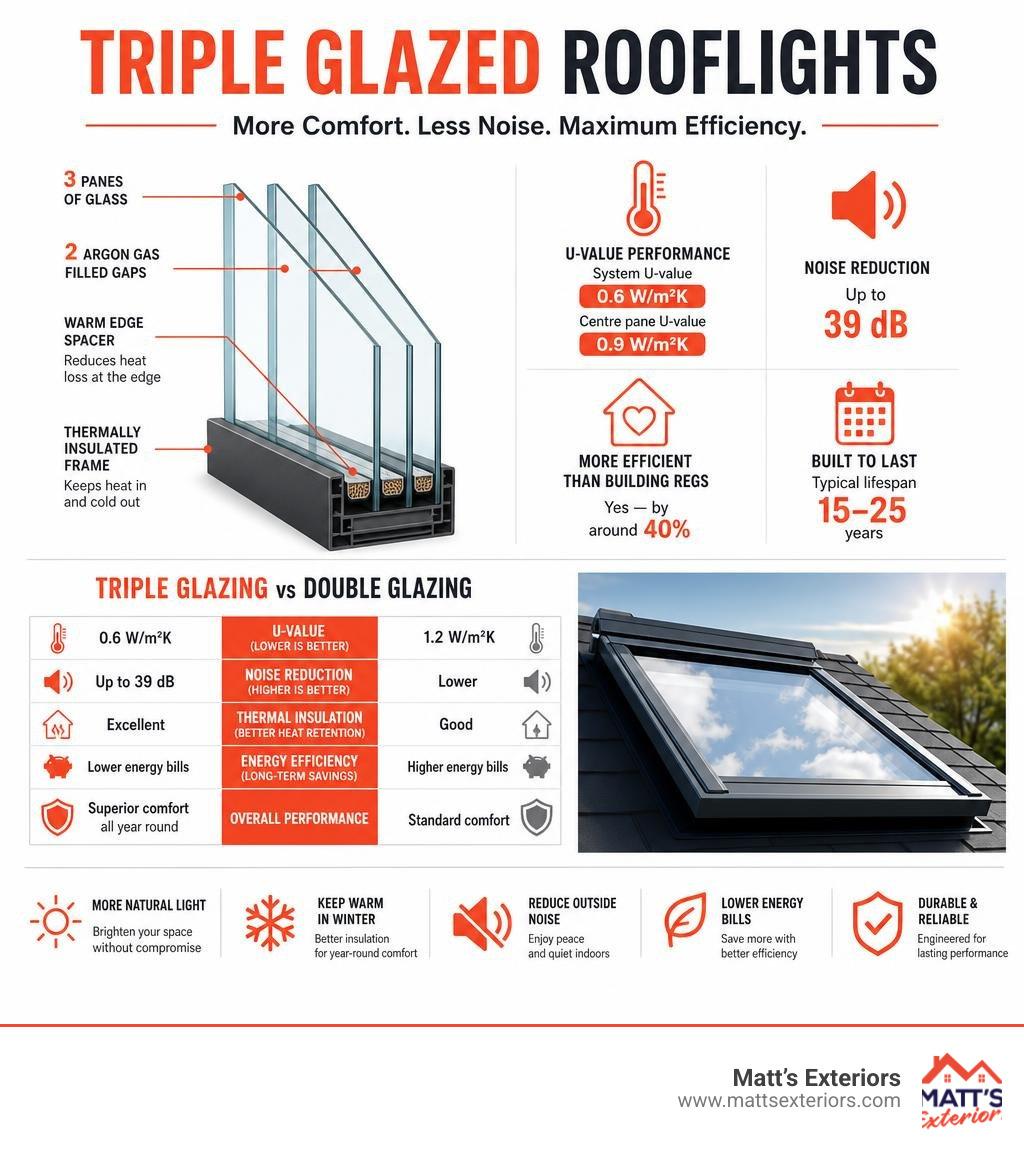
At its core, a triple glazed rooflight is a highly engineered window designed to sit horizontally or at an angle on your roof. While a standard double-glazed window uses two sheets of glass, triple glazing introduces a third. This simple addition completely changes how the unit handles energy, light, and sound.
The magic happens in the spaces between those three panes of glass. Instead of regular air, these cavities are filled with an inert gas—usually 90% argon. Argon is much denser than air, which means it is incredibly slow at transferring heat. When heat tries to escape your cozy living room, it has to fight its way through three separate layers of tempered glass and two dense barriers of argon gas.
To keep these layers perfectly spaced and to prevent cold drafts from creeping around the edges, manufacturers use "warm edge" spacer bars. These spacers are made of low-conductivity materials rather than traditional highly-conductive aluminum, eliminating the cold perimeter line that often causes condensation. For a deeper dive into the science of these glass assemblies, you can explore the Technical specifications of triple-glazed glass.
When you hold or install a high-quality triple glazed unit, you immediately notice its robust build. A premium flat rooflight typically features an overall glass thickness of 46mm. This heavy-duty profile is built using three distinct layers:
All of these components conform to strict safety glass standards, such as BS EN 12150, ensuring that in the rare event of breakage, the glass shatters into small, blunt fragments rather than dangerous shards. If you are looking for a non-opening, streamlined option that utilizes this exact heavy-duty structural layout, check out More info on fixed flat roof skylights.
While double glazing remains a popular standard, triple glazing is rapidly becoming the go-to choice for homeowners who want to future-proof their properties. Here is how the two compare across the most important categories:
Feature Double Glazing Triple Glazing Number of Glass Panes 2 panes 3 panes Insulating Gas Barriers 1 argon-filled cavity 2 argon-filled cavities Typical System U-Value Around 1.2 W/m²K Down to 0.6 W/m²K Acoustic Insulation 32 to 34 dB reduction Up to 39 dB reduction Overall Glass Thickness Typically 24mm to 28mm Typically 46mm Weight Moderate Heavy (requires structural check)
The most obvious trade-off here is weight. Because triple glazed units feature an extra sheet of thick safety glass, they are significantly heavier. For example, a large 1500 x 3000 mm frameless unit can weigh upwards of 225 kg (nearly 500 lbs)! This extra weight means you must ensure your roof structure is strong enough to support the unit, which is why we always recommend a professional structural assessment before delivery day.
If you have ever sat under an old, drafty skylight on a cold winter evening, you know how quickly a poor window can ruin a room's comfort. Heat naturally rises, making your roof the primary escape route for warmth. By upgrading to a triple glazed system, you effectively put a highly insulated lid on your home.
This thermal performance is backed by extensive testing. Organizations focusing on sustainable building standards consistently highlight how advanced glazing materials prevent thermal bridging—the process where cold bypasses insulation through highly conductive materials. For some excellent context on how premium manufacturers design these systems, look at the Top-performing triple-glazed skylight research.
When shopping for rooflights, the most important metric to look for is the U-value. This measures the rate of heat transfer through a structure. The lower the U-value, the better the material is at keeping heat inside.
With triple glazing, we look at two different U-values:
To put that in perspective, a system U-value of 0.6 W/m²K is roughly 40% more efficient than what standard Building Regulations require. This means you will spend less money running your heating system in the winter and your air conditioning in the summer. For a complete breakdown of what to look for in modern skylights, check out our Complete guide to 2026 skylights.
For our clients looking to meet the absolute highest standards of environmental efficiency—such as those aiming for Passive House certification—triple glazing is practically a necessity. Passive House design requires airtight construction, ultra-low thermal bridging, and exceptional insulation.
Because premium triple glazed units achieve system U-values as low as 0.6 W/m²K, they easily meet and exceed local energy standards (like UK Part L requirements). This level of thermal efficiency ensures that even large expanses of glass won't create cold spots or drafts, allowing you to design bright, open extensions that remain perfectly comfortable all year round.
Whether you are remodeling a mid-century home in Dunwoody, building a modern kitchen extension in Marietta, or updating a cozy cottage in Senoia, triple glazed rooflights can be adapted to fit your architectural style. They are highly versatile and suitable for kitchens, living rooms, bedrooms, and home extensions. If you are replacing an old, yellowed acrylic dome or a leaking double-glazed skylight, you can find helpful tips in our guide on Information on replacement skylights.
A common question we get at Matt's Exteriors is: Can I install these on both flat and pitched roofs?
The answer is a resounding yes! However, the installation requirements differ slightly depending on your roof style:
To understand how these units sit on your roof deck and how they are framed, take a look at our Guide to curb mount skylights.
If you want to take your home design to the next level, you aren't limited to fixed, non-opening glass. Modern manufacturing has introduced incredible specialty options:
Because triple glazed rooflights are heavy, high-performance pieces of engineering, proper installation is absolutely critical. A poorly installed rooflight will leak, draft, and potentially void your manufacturer's warranty.
Before you begin, always perform a structural assessment of your roof rafters to ensure they can handle the weight of the unit. For step-by-step guidance on structural preparation, refer to our Curb mount skylight installation guide.
To achieve a flawless, leak-free installation, we recommend following these industry best practices:
Many premium triple glazed rooflights come standard with self-cleaning glass. This glass features a special microscopic, hydrophobic coating that uses UV rays from the sun to break down organic dirt and dust. When it rains, the water sheets off the glass smoothly, washing the loosened dirt away without leaving water spots.
To keep your rooflights performing beautifully for their 15 to 25-year lifespan, follow these simple maintenance tips:
Yes, absolutely—especially if you plan to stay in your home for several years or are building a highly efficient extension. While the upfront cost of triple glazing is higher than double glazing, it acts as a long-term investment. By slashing your heat loss by up to 40% compared to standard units, triple glazing lowers your monthly utility bills. Furthermore, it adds tangible value to your home and significantly improves everyday comfort by eliminating cold drafts and hot spots.
They do, and the difference is remarkable. Standard double glazing typically offers moderate sound insulation, but the extra pane of glass and dual argon-filled cavities in a triple glazed unit act as a highly effective acoustic barrier. Premium triple glazed rooflights achieve a noise reduction rating of up to 39 dB. This makes them the perfect choice for homes in busy urban areas, near airports, or in neighborhoods where you want to block out traffic, lawnmowers, and the loud drumming of heavy rain.
For standard sizes, the typical lead time in the UK is incredibly fast—usually between 1 and 3 working days (with delivery taking up to 5 days for remote areas like Scotland). When your unit arrives, make sure to inspect the glass immediately. Any transit damage or cracks must be reported to the supplier within 12 hours of delivery to protect your warranty. Always store the glass flat on a clean, soft surface, and never rest the unit on its edges or corners.
Upgrading your home with triple glazed rooflights is one of the best ways to flood your living spaces with beautiful natural light while maximizing energy efficiency, comfort, and peace of mind. By choosing a system with a U-value of 0.6 W/m²K, you are investing in a product that keeps your home cozy in the winter, cool in the summer, and whisper-quiet all year round.
At Matt's Exteriors, we have been helping homeowners throughout Metro Atlanta—from Alpharetta and Johns Creek down to Peachtree City and Brooks—transform their properties since 2007. With over 12,000 successful projects under our belt, our family-owned team is dedicated to providing high-quality workmanship, trusted materials, and exceptional customer care.
If you are ready to bring more light into your home with a professionally installed, high-performance rooflight, we would love to help. Schedule a consultation for your skylight project with our expert team today!