
Get Your Instant Quote Now!
Get Started
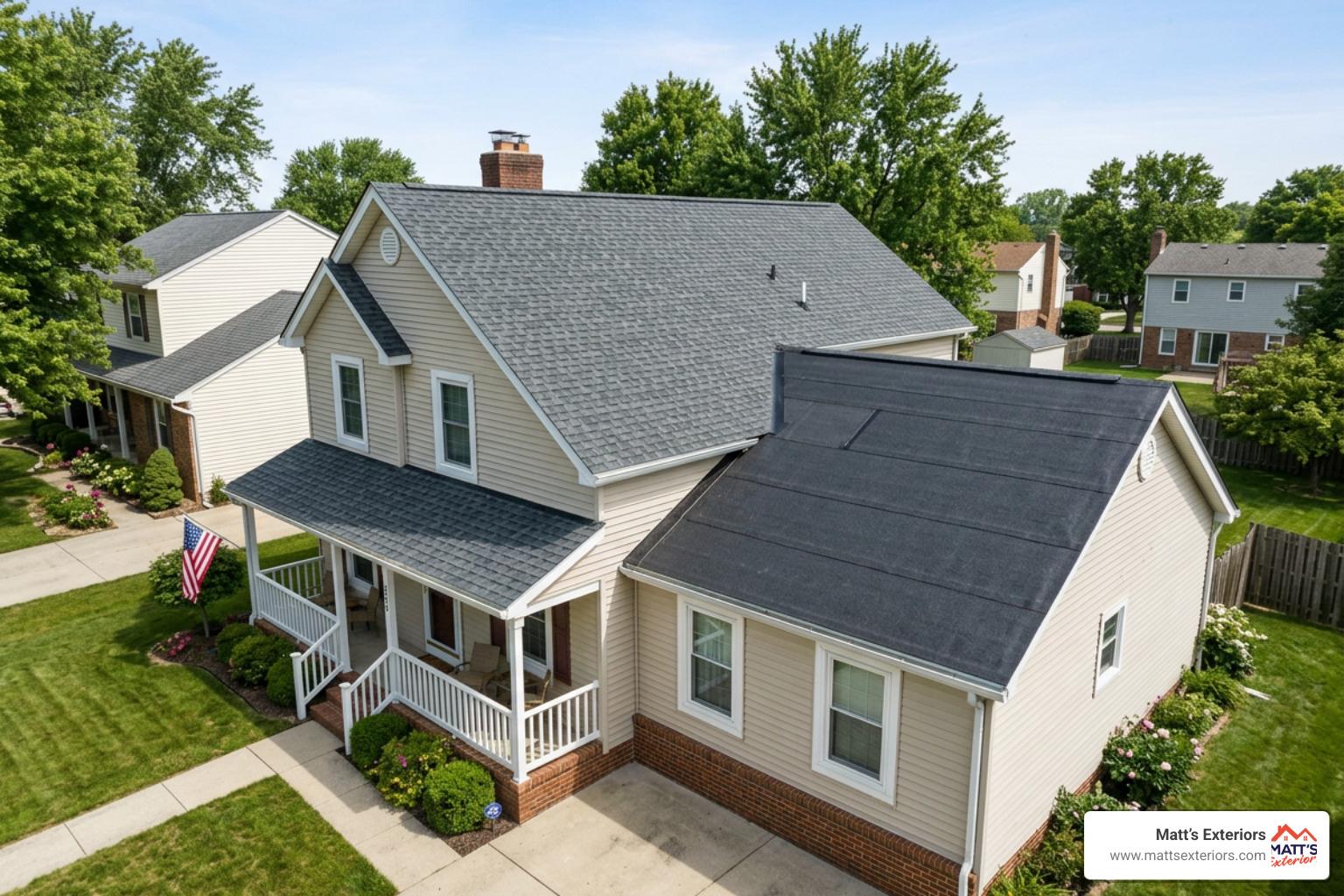
When comparing rolled roofing vs shingles cost, the upfront price difference is significant — but it's not the whole story.
Here's a fast breakdown:
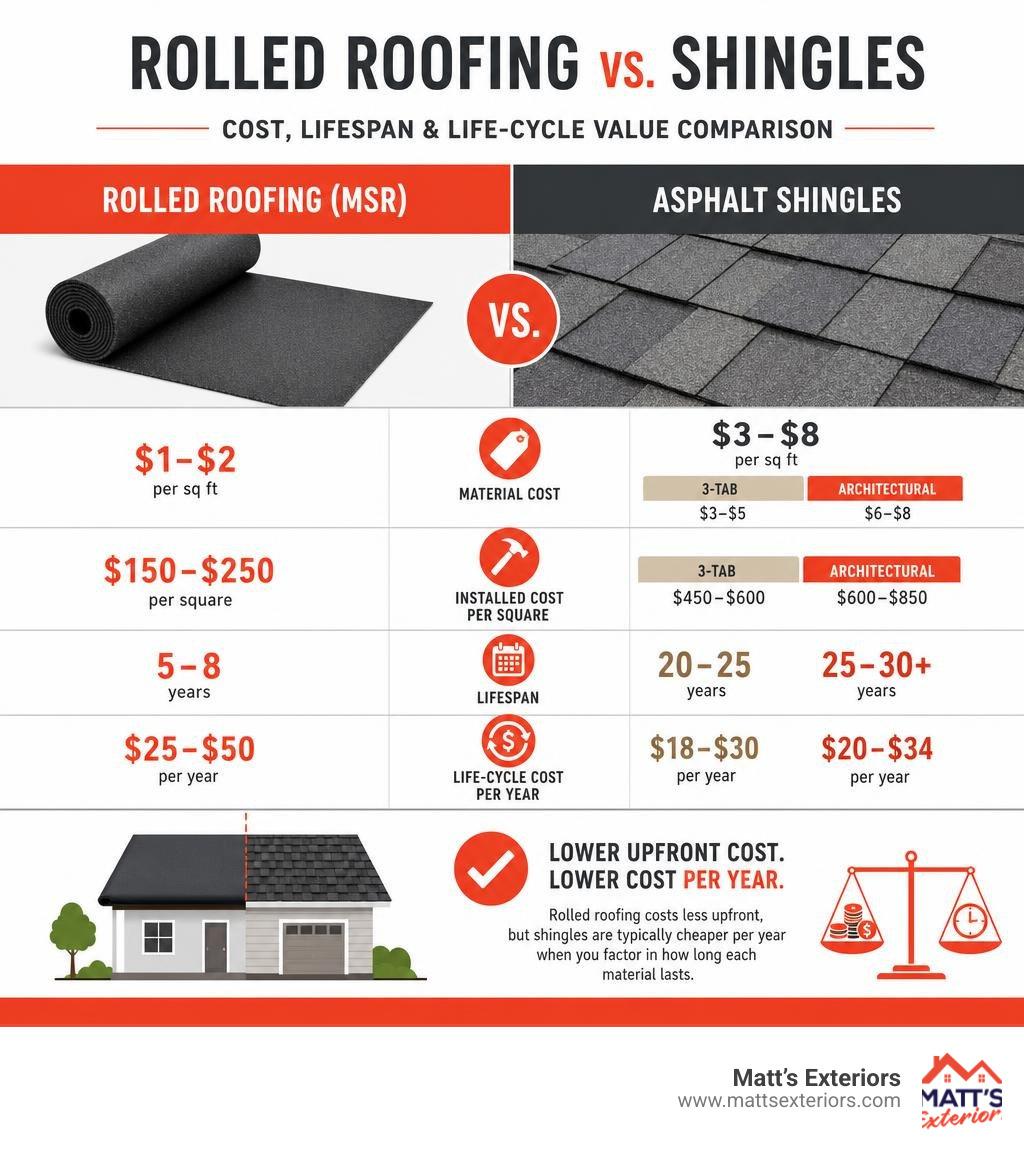
Rolled Roofing (MSR) 3-Tab Shingles Architectural Shingles Material cost $1–$2 per sq ft $3–$5 per sq ft $6–$8 per sq ft Installed cost per square $150–$250 $450–$600 $600–$850 Lifespan 5–8 years 20–25 years 25–30+ years Life-cycle cost per year $25–$50 $18–$30 $20–$34
The bottom line: Rolled roofing costs less upfront, but shingles are typically cheaper per year when you factor in how long each material lasts.
So which one is actually right for your home? That depends on your roof slope, your budget, your insurance, and whether you're roofing a garden shed or your family's primary residence. Those are very different situations — and they call for very different answers.
As a Metro Atlanta homeowner, you're likely weighing real costs against long-term protection. This guide breaks down everything you need to make a confident, informed decision — no guesswork, no fluff.
I'm Matt Lopez, owner of Matt's Exteriors, and after nearly two decades of installing and replacing roofs across Fayetteville, Peachtree City, and the greater Metro Atlanta area, I've seen how the rolled roofing vs shingles cost conversation plays out for homeowners at every budget level. Let's walk through what actually matters before you spend a dollar.
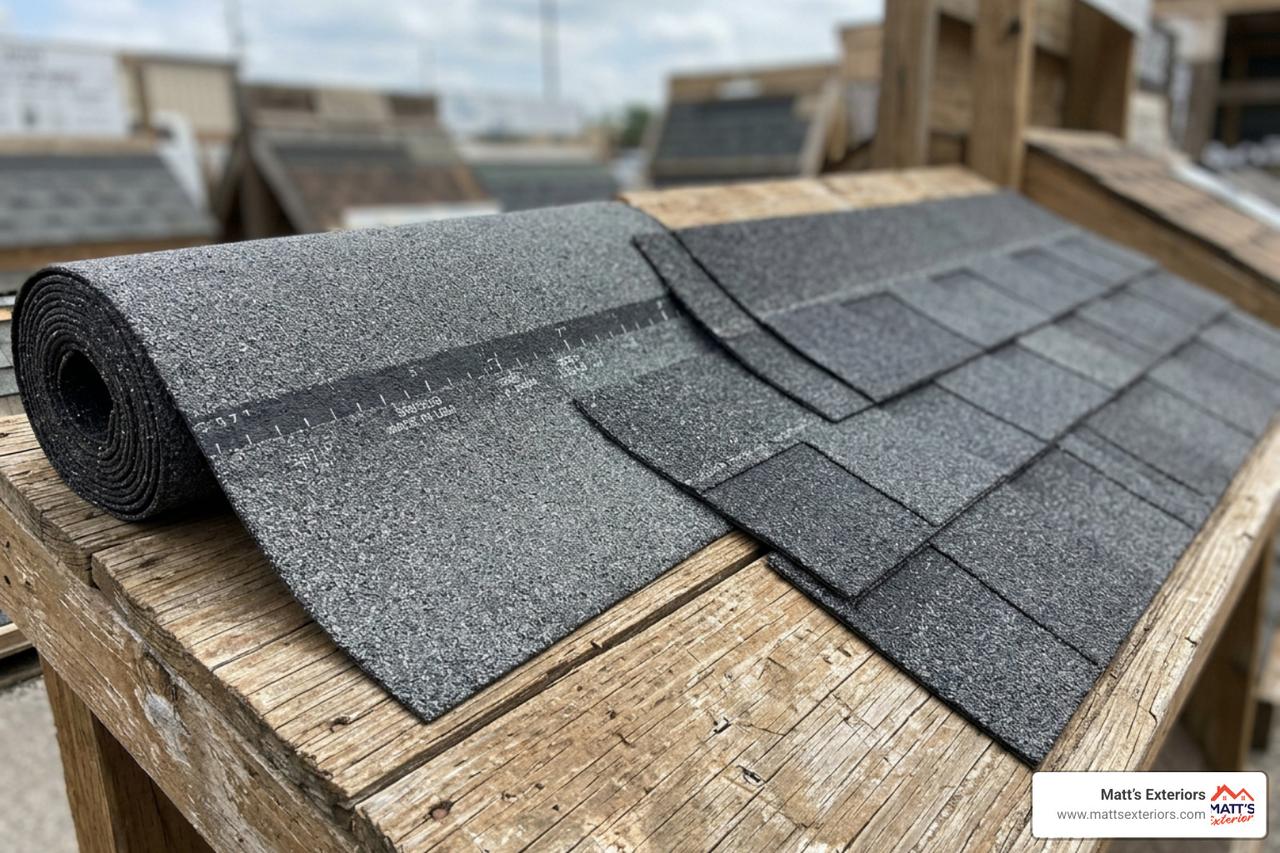
Before we jump headfirst into the exact dollars and cents, it is essential to understand what these two materials actually are. While both rely on asphalt for waterproofing, their physical structures, weights, coverage capabilities, and intended uses are worlds apart.
Mineral-Surfaced Roll roofing (MSR), commonly referred to in the industry as 90-pound roofing, is essentially a long, continuous sheet of asphalt-saturated fiberglass mat. The top surface is embedded with mineral granules, much like a traditional shingle, but instead of individual pieces, it comes in a heavy roll.
A standard roll of MSR is 36 inches wide by 36 feet long, weighing roughly 75 to 90 pounds, and covers exactly one square (100 square feet) of roof space. Because it is a single, continuous sheet, it is incredibly lightweight and easy to handle compared to the equivalent coverage weight of shingles. However, because it lacks the overlapping layers of shingles, it is highly vulnerable to wind uplift and thermal movement.
We typically recommend MSR for unoccupied outbuildings, agricultural barns, detached garages, workshops, and garden sheds. If you are wondering about the pitch requirements for this material, you can read more info on minimum pitch for roll roofing to understand how it handles water runoff.
Asphalt shingles are the undisputed king of North American residential roofing. Unlike rolled roofing, shingles are individual, overlapping pieces designed to shed water down a sloped surface. They consist of a sturdy fiberglass base mat saturated with premium asphalt and coated with ceramic-coated mineral granules that protect the roof from harsh UV rays.
Shingles come in two primary variations:
Because shingles rely on gravity and overlapping rows to shed water rather than create a completely waterproof barrier, they require a steeper slope to function correctly. If you are planning a residential project, check out our more info on best roof pitch for shingles to make sure your home's pitch is compatible.
When evaluating rolled roofing vs shingles cost, we have to look at both the immediate cash layout and the long-term cost of ownership. Let's break down the physical numbers behind materials, labor, and installation.
At first glance, rolled roofing is a clear winner for budget-conscious homeowners. Material costs for MSR sit at a modest $1 to $2 per square foot (roughly $35 to $50 per roll/square). On the other hand, basic 3-tab shingles will run you $3 to $5 per square foot, and high-end dimensional or architectural shingles range from $6 to $8 per square foot.
But materials are only half the equation. Labor and installation times vary drastically:
For a detailed look at the installation differences, you can review the Asphalt Roll Roofing vs Asphalt Shingles Roofing Installation Cost & Price Guide or read more on Rolled Roofing: Cost, Installation, and Pros vs Cons - D and G Flooring.
While saving money upfront feels great, a smart homeowner in Marietta or Alpharetta looks at the long-term life-cycle cost. This is where the math shifts dramatically in favor of shingles.
Rolled roofing has an average lifespan of just 5 to 8 years (stretching to perhaps 10 to 12 years if installed using the concealed nail method and treated with reflective coatings). Because it is a single thin layer exposed to the elements, the intense Georgia summer heat degrades the asphalt quickly, leading to cracking, seam separation, and leaks.
Asphalt shingles, however, are built for the long haul. 3-tab shingles regularly last 20 to 25 years, while high-quality architectural shingles can easily last 25 to 30+ years with basic maintenance.
Let's look at the math over a 30-year period for a standard 2,000-square-foot roof:
As you can see, shingles are actually the more cost-effective option over time. For more details on this dynamic, refer to Is Roll Roofing Cheaper Than Shingles? A Comprehensive Cost Comparison and check out Rolled Roofing Vs. Shingles: Which One Is Better?.
Furthermore, investing in a high-quality shingle roof adds tangible value to your property. According to the JLC Cost vs Value Report, a standard asphalt shingle roof replacement yields an average of 68% Return on Investment (ROI) in home resale value. Rolled roofing, conversely, is often viewed by buyers and home appraisers as a temporary fix and can actively drag down your home's market value.
Choosing between these two materials is not just a financial decision. Local building codes, the physical pitch of your roof, and your homeowners insurance policy all play massive roles in dictating what you can and cannot install.
The slope (or pitch) of your roof is the ultimate deciding factor. Roof pitch is measured by the vertical rise over a 12-inch horizontal run (e.g., a 2:12 pitch rises 2 inches for every 12 inches of horizontal run).
According to the International Residential Code (IRC R905.2.2), asphalt shingles are strictly prohibited on roofs with a slope of less than 2:12. If your roof is between 2:12 and 4:12, you can install shingles, but you must use a double layer of underlayment or a self-adhering ice and water shield to prevent water back-up. Shingles perform best on pitches of 4:12 or steeper, where gravity can easily shed water away from seams.
Rolled roofing, because it is sealed at the seams with roofing cement or heat-welded, is designed specifically for low-slope environments. It can safely be installed on pitches as low as 1:12. Trying to force shingles onto a flat or low-slope roof will inevitably result in pooling water, rot, and catastrophic leaks. To find out what material fits your specific structure, read more info on rolled roofing vs shingles for low-slope roofs.
Operating a home in Metro Atlanta means dealing with severe weather. From high winds during spring storms to intense heat and humidity in July, your roof takes a beating.
For a deeper dive into protecting your roof from severe weather and understanding the repair landscape, check out our more info on roof repairs complete guide 2026. If you are dealing with minor wind or hail damage on an existing roof, you can read about asphalt shingle roof repair or explore our professional roof repair services. To weigh the pros and cons further, read Roll Roofing VS. Asphalt Shingles: Pros and Cons.
If you have a flat or low-slope roof on your home, porch, or commercial space in Kennesaw or Smyrna, you might feel stuck. Shingles are out because of the slope, but you do not want the cheap look and short lifespan of basic rolled roofing. Fortunately, there are high-performance alternatives designed specifically for low-slope waterproofing.
Instead of standard residential MSR, commercial-grade single-ply and multi-ply membrane systems offer incredible durability for flat surfaces:
Even better, organizations like Georgia Power offer cool roof rebates of 10 to 20 cents per square foot for installing highly reflective roofing materials like TPO. For homeowners looking to invest in long-term protection, you can read more info on high quality roofing materials to see how these modern low-slope options compare.
We hear a lot of the same questions from homeowners in Peachtree City, Marietta, and Dunwoody when they are trying to balance their budgets. Here are our honest, professional answers.
Technically, yes, you can lay rolled roofing over existing shingles if the surface is cleaned and all debris is removed. However, we strongly advise against it.
Lay of MSR over shingles prevents the roll from adhering flatly to the roof deck, creating air pockets that trap moisture and lead to premature wood rot. Furthermore, local building codes generally limit roofs to two layers of any material, and overlaying shingles with roll roofing makes future leak detection nearly impossible. For a secure, code-compliant, and durable roof, a complete tear-off is always the best path.
For a primary residential home, the answer is a resounding yes. The upfront savings of rolled roofing are quickly wiped out by its cheap aesthetic, lack of insulation value, short lifespan, and negative impact on your home's resale value. Shingles provide superior curb appeal, better wind and impact resistance, and a much higher ROI. Keep the rolled roofing for the backyard garden shed or the detached workshop.
Most standard homeowners insurance policies will not cover rolled roofing on a primary dwelling, or they will heavily restrict coverage. Because insurers view MSR as a temporary, low-quality material prone to rapid degradation and leaks, they classify it as a high risk. If they do agree to cover it, you can expect higher premiums, higher deductibles, or a policy that only pays out on an actual cash value (ACV) basis rather than replacement cost.
At the end of the day, navigating the rolled roofing vs shingles cost debate comes down to matching the right material to the right structure and slope. While mineral-surfaced rolled roofing is a fantastic, budget-friendly choice for a backyard shed in Woodstock or a detached garage in Senoia, it simply does not belong on your primary family home.
Investing in a high-quality asphalt shingle roof or a premium low-slope membrane ensures your home stays dry, your energy bills stay manageable, and your property value remains protected for decades to come.
As a family-owned business serving Metro Atlanta since 2007, Matt's Exteriors has completed over 12,000 successful projects. Whether you are in Alpharetta, Marietta, Peachtree City, or Fayetteville, our team is dedicated to providing high-quality workmanship, trusted materials, and exceptional customer care.
Ready to make the right choice for your home? Schedule a professional roof replacement with us today for a free, honest consultation and estimate.