
Get Your Instant Quote Now!
Get Started
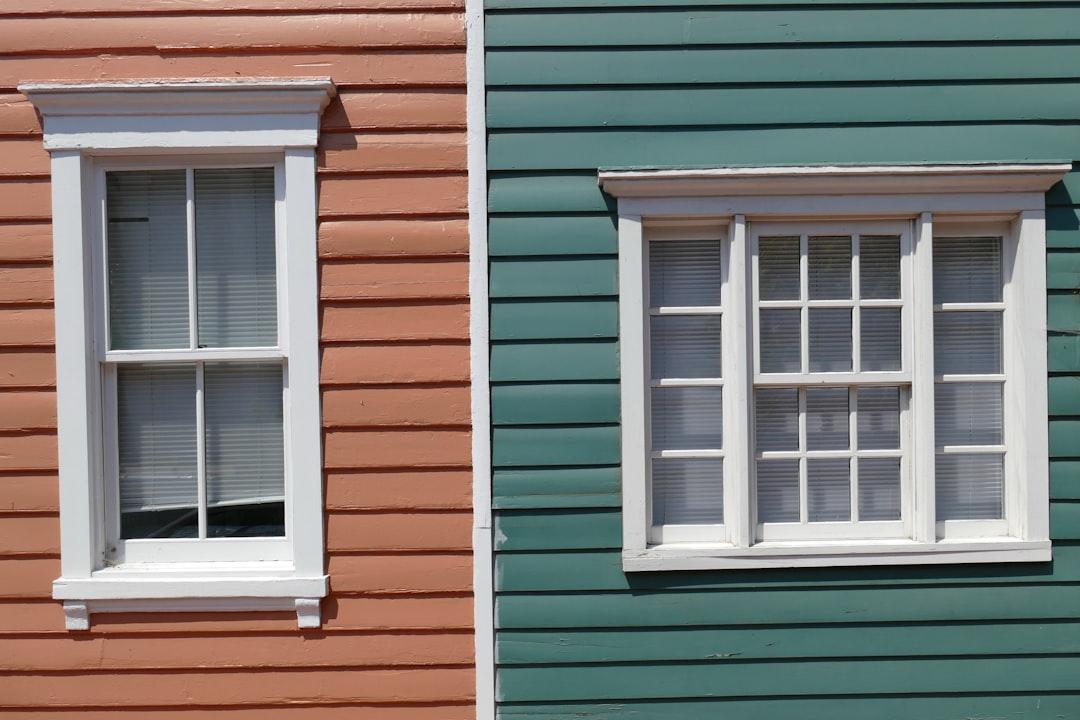
Fiber cement siding vs vinyl is one of the most common questions homeowners face when replacing their home's exterior. Here's a quick comparison to help you decide:
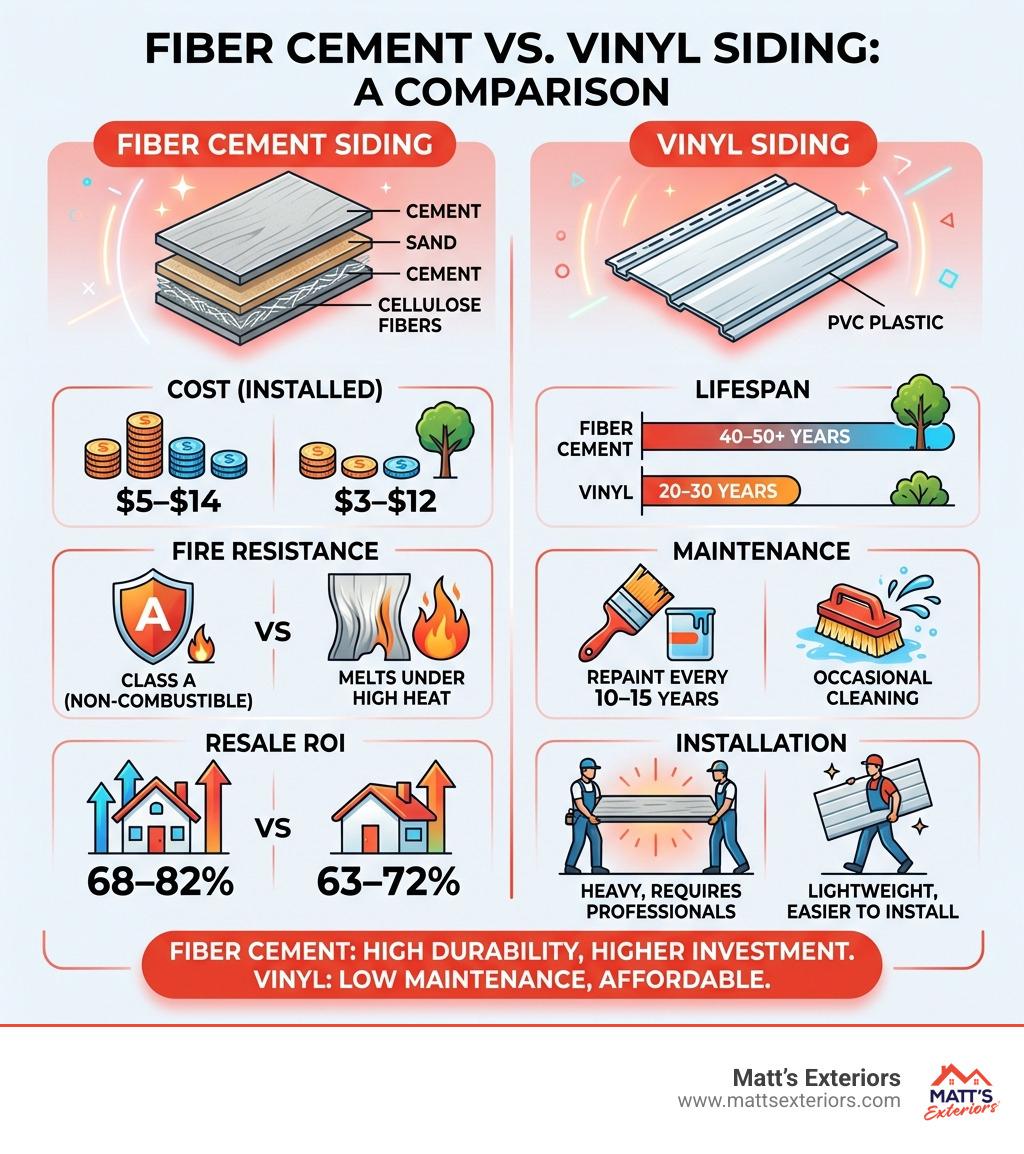
Category Fiber Cement Vinyl Cost (installed) $5–$14 per sq ft $3–$12 per sq ft Lifespan 40–50+ years 20–30 years Fire resistance Class A (non-combustible) Melts under high heat Maintenance Repaint every 10–15 years Occasional cleaning only Resale ROI 68–82% 63–72% Installation Heavy, requires professionals Lightweight, easier to install Best for Long-term owners, high-value homes Budget-conscious, short-term owners
Bottom line: Fiber cement costs more upfront but lasts longer, resists fire, and adds more resale value. Vinyl costs less and needs almost no maintenance, making it a solid choice for budget-driven projects.
Both materials can be the right answer — it just depends on your priorities.
Georgia homeowners face a unique challenge. The Metro Atlanta climate brings intense summer heat, high humidity, and the occasional severe storm. Your siding isn't just cosmetic — it's your home's first line of defense. Choosing the wrong material can mean warping, moisture damage, or an expensive replacement far sooner than you planned.
The good news? You don't have to guess. Understanding the real differences between these two materials makes the decision much clearer.
I'm Matt Lopez, founder of Matt's Exteriors in Fayetteville, Georgia, and over nearly two decades of installing and replacing both fiber cement and vinyl siding across Metro Atlanta, I've seen how each material holds up in our specific climate — and when choosing one over the other makes a real difference in the fiber cement siding vs vinyl decision. Let's walk through everything you need to know.
When we sit down with homeowners in Marietta or Peachtree City, the first thing we explain is that these two products are built from completely different "DNA." Understanding what they are made of explains why they perform so differently over time.
Fiber Cement Siding is a heavy-duty composite material. It is manufactured by mixing Portland cement, sand, water, and cellulose fibers (usually derived from wood pulp). This mixture is then molded into planks or shingles and cured to create a product that is incredibly rigid and dense. Because it contains cement, it doesn't rot, and bugs like termites find it completely unappetizing.
Vinyl Siding, on the other hand, is a plastic product made primarily from PVC (polyvinyl chloride). It was designed to be a low-cost, low-maintenance alternative to wood. It is much lighter and more flexible than fiber cement. While it has come a long way since the 1970s in terms of look and durability, it remains a petroleum-based product that reacts to temperature changes.
Here is a quick look at how they stack up mechanically:
Feature Fiber Cement Vinyl Weight ~2.5 lbs per square foot ~0.5 lbs per square foot Thickness Up to 5x thicker than vinyl Thin, flexible panels Installation Requires specialized cutting tools and heavy lifting Can be cut with snips; "hangs" on the wall Expansion Very stable; minimal movement Expands and contracts significantly with heat
Because fiber cement is so heavy and rigid, it requires a professional crew to install it correctly. You can't just "nail it up" like vinyl; it needs precise cutting (which produces silica dust that requires safety gear) and specific fastening techniques to ensure the warranty remains valid. If you are looking for a deeper dive into the technical specs, check out Fiber Cement Siding vs. Vinyl Siding: Important Factors to Consider When Updating Your Home’s Exterior.
For those exploring Exterior House Siding options, the "feel" of the material is often the deciding factor. When you knock on fiber cement, it feels like masonry or solid wood. When you knock on vinyl, it sounds hollow and plastic-like.
In curb appeal, fiber cement is generally considered the "premium" choice. Because it is thick, manufacturers can emboss it with deep, realistic wood-grain textures that are almost indistinguishable from real cedar from the street. It also comes in a massive variety of architectural styles, from traditional lap siding to modern board-and-batten or even shingles.
One of the biggest advantages of fiber cement is that it is paintable. You can choose from factory-finished colors (like the James Hardie ColorPlus technology) or have it primed and painted any custom color you desire. This allows you to refresh your home's look every decade if you want a change. For homeowners transitioning from high-maintenance natural wood, Wood Siding Installation techniques are often mirrored in how we apply fiber cement to get that classic look.
Vinyl siding has improved its game, offering "hand-split shake" looks and various "designer" colors. However, because vinyl is thin, the texture is often shallower and can look a bit "flat" under the bright Georgia sun. Also, you generally cannot paint vinyl a darker color later on, as the heat absorption can cause the plastic to warp or buckle.
As we move through 2026, more of our clients in Alpharetta and Sandy Springs are asking about the "green" factor.
Let's talk about the elephant in the room: the price tag. We know that budget is a primary driver for any renovation in Metro Atlanta.
When you look at the Exterior Siding Replacement Cost, vinyl is almost always the clear winner for the initial purchase. On a national average, vinyl costs between $3 and $12 per square foot installed. Fiber cement typically ranges from $5 to $14 per square foot.
Why the big jump? It’s not just the material.
You can find more detailed breakdowns on these costs in this guide on Vinyl Siding vs Fiber Cement Siding: Cost, Durability & Best Choice.
While fiber cement costs more upfront, it often pays for itself when it’s time to sell. In 2026, real estate data shows that fiber cement siding recoups roughly 70% to 82% of its cost at resale. In many high-end Metro Atlanta neighborhoods, having fiber cement (specifically brands like James Hardie) is an "expected" feature. If your neighbors all have fiber cement and you install vinyl, it could actually hurt your home's market competitiveness.
Conversely, vinyl is a fantastic "value play." If you are planning to sell in two years and just want to freshen up the look without breaking the bank, vinyl offers a solid ROI of 63% to 72%. It’s especially popular for rental properties or homes in neighborhoods where price-point is the primary concern for buyers. If you are looking for long-term peace of mind, we often suggest looking into Lifetime Warranty Siding Atlanta options to protect your investment regardless of the material.
To find the "true" cost, you have to look at the lifecycle.
In cities like Smyrna, Woodstock, and Kennesaw, we see a lot of weather extremes. Our summers are brutal, and our spring storm season can be intense.
Fiber Cement Durability: This material is the tank of the siding world. It can withstand winds up to 130 mph and is highly resistant to impact. If a large branch falls against your house during a summer thunderstorm, fiber cement is much more likely to hold its ground. Its expected lifespan is 30 to 50 years, and in many cases, it can last up to 100 years if the paint and caulk are maintained.
Vinyl Durability: Vinyl is resilient but has "kryptonite." Its biggest enemy is extreme heat. We have seen cases where high-efficiency "Low-E" windows on a neighbor's house reflect sunlight onto a vinyl-sided wall, creating a "magnifying glass" effect that actually melts the siding. Vinyl also becomes brittle as it ages and is exposed to UV rays, making it prone to cracking during cold snaps or hail storms. If you ever find yourself dealing with storm damage, our team handles Siding Repair Atlanta for both types of materials.
There is a common myth that vinyl is "zero maintenance." While you don't have to paint it, you do need to wash it. In humid areas like Hampton or McDonough, mold and mildew love to grow on the shady side of vinyl-sided houses. A quick rinse with a garden hose and mild detergent once a year is usually enough to keep it looking fresh.
Fiber cement is "low maintenance," but not "no maintenance."
For those Replacing Wood Siding On House, fiber cement is a massive relief because it removes the fear of rot and wood-peckers, though it keeps the classic aesthetic.
The Metro Atlanta humidity is the real test.
This is one of the most significant differences. Fiber cement is non-combustible. It has a Class A fire rating, which is the highest possible. It will not ignite when exposed to direct flame and won't contribute "fuel" to a fire. This can be a lifesaver in preventing a fire from spreading from a neighboring house to yours.
Vinyl siding is a petroleum product. While it is often treated with flame retardants, it will melt, warp, and eventually burn when exposed to high heat. When it burns, it can release toxic fumes. In fire-prone areas or tightly packed neighborhoods in Atlanta, fiber cement is the clear winner for safety.
If you are looking for the highest possible resale value, fiber cement usually wins. It provides a more "substantial" and expensive look that buyers associate with quality. According to most "Cost vs. Value" reports, fiber cement consistently recoups a higher percentage of its initial cost (often around 70-80%) compared to vinyl.
However, "value" is subjective. If you are renovating a starter home in a neighborhood where every other house has vinyl, spending $25,000 on fiber cement might not give you the return you expect. We always help our clients look at the neighborhood context. You can learn more about how we approach this in our guide on How Matts Exteriors Helps Homeowners Choose The Best Siding For Long Lasting Curb Appeal.
On their own, both materials have relatively low R-values (a measure of thermal resistance). Standard vinyl is about 0.61, and fiber cement is roughly 0.5.
However, insulated vinyl siding is a game-changer. This is vinyl with a form-fitting foam backing. It can raise the R-value to 2.0 or higher, which helps reduce "thermal bridging" (heat escaping through the wooden studs of your walls).
Fiber cement is dense, which helps with noise reduction, but it doesn't offer much in the way of insulation unless you install rigid foam boards underneath it during the siding project. If your goal is lowering your Georgia Power bill, Transform Your Home With Quality Siding by opting for an insulated system regardless of the "face" material.
So, is fiber cement siding worth the upgrade?
If you plan to stay in your home for more than 10 years, if you live in a high-value Metro Atlanta neighborhood, or if fire safety and maximum durability are your top priorities, then yes, the upgrade to fiber cement is absolutely worth it. It’s a "once-in-a-lifetime" siding choice that protects your home like a suit of armor.
However, if you are working with a strict budget, want a virtually maintenance-free exterior, or are looking to spruce up a property before a quick sale, vinyl remains a reliable, cost-effective, and attractive option.
At Matt’s Exteriors, we take pride in helping families across Metro Atlanta—from Cumming and Suwanee down to Senoia and Sharpsburg—make the best choice for their specific needs. With over 12,000 projects completed since 2007, we have the expertise to ensure your installation is handled with the highest level of craftsmanship, whether you choose the rugged durability of fiber cement or the versatile value of vinyl.
Ready to see the difference for yourself? Explore our Siding Services or contact us today for a free estimate. We’ll help you find the perfect fit for your home, your budget, and your future.