Get Your Instant Quote Now!
Get Started
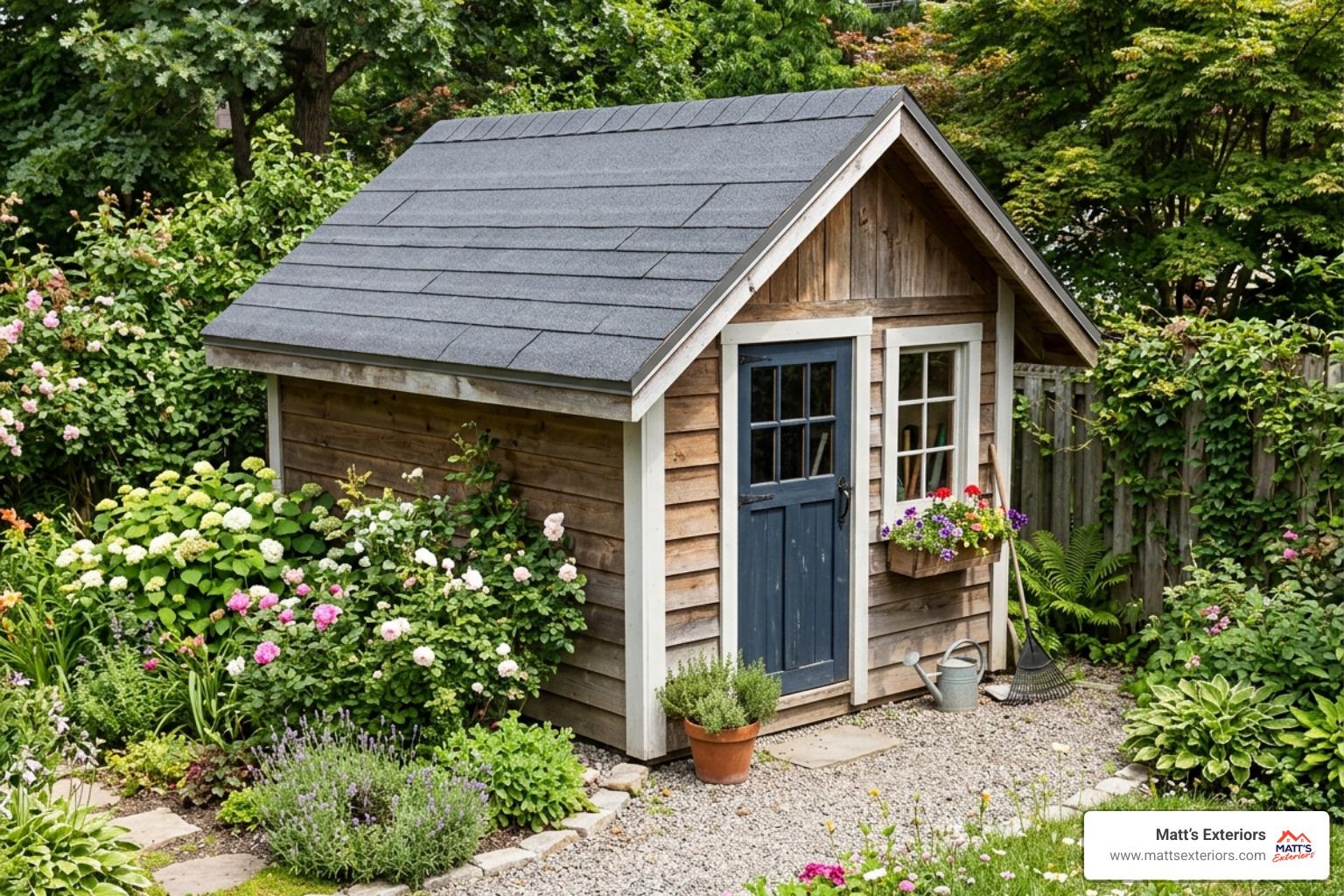
Rolled roofing for sheds is one of the most affordable and DIY-friendly roofing options available for low-slope outbuildings. Here's a quick answer if you're trying to decide:
Quick Answer: Rolled Roofing for Sheds
Question Answer Best for Low-slope shed roofs (1:12 to 2:12 pitch) Cost per roll $22 - $133 (covers ~100 sq ft) Lifespan 5 to 10 years typical DIY-friendly? Yes - minimal tools required Best material types SBS modified bitumen, peel-and-seal, mineral surface asphalt Minimum slope 1:12 (concealed nails); 2:12 recommended
If you have a backyard shed in Metro Atlanta, keeping it watertight matters. Georgia's heat, humidity, and afternoon storms put real stress on any roofing material - even on a small structure. Rolled roofing is a popular choice because it goes on fast, costs far less than shingles, and handles low-slope surfaces well. But it's not a perfect solution for every situation, and the wrong installation can lead to leaks sooner than you'd expect.
This guide walks you through everything you need to know - from choosing the right material to installing it correctly and keeping it in good shape through Atlanta's tough summers.
I'm Matt Lopez, owner of Matt's Exteriors, and with nearly two decades of roofing experience across Metro Atlanta, I've seen how rolled roofing for sheds performs in Georgia's demanding climate. Let's make sure your shed is protected the right way.
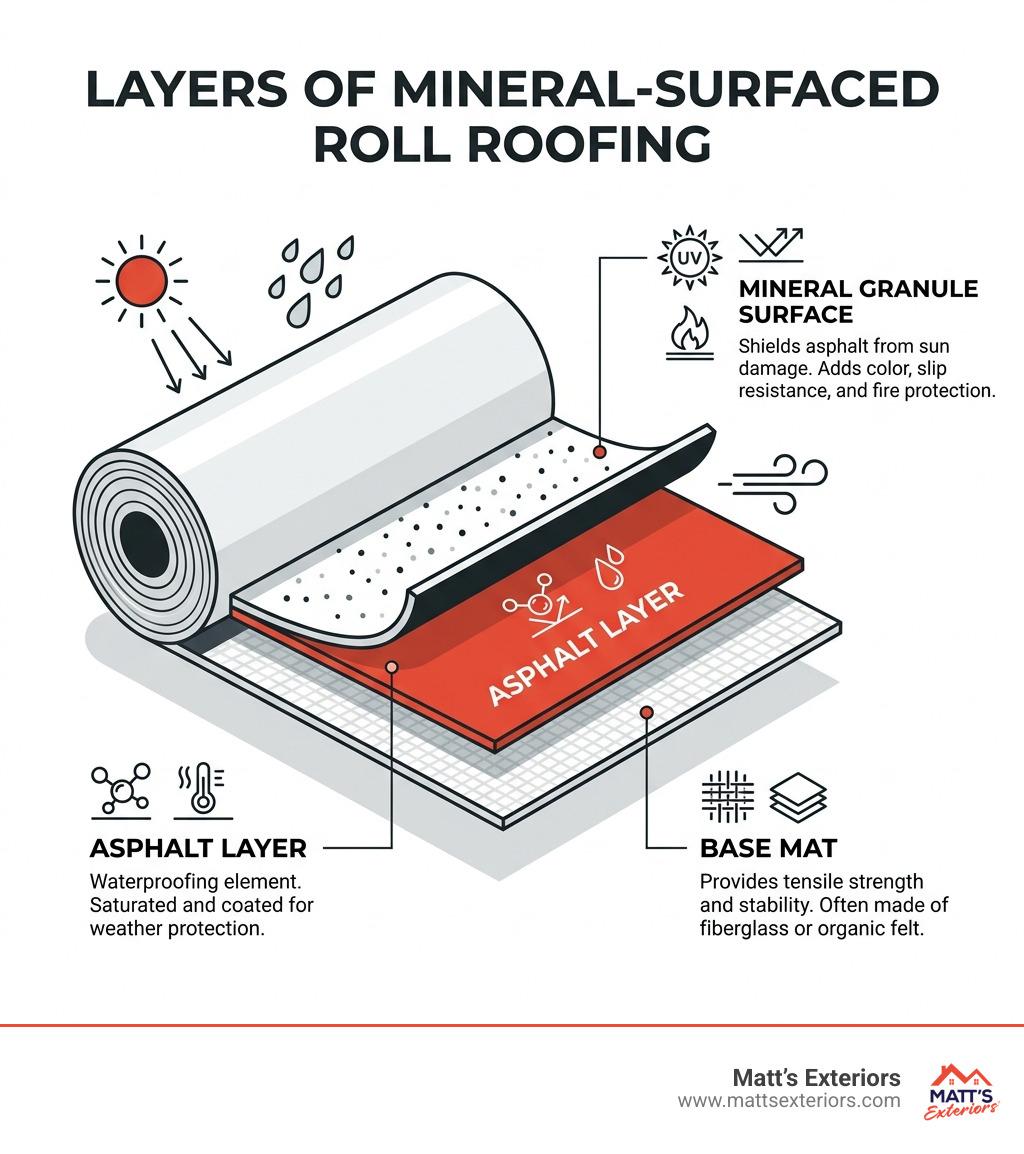
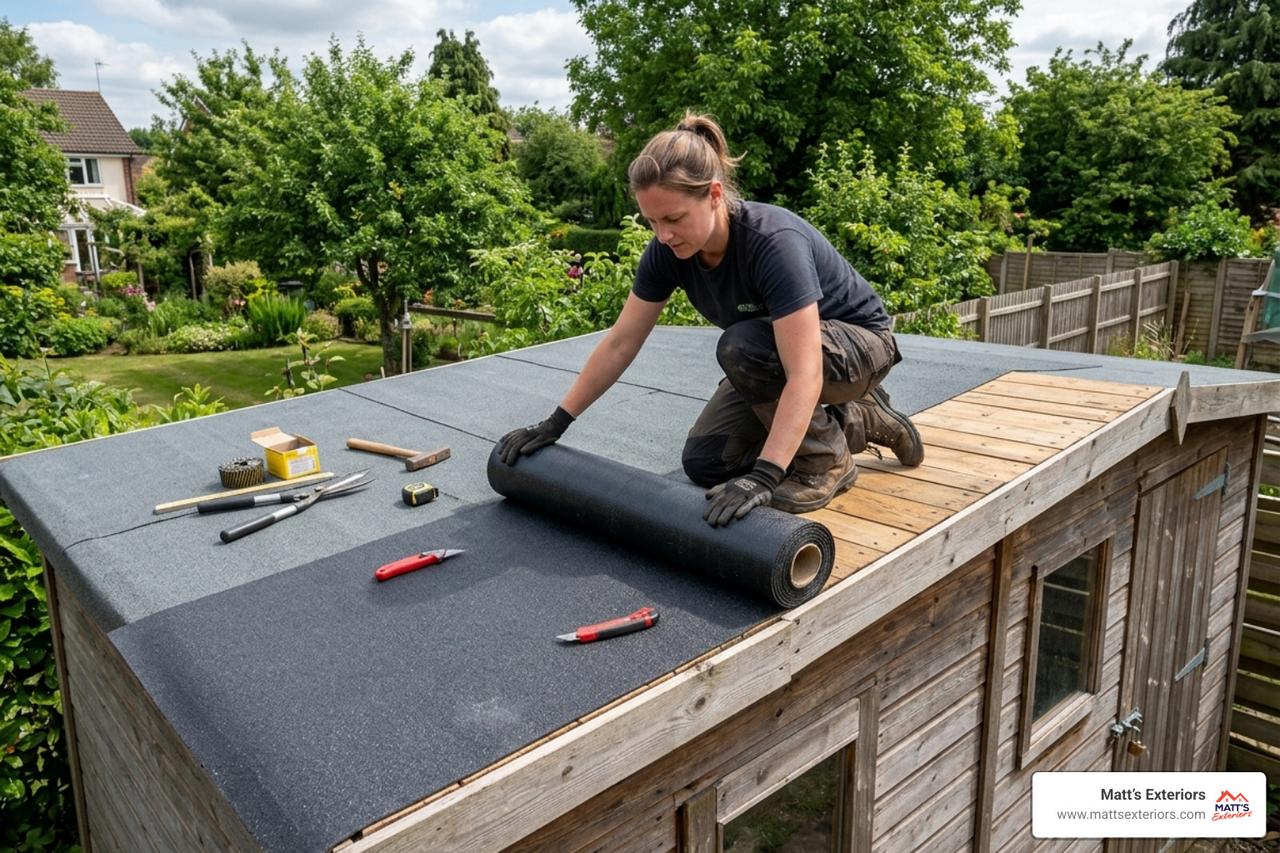
Think of rolled roofing for sheds as a giant, continuous asphalt shingle. Technically known as Mineral-Surfaced Roll Roofing (MSR), it consists of a long, flexible sheet of asphalt-saturated material topped with ceramic granules. Unlike traditional shingles, which are small interlocking pieces, MSR comes in rolls that are typically 36 inches wide and 36 feet long, covering about 100 square feet (one "square" in roofing terms).
The magic of rolled roofing lies in its simplicity. It works by creating a seamless-style barrier over your roof deck. Because it involves fewer seams than shingles, it is particularly effective on low-slope roofs where water doesn't run off as quickly. In our experience across Metro Atlanta, from Marietta to McDonough, we’ve seen homeowners use it as a "quick fix" or a budget-friendly long-term solution for tool sheds, potting sheds, and workshops.
For those dealing with particularly tricky flat surfaces, Peel and stick roofing for flat roofs and beyond offers an even more modern approach, using self-adhesive backings that eliminate the need for messy roofing cements or specialized torches.
Feature Rolled Roofing Asphalt Shingles Material Weight ~75 lbs per 100 sq ft ~200-300 lbs per 100 sq ft Installation Time 1-3 hours for a typical shed 4-8 hours for a typical shed Minimum Pitch 1:12 (with proper sealing) 2:12 (special application) or 4:12 Lifespan 5-10 years 20-30 years Cost Under $1.00 per sq ft (DIY) $1.50 - $4.00 per sq ft
When you walk into a store in Cumming or Alpharetta, you'll see several types of rolled roofing for sheds. Choosing the right one depends on your budget and how long you want the roof to last.
One of the biggest advantages of rolled roofing for sheds is the price point. A typical roll of mineral-surfaced roofing costs around $50, but high-end self-adhering cap sheets like GAF Liberty can range up to $133 per roll.
If you are hiring a pro in the Atlanta area, you might pay between $1.50 and $2.50 per square foot for installation. However, most shed owners find this to be a perfect Saturday DIY project. For a detailed breakdown of what you might spend on the self-adhesive varieties, check out our Peel and stick roofing price guide. You can find these materials at most local home improvement centers in Suwanee, Buford, or Woodstock.
Before you commit, it’s important to weigh the trade-offs. We’ve installed thousands of roofs since 2007, and we always tell our customers in Fayetteville and Peachtree City that the "cheapest" option isn't always the best value.
The Pros:
The Cons:
To dig deeper into the durability differences, read our comparison on Rolled roofing vs shingles for low slope roofs.
A common question we get from homeowners in Dunwoody and Sandy Springs is: "My shed has a slight slope, is rolled roofing okay?"
The answer depends on the "pitch." A 3/12 slope means the roof rises 3 inches for every 12 inches of horizontal run. This is approximately a 14-degree angle. While 3/12 is actually the minimum slope recommended for standard asphalt shingles, rolled roofing for sheds is often the better choice for anything lower than that (like 1/12 or 2/12).
On a 3/12 slope, water runs off well enough that you could use either shingles or rolls. However, if your roof is flatter than 2/12, shingles are prone to "ice damming" or water backing up under the tabs. In those cases, the continuous nature of rolled roofing is a lifesaver. For more on this, see The minimum slope for asphalt shingles explained.
Ready to get to work? Follow these steps to ensure your shed stays dry during the next Atlanta thunderstorm.
For a more detailed look at the materials used in this process, check out our Asphalt roll roofing guide.
You don't need a truckload of specialized gear, but having the right tools makes the job much easier:
If you're looking for a high-end material that comes with its own reputation for durability, consider the Roof Pro Super 15 Year Shed Felt, which is often used on premium garden buildings.
Never "butt" the edges of rolled roofing together. You must have an overlap. The standard is a 3-inch horizontal overlap and a 6-inch end lap (where two rolls meet end-to-end).
As for underlayment, it’s the "insurance policy" for your roof. In humid areas like Smyrna and Kennesaw, moisture can trap under the roofing material. A breathable underlayment helps protect the wood deck from rot. If you're working with a very low pitch, check out our Lowest roof pitch for shingles guide to see how underlayment requirements change as the roof gets flatter.
In Metro Atlanta, our roofs face a unique set of challenges. The UV index in July is high enough to "bake" the oils out of asphalt, and our high humidity can encourage moss and algae growth.
How to extend the life of your shed roof:
If you ever find a leak during a heavy downpour in Peachtree City or Tyrone, don't panic. Our Emergency flat roof repair guide can help you patch things up until you can do a permanent fix.
Typically, you can expect 5 to 10 years. Lower-quality mineral-surfaced rolls might lean toward the 5-year mark, while high-quality SBS modified bitumen or self-adhering sheets can last 10 to 12 years if maintained. The intense heat in Georgia often means our roofs age slightly faster than those in cooler climates.
Yes, you can, but we generally don't recommend it. For rolled roofing for sheds to seal properly, the surface needs to be perfectly flat. Old shingles are often curled or bumpy, which prevents the new roll from making a watertight seal. It's usually better to tear off the old material and start with a fresh deck. If you're considering a repair instead, see our Flat roof repair tips.
Rolled roofing for sheds is a fantastic, cost-effective solution for homeowners across Metro Atlanta. Whether you're in Alpharetta, Marietta, or Fayetteville, it offers a practical way to protect your outdoor investments without breaking the bank. While it may not have the multi-decade lifespan of a professional shingle roof, its ease of installation and immediate waterproofing benefits make it a top choice for utility buildings.
At Matt’s Exteriors, we take pride in helping our neighbors throughout the 25+ communities we serve. From simple shed advice to complex residential roof replacements, our family-owned team is dedicated to high-quality workmanship and exceptional customer care. We’ve completed over 12,000 projects since 2007, and we bring that same expertise to every job—big or small.
If you’ve decided that your shed (or your home!) needs a more permanent roofing solution, we’re here to help. Schedule your professional roof replacement with us today and experience the peace of mind that comes with trusted materials and expert installation.